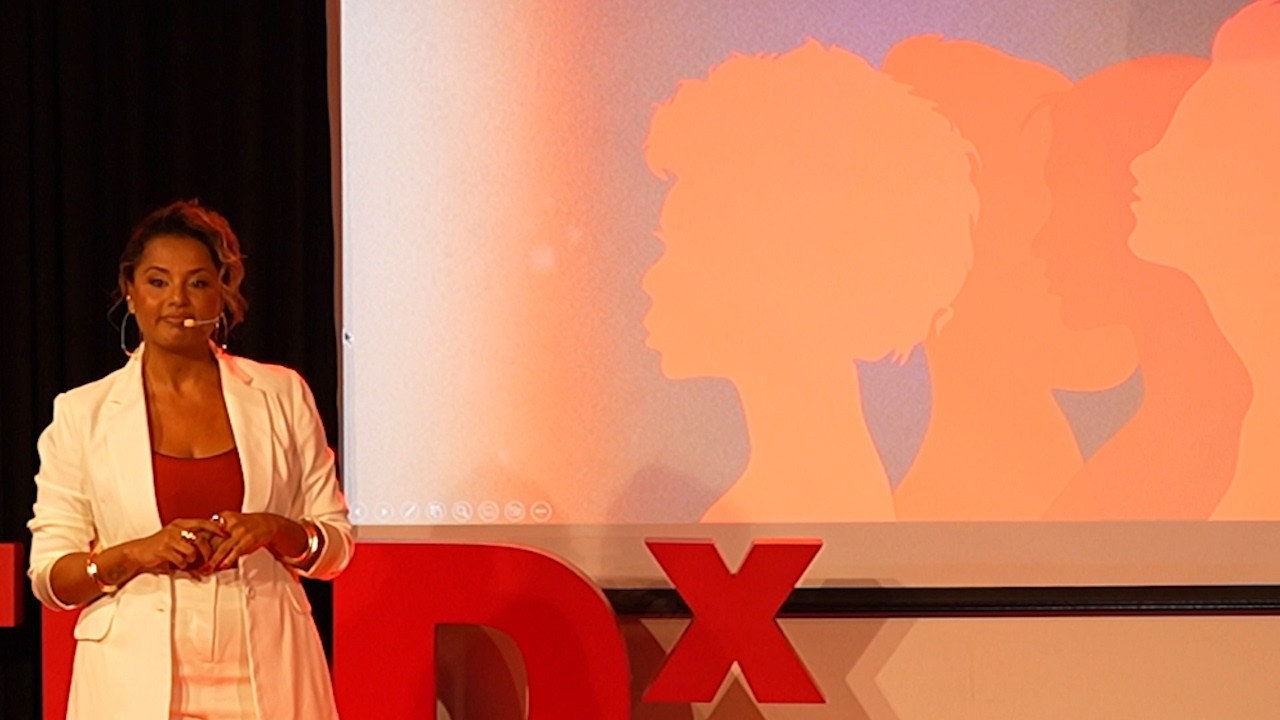
A Estética Da Força: Eu Dou Conta De Tudo | Tábata Poline | TEDxSão José do Rio Preto Women
Keywords
Summary
178 words
Critical Evaluation
Value of the Information & Strength of the Argument
The talk’s value lies in its authentic personal testimony, which powerfully illustrates the psychological and physical toll of societal expectations on women. The speaker’s narrative is compelling and emotionally resonant, effectively conveying the internal conflict between the need to appear strong and the reality of exhaustion. Her argumentation is structured around personal experience and anecdotal evidence, which she uses to build a case for the systemic nature of female burnout. While she references concepts like burnout and emotional labor, she does not provide empirical data or cite specific studies, relying instead on her professional observations and personal journey. The strength of the argument rests on its emotional appeal and the universality of the experience she describes, rather than on rigorous scientific analysis.
Scientific Rigor, Source Quality, Title Accuracy
The talk is a personal narrative and expert opinion, not a scientific presentation. As such, it lacks formal citations or references to academic literature. The speaker’s credibility is established through her professional background as a journalist and her personal experience with burnout. The title accurately reflects the content, focusing on the ‘aesthetic of strength’ and the pressure to appear capable. The talk is well-structured and the message is clear, but the lack of external sources limits its scientific rigor. The description mentions the TEDx format and provides a link to TED, but no specific sources are cited within the talk itself.
238 words
Title / Content Match
The title accurately reflects the central theme of the talk, which explores the societal pressure on women to appear strong and capable, and the personal and collective consequences.
Quality & Reliability
7/10
Personal testimony and expert opinion from a journalist, with references to psychological concepts (burnout, mental exhaustion) and social analysis, but lacking empirical data or citations to scientific studies.
Key Moments
Markers derived by PSI from the transcript: the creator did not define chapters.
- Speaker describes her burnout symptoms and the moment she 'pifou' (blacked out) during an interview.
- Speaker receives the diagnosis of burnout and mental exhaustion from her psychologist and psychiatrist.
- Speaker reflects on her childhood responsibilities and early work, linking them to her inability to stop.
- Speaker proposes an exercise to ask women how they are feeling, predicting answers of tiredness and exhaustion.
- Speaker argues that female exhaustion is a collective and structural problem, not an individual one.
- Speaker discusses the double burden of professional and domestic work, and the invisible labor of women.
- Speaker calls for support networks and a cultural shift, urging women to prioritize their own well-being.
Cited Sources
- TEDx Program — The talk was given at a TEDx event, and the description links to the TEDx program page.
Concurring Sources
- TEDx Program — The talk is part of the TEDx series, which aims to share ideas worth spreading.
Contribution & Novelties
The talk offers a personal and emotional perspective on the ‘aesthetic of strength’ and its impact on women’s mental health. It contributes to the discourse on burnout by framing it as a collective, societal issue rather than an individual failure. The speaker’s call for support networks and her emphasis on the invisible labor of women add a valuable dimension to the conversation.
Pour aller plus loin :
- Burnout (ICD-11) — The World Health Organization’s classification of burnout as an occupational phenomenon.
- Emotional labor — Concept introduced by Arlie Hochschild, relevant to the invisible work discussed in the talk.
- Second shift — Arlie Hochschild’s book on the unpaid domestic work that women perform after their paid employment.
116 words
Radar Profile
The radar profile shows a talk that is strong in qualitative information and personal credibility, but lower in technical depth and quantitative data. This is typical of a personal testimony or expert opinion piece, where the value lies in the narrative and emotional resonance rather than in empirical evidence.