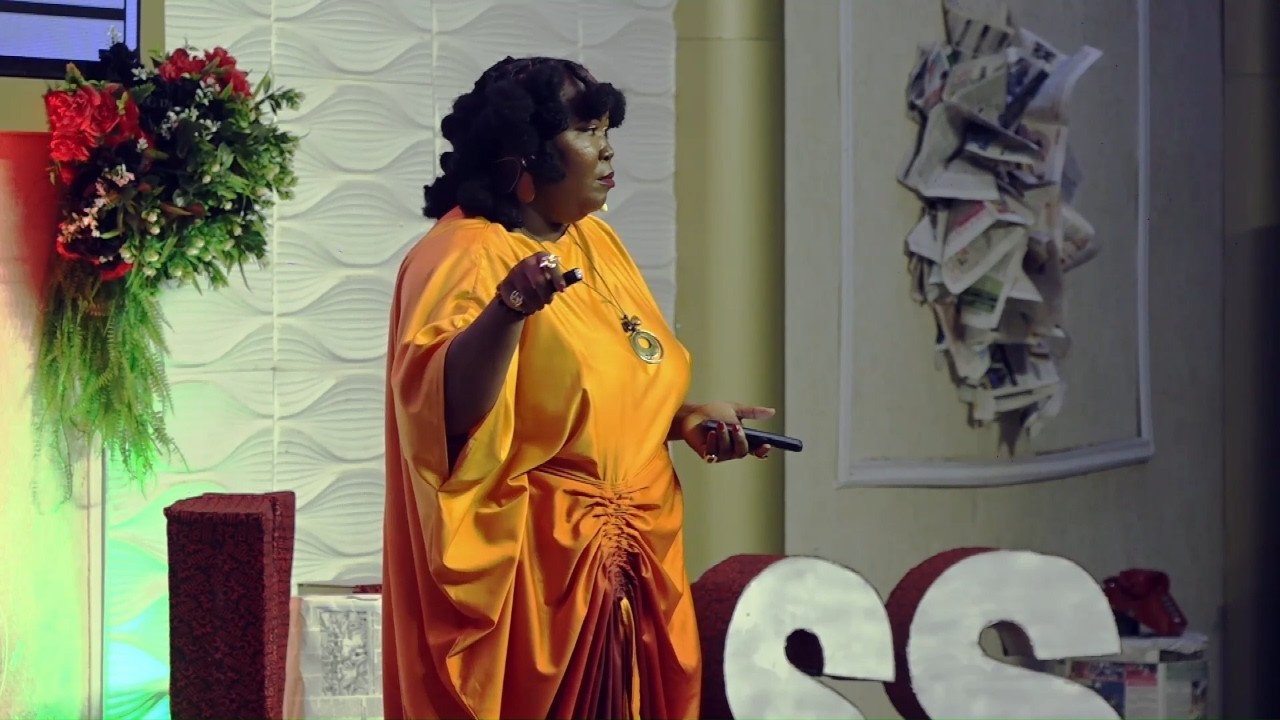
Stop Putting Ankara on Everything: Africa | Chukwu Adaeze Victoria | TEDxCovenant University
Keywords
Summary
184 words
Critical Evaluation
Value of the Information & Strength of the Argument
The talk offers valuable insights into the importance of cultural depth in creative work, challenging superficial representations of Africa. The argument is well-structured, moving from critique to concrete examples and actionable advice. The use of specific cultural references (proverbs, symbols, stories) strengthens the argument, though it relies on personal interpretation and lacks external validation. The speaker’s professional background adds credibility, but the argument would benefit from more rigorous evidence or references.
Scientific Rigor, Source Quality, Title Accuracy
The talk is based on the speaker’s personal experience and cultural knowledge, with no formal citations or references. The title accurately reflects the content, and the talk is well-organized. However, the lack of verifiable sources limits its scientific rigor. The description provides a link to TEDx, but no specific sources are cited. The talk is more of an opinion piece than a research-based presentation.
150 words
Title / Content Match
The title accurately reflects the core message: challenging the superficial use of African patterns in design.
Quality & Reliability
7/10
The talk is an opinion-based presentation by a design professional, grounded in cultural references and personal experience. It lacks formal citations or empirical evidence, but the arguments are coherent and based on recognized cultural symbols and practices.
Key Moments
Markers derived by PSI from the transcript: the creator did not define chapters.
- Introduction: Speaker sets the context, addressing creators from various fields.
- Critique of superficial African aesthetics: patterns, brown color, talking drums.
- Examples of meaningful African expressions: compound entrances, Uli tattoos, titled Igbo woman.
- Explanation of 'flattening culture' and loss of nuance, with example of Yoruba fila orientation.
- Africa as a system of meaning: proverbs, symbols (Aya), and stories.
- Assignment: speak to cultural custodians and collect stories.
- Framework for creators: reframing, context, translate not transfer.
- Final advice: create for behavior, use language intentionally, engage with culture, accept depth is slower.
Cited Sources
- TEDx Program — Mentioned in the video description as the organizing body for the event.
Concurring Sources
- TEDx Program — The talk is part of the TEDx series, which promotes ideas worth spreading.
Contribution & Novelties
The talk provides a fresh perspective on African identity in creative fields, urging a shift from superficial aesthetics to meaningful cultural engagement. It offers a practical framework for creators to incorporate cultural depth into their work.
Pour aller plus loin :
- Adinkra symbols — Overview of Adinkra symbols, including Aya, and their meanings.
- Igbo-Ukwu art — Context on Igbo art and cultural significance.
- Semiotics — Study of signs and symbols, relevant to the talk’s discussion of African semiotics.
78 words
Radar Profile
The radar profile shows moderate scores across all dimensions, with slightly higher quality of information and lower technical level. This indicates a balanced but not deeply technical presentation, suitable for a general audience interested in cultural design.
💬 No comments were provided for analysis.