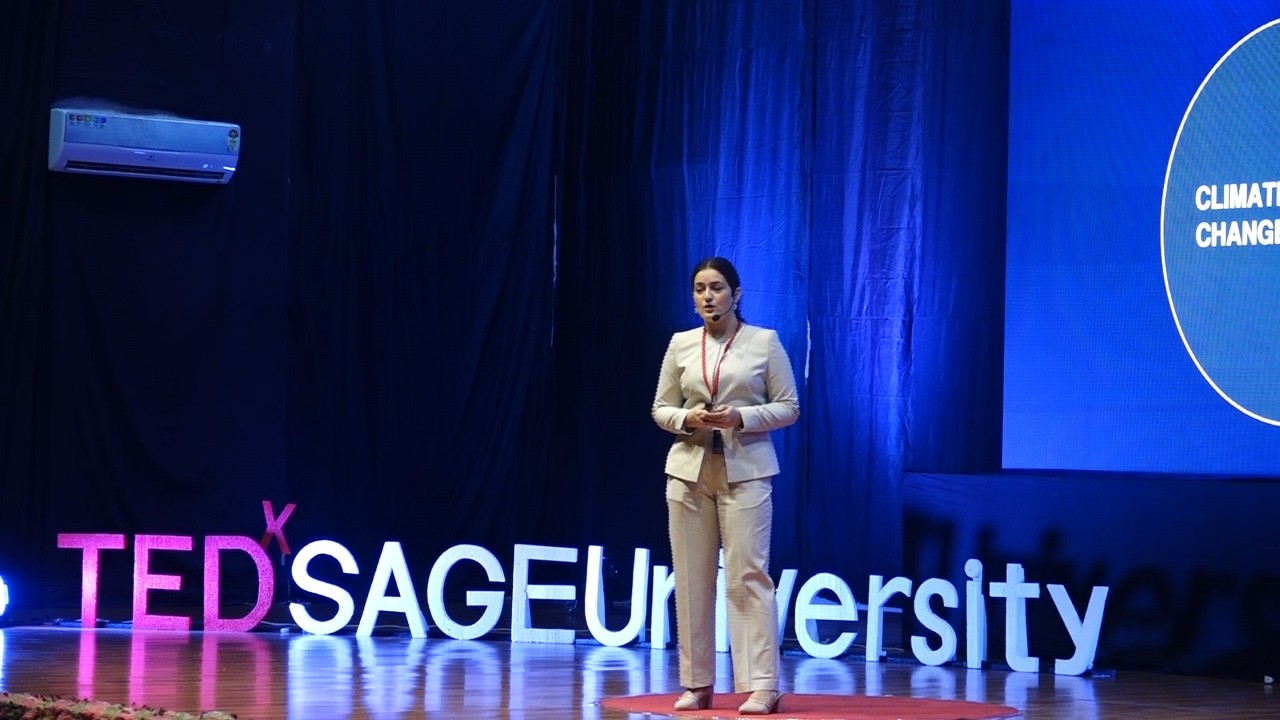
When Home No Longer Feels Like Home
Keywords
Summary
137 words
Critical Evaluation
Value of the Information & Strength of the Argument
The talk provides valuable insights into the intersection of climate change and public health, emphasizing often-overlooked mental health aspects like climate anxiety. The personal narrative adds emotional weight and makes the issue relatable. However, the argumentation relies heavily on anecdotal evidence and general statistics without deep scientific analysis. The speaker’s suggestions for individual action are practical but lack novelty. The strength lies in advocating for community-based approaches and integrating local knowledge, which is a valuable perspective.
Scientific Rigor, Source Quality, Title Accuracy
The talk references a Lancet study and WHO estimates but does not provide specific citations or URLs, limiting verifiability. The speaker’s expertise in public health adds credibility, but the scientific rigor is moderate. The title is well-aligned with the content, capturing the emotional and personal dimension of climate change. The talk is more of an expert opinion and personal testimony than a rigorous scientific review.
156 words
Title / Content Match
The title is metaphorical and engaging, accurately reflecting the talk's focus on climate change's impact on the sense of home and well-being.
Quality & Reliability
7/10
The talk is based on personal experience and general references to studies (Lancet, WHO) without detailed citations. The speaker is a public health professional, lending credibility, but the content is largely anecdotal and lacks rigorous scientific depth.
Key Moments
Markers derived by PSI from the transcript: the creator did not define chapters.
- Introduction: climate change as a distant image (polar bear) vs. personal reality.
- Personal story: colleague's death due to weather-related healthcare access barriers.
- Definition of climate anxiety and ecological grief, citing Lancet study.
- Data on India's climate changes: temperature rise, heatwaves, extreme rainfall.
- Work with FOLK: documenting traditional knowledge and community training.
- Practical advice: notice, prepare, connect, participate; concluding message of hope.
Cited Sources
- TEDx Program — General reference to TEDx event format and organization.
Concurring Sources
- Lancet study on climate anxiety — Referenced in the talk, showing high worry among youth.
Contribution & Novelties
The talk contributes a personal and community-focused perspective on climate change and health, highlighting the importance of local knowledge and resilience. It bridges the gap between environmental and health sectors, advocating for integrated approaches.
Pour aller plus loin :
- Climate anxiety and mental health — APA report on climate change’s mental health impacts.
- Lancet Countdown on health and climate change — Annual assessment of health impacts of climate change.
- WHO fact sheet on climate change and health — Overview of health risks and WHO’s role.
- Ecological grief — Academic article on ecological grief as a mental health response to environmental loss.
101 words
Radar Profile
The radar profile shows moderate scores across all dimensions, with slightly higher quality and reliability compared to quantity and technical level. This indicates a balanced but not deeply technical talk, focusing on personal experience and general information.
💬 No comments were provided for analysis.