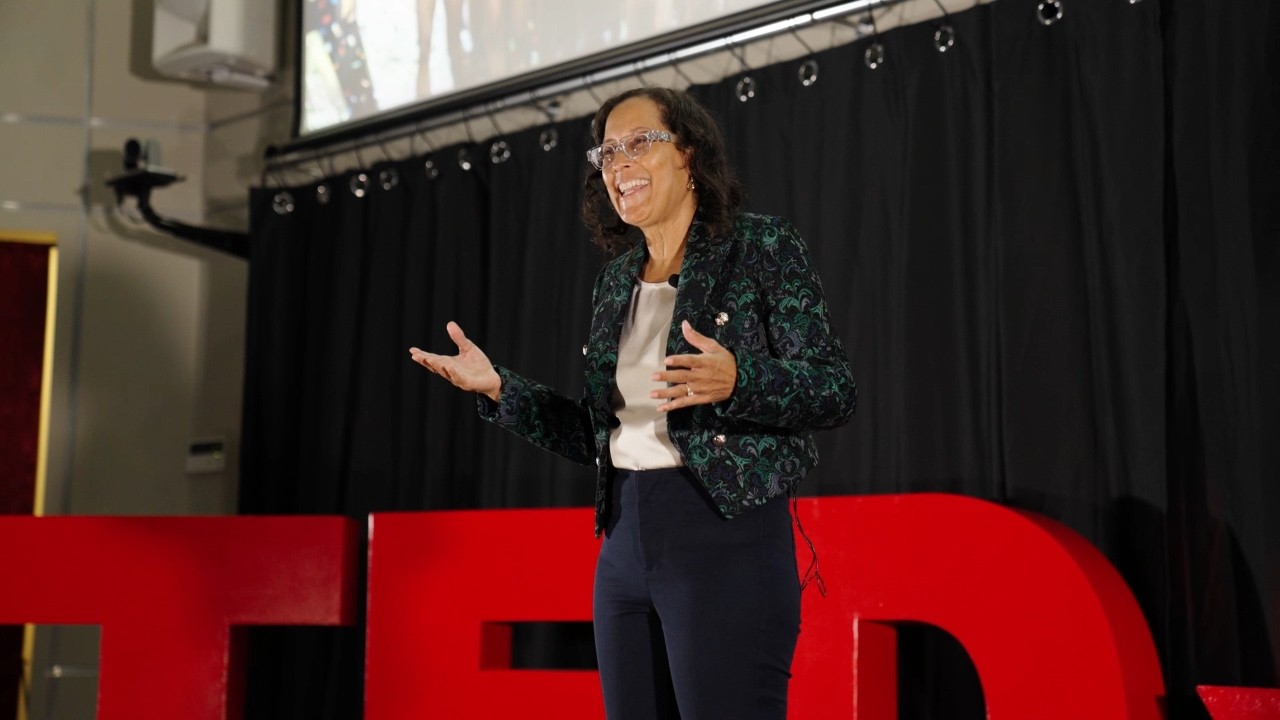
The Myth of the Cancer Warrior | Yvette Colón | TEDxKU
Keywords
Summary
164 words
Critical Evaluation
Dr. Colón delivers a powerful and emotionally resonant critique of the ‘cancer warrior’ narrative, drawing on her own harrowing experience with pancreatic cancer and its aftermath. Her credentials as a doctor lend credibility to her perspective, and her personal story provides a compelling illustration of the psychological burden imposed by societal expectations of heroism. The talk effectively deconstructs the language of war used in cancer discourse, highlighting how it can alienate and shame patients who do not fit the triumphant survivor archetype. However, the argument is primarily anecdotal and lacks engagement with the broader scientific literature on cancer survivorship, psychosocial oncology, or disability studies. While she mentions statistics (e.g., 7% survival rate for pancreatic cancer, 25% of survivors with long-term disabilities), these are not sourced, and the talk would benefit from references to studies on toxic positivity or the impact of narrative on patient well-being. The structure is clear and the delivery is engaging, but the depth of analysis is limited by the personal nature of the talk. The title accurately reflects the content, and the talk does not significantly deviate from its stated theme. Overall, it is a valuable contribution to the conversation on cancer survivorship, but it would be strengthened by integrating more empirical evidence and addressing potential counterarguments.
211 words
Title / Content Match
The title accurately reflects the talk's focus on deconstructing the 'cancer warrior' narrative.
Quality & Reliability
7/10
Personal narrative from a medical professional with direct experience, but lacks citations to scientific literature; relies on anecdotal evidence and general statistics.
Key Moments
Markers derived by PSI from the transcript: the creator did not define chapters.
- Introduction: Dr. Colón shares her diagnosis of pancreatic cancer.
- Describes the Whipple surgery and its aftermath, including mobility issues.
- Reveals the fake marathon photo and contrasts it with her real struggles.
- Discusses the spinal stroke and long-term disabilities.
- Critiques the 'cancer warrior' language and the pressure to be positive.
- Shares the story of a support group member training for a marathon to avoid appearing weak.
- Calls for radical honesty and allowing survivors to be human.
Cited Sources
- TEDx Program — Mentioned in the video description as the organizing body for the talk.
Concurring Sources
- National Cancer Institute - Survivorship — Provides information on the long-term effects of cancer treatment and survivorship.
Dissenting Sources
- The Power of Positive Thinking in Cancer Care — Some sources emphasize the benefits of a positive attitude, which contrasts with the talk's critique of toxic positivity.
Contribution & Novelties
This talk contributes a personal and professional perspective on the often-ignored emotional and psychological challenges of cancer survivorship, particularly for those with long-term disabilities. It challenges the dominant ‘warrior’ narrative and advocates for a more honest and inclusive discourse.
Pour aller plus loin :
- Toxic positivity in healthcare — Discusses the concept of toxic positivity and its effects.
- Cancer survivorship and quality of life — National Cancer Institute resource on survivorship issues.
- Disability studies — Academic field examining disability from social and cultural perspectives.
84 words
Radar Profile
The radar profile shows moderate scores across all dimensions, with slightly higher quality of information and lower technical level. This reflects a talk that is emotionally compelling and credible but lacks deep scientific depth.
💬 No comments were provided for analysis.