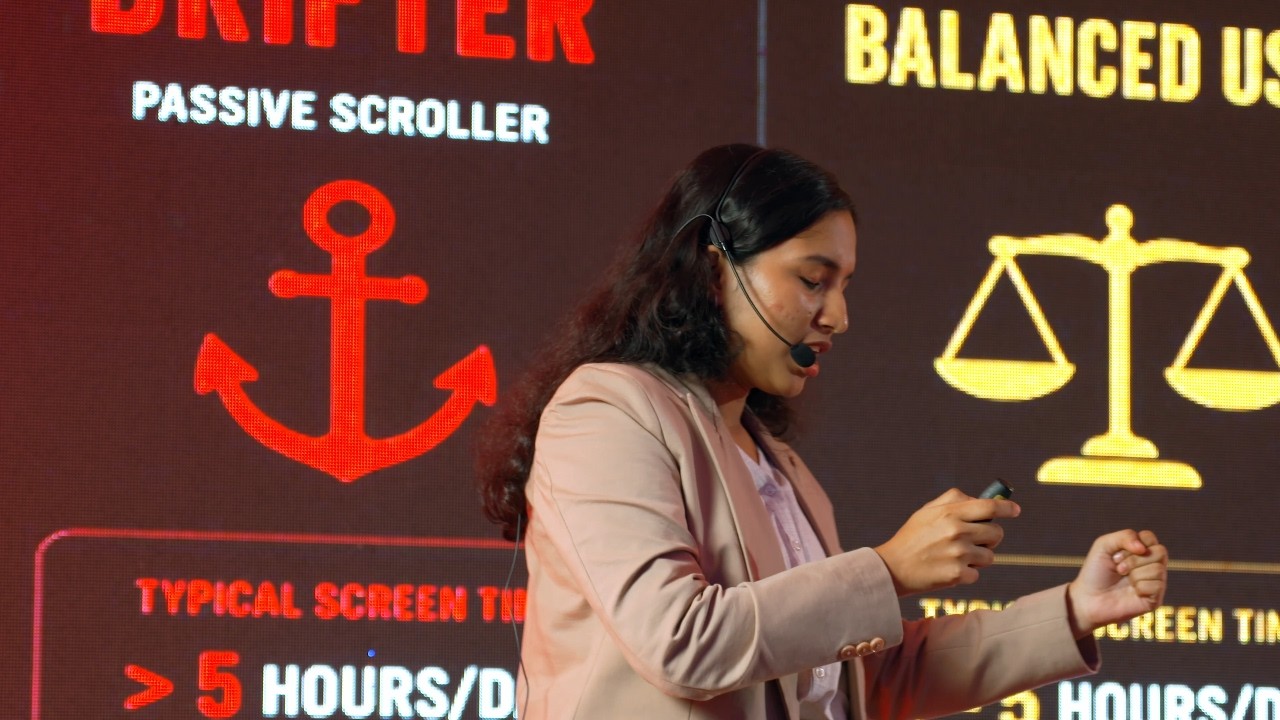
The Scroll Swap | Devangana A R | TEDxChinmaya Vidyalaya Attukal Youth
Keywords
Summary
145 words
Critical Evaluation
Value of the Information & Strength of the Argument
The value of the information lies in its relatable personal testimony and the simple, actionable insight that intentional use of technology can transform one’s relationship with it. The argumentation is primarily anecdotal, based on a single, uncontrolled experiment with two participants. While the narrative is engaging and the conclusion (screen neutrality, importance of active engagement) is reasonable, it lacks empirical evidence, statistical support, or reference to existing research on digital habits and attention. The speaker’s rhetorical style is persuasive but does not constitute a rigorous scientific argument.
Scientific Rigor, Source Quality, Title Accuracy
The talk is a TEDx presentation, which typically features personal stories and opinions rather than peer-reviewed research. No external sources are cited, and the only link provided is the general TEDx page. The title accurately reflects the content, which is a narrative about swapping scrolling habits. The lack of citations and the reliance on a single anecdotal experiment significantly limit the scientific rigor. The talk would benefit from referencing existing studies on social media use, attention, and habit formation to support its claims.
185 words
Title / Content Match
The title accurately reflects the content: a swap of scrolling habits between two individuals, presented as an experiment.
Quality & Reliability
5/10
The talk is a personal anecdote presented as a social experiment, but lacks methodological rigor, data, or peer-reviewed references. It relies on subjective experience and rhetorical claims, with no verifiable evidence or citations.
Key Moments
Markers derived by PSI from the transcript: the creator did not define chapters.
- Introduction: The speaker asks about a habit that robs leisure time, introducing the concept of scrolling.
- The speaker defines 'drifter' and 'navigator' scrolling styles, setting up the experiment.
- The experiment design is explained: a 7-day swap of scrolling habits.
- The drifter's experience: withdrawal symptoms, restlessness, and the urge to check the phone.
- The drifter's positive outcomes: improved punctuality and time management.
- The navigator's experience: initial ease, then growing craving for relatable content.
- Conclusion: The screen is neutral; the key is intentional engagement and applying information.
Cited Sources
- TEDx Program — General reference to the TEDx event format, not a specific source for the claims.
Concurring Sources
- Digital media use and mental health — Supports the idea that excessive scrolling can affect well-being, aligning with the talk's observations.
Dissenting Sources
- No direct discordant sources — No specific sources contradicting the talk's claims were found, but the lack of citations means the claims are not scientifically validated.
Contribution & Novelties
The talk offers a personal, relatable perspective on digital scrolling habits, framing them as a choice between passive drifting and active navigation. It introduces a simple, memorable metaphor (drifter vs. navigator) that could help individuals reflect on their own technology use. However, the scientific novelty is limited, as the concept of intentional technology use is well-established in digital wellness literature.
Pour aller plus loin :
- Digital media use and mental health — Provides an overview of research on the effects of digital media on well-being, relevant to the talk’s claims.
- Attention economy — Explains the economic and psychological dynamics behind why platforms are designed to capture attention, supporting the talk’s premise.
- Habit loop — Discusses the psychology of habit formation, which underlies the behavioral changes described in the experiment.
129 words
Radar Profile
The radar profile shows low scores across all dimensions, reflecting the talk's anecdotal nature and lack of technical depth. The highest score is in 'qualite_information' (4), indicating some value in the personal insights, but overall the content is not scientifically robust.
💬 No comments were provided for analysis.