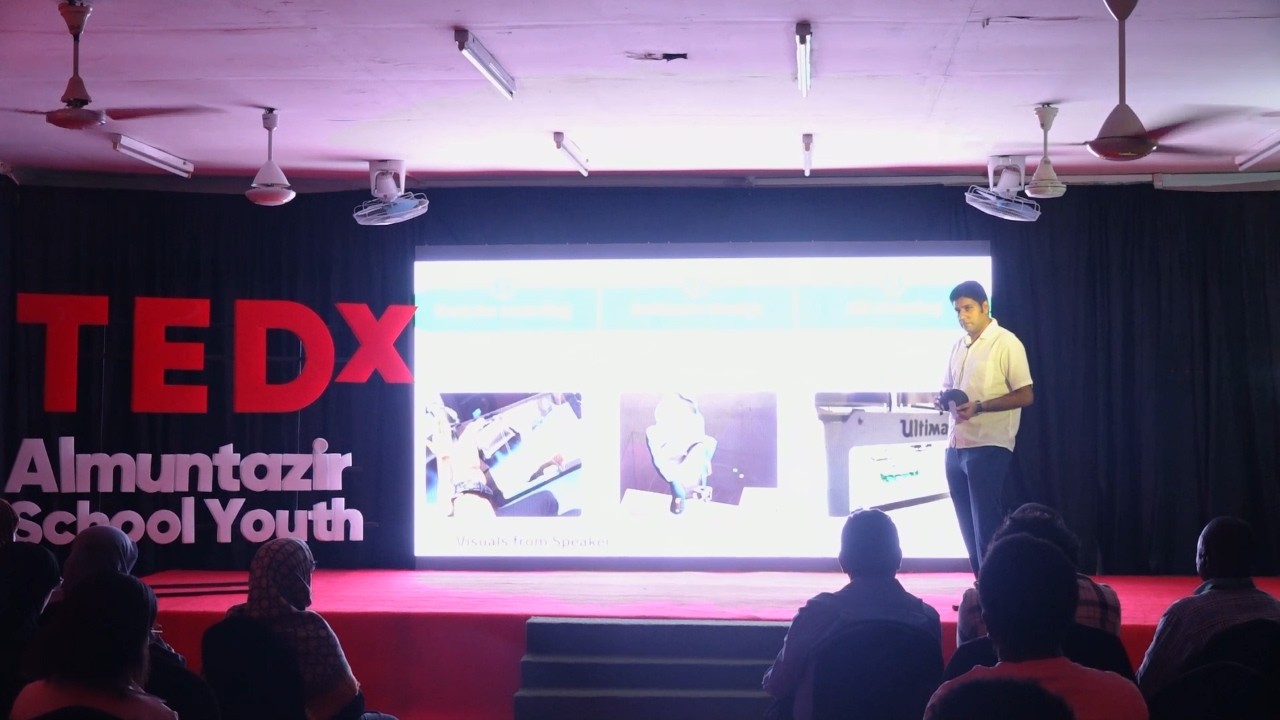
Tech that shapes the world | Atish Shah | TEDxAlmuntazir School Youth
Keywords
Summary
122 words
Critical Evaluation
The talk presents a compelling narrative of using technology for social impact, but it lacks scientific rigor. The speaker’s personal story is engaging, but the technical explanations are superficial. For instance, he mentions using generative AI for design but does not explain the algorithms or validation processes. The claim that AI designs 80-90% of the device is unsubstantiated. The discussion of EMG signals and AI pattern recognition is oversimplified, without addressing challenges like signal noise or real-time processing. The use of Cobb’s angle is mentioned but not elaborated. The talk is more inspirational than educational, with no citations or references to scientific literature. The speaker’s credibility is established through his background, but the content lacks depth. The title is broad, and the talk does not fully deliver on ’tech that shapes the world’ as it focuses narrowly on his company’s work. Overall, it is a decent introduction to the field but not a rigorous scientific analysis.
156 words
Title / Content Match
The title is broad and somewhat generic, but the content does discuss technology shaping the world through medical devices and AI, so it is reasonably aligned.
Quality & Reliability
6/10
The talk is based on personal experience and anecdotal evidence, with no detailed scientific data or peer-reviewed references. The speaker is a physician and engineer, but the claims about technology impact lack rigorous validation.
Key Moments
Markers derived by PSI from the transcript: the creator did not define chapters.
- Introduction: Dr. Atish Shah introduces himself and the problem of assistive device access in Africa.
- Personal journey: from O levels to medical school and decision to study engineering.
- Building a 3D printed hand and the challenges of interdisciplinary work.
- Explanation of the 3D scanning and generative AI design process.
- Comparison of human-designed vs AI-designed hinges, highlighting AI's efficiency.
- Use of EMG signals and AI for bionic hand control.
- Medical application: spinal braces and Cobb's angle calculation.
Cited Sources
- TEDx Program — Mentioned as the organizing body for the talk.
Concurring Sources
- TEDx Program — The talk is part of TEDx, which generally promotes innovative ideas.
Contribution & Novelties
The talk provides a personal perspective on applying 3D printing and AI in low-resource settings, emphasizing the use of smartphone-based 3D scanning and generative design for customized medical devices. It highlights the potential for decentralized manufacturing of assistive devices.
Pour aller plus loin :
- Generative design in engineering — Overview of the concept used for AI-driven device design.
- 3D scanning with smartphones — Background on the technology enabling remote customization.
- Electromyography (EMG) — Explanation of the signal used for bionic hand control.
- Cobb angle — Measurement technique for spinal deformities mentioned in the talk.
94 words
Radar Profile
The radar profile shows moderate scores across all dimensions, indicating a balanced but not exceptional presentation. The talk is informative but lacks depth in technical details and scientific backing.