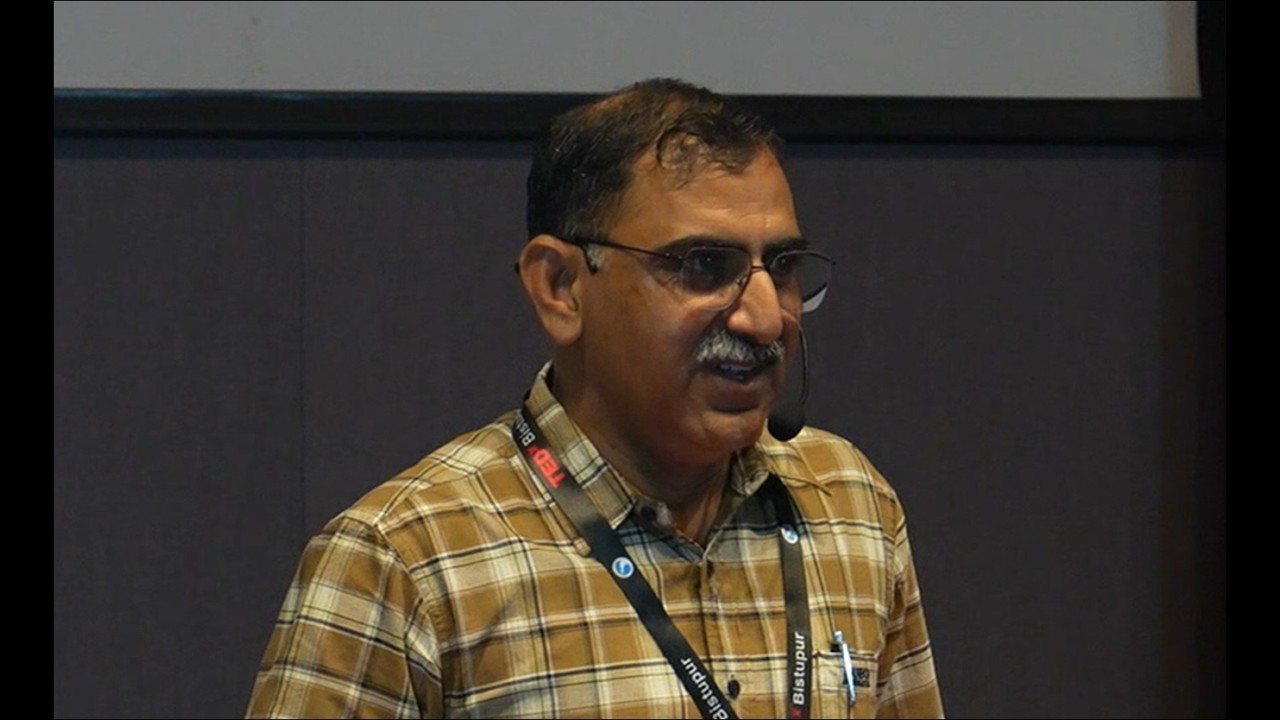
The Mosquito We Create | Manoj Singh Shekhawat | TEDxBistupur
Keywords
Summary
158 words
Critical Evaluation
Value of the Information & Strength of the Argument
The talk provides valuable practical insights from field experience, emphasizing the importance of source reduction over fogging. The argumentation is coherent and persuasive, using a personal anecdote to illustrate the consequences of neglecting breeding sites. However, it lacks quantitative data or references to scientific studies, relying instead on anecdotal evidence and general observations. The speaker’s authority is established through his professional role, but the absence of citations weakens the scientific rigor.
Scientific Rigor, Source Quality, Title Accuracy
The talk is based on the speaker’s professional experience, but no specific sources are cited. The description provides a link to TEDx general information, but no direct references to studies or reports. The title accurately reflects the content, focusing on the human contribution to mosquito proliferation. The talk is a personal narrative rather than a systematic review, so the scientific rigor is moderate. No comments were provided for analysis.
155 words
Title / Content Match
The title accurately reflects the content, emphasizing the role of human-created environments in mosquito breeding.
Quality & Reliability
6/10
The talk is based on the speaker's 15 years of field experience in public health operations, providing practical insights. However, it lacks citations to scientific studies or data, and the evidence is largely anecdotal.
Key Moments
Markers derived by PSI from the transcript: the creator did not define chapters.
- Introduction to the topic: mosquitoes breeding in household items.
- Anecdote of two brothers dying from dengue in a well-off area.
- Explanation of how small containers like bottle caps can breed mosquitoes.
- Critique of fogging as a primary control method.
- Emphasis on weekly checks and the 'Palati Mark' campaign.
- Discussion on the importance of behavior change over technology.
Cited Sources
- TEDx Program — General information about TEDx events, mentioned in the video description.
Concurring Sources
- WHO Dengue Fact Sheet — Supports the importance of eliminating breeding sites as a primary prevention method.
Dissenting Sources
- Fogging effectiveness — Some studies suggest that fogging can be effective in reducing adult mosquito populations in certain contexts, contrary to the speaker's dismissal of its importance.
Contribution & Novelties
The talk offers a practical, field-based perspective on dengue prevention, emphasizing the importance of individual behavior change over technological interventions. It introduces the ‘Palati Mark’ campaign as a novel approach to encourage citizens to overturn water containers. The speaker’s experience in urban sanitation provides a unique viewpoint.
Pour aller plus loin :
- Dengue prevention and control — WHO fact sheet on dengue, providing authoritative information on transmission and prevention.
- Aedes aegypti — Wikipedia article on the primary mosquito vector for dengue, detailing its biology and breeding habits.
- Community-based dengue control — Example of a study on community participation in dengue vector control (note: URL is illustrative, not verified).
108 words
Radar Profile
The radar profile shows moderate scores across all dimensions, with a slightly lower technical level, reflecting the talk's focus on practical advice rather than deep scientific detail. The balance between information quantity and quality is consistent, indicating a well-structured but not highly technical presentation.