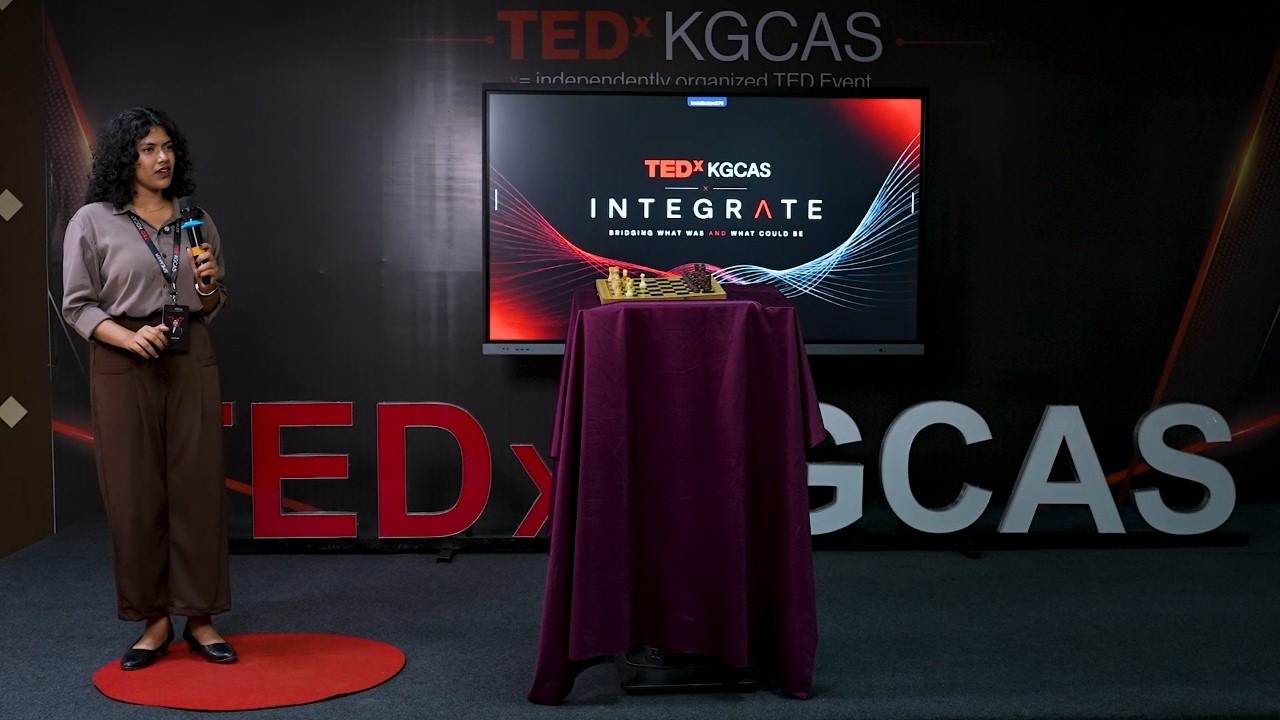
Right Mind, Wrong Room | Susenna N | TEDxKGCAS
Keywords
Summary
162 words
Critical Evaluation
Value of the Information & Strength of the Argument
The talk offers a relatable personal anecdote that illustrates the importance of context-dependent behavior and cognitive flexibility. However, the argumentation is purely anecdotal and lacks scientific backing. The speaker does not provide any empirical evidence, psychological theories, or research to support her claims about mindset adaptation. The narrative is engaging but remains at the level of personal opinion and reflection, with no attempt to generalize or validate the concept beyond her own experience. The logical flow is clear, but the depth of analysis is limited.
Scientific Rigor, Source Quality, Title Accuracy
The talk is a personal narrative with no citations or references to scientific literature. The only source mentioned is the TEDx platform itself. The title ‘Right Mind, Wrong Room’ is catchy and accurately reflects the central theme, but it is not backed by rigorous scientific exploration. The content is more of a motivational speech than a scientific presentation. The lack of sources and empirical data significantly reduces the scientific rigor. The title is appropriate but does not promise more than what is delivered, which is a personal story with a universal lesson.
192 words
Title / Content Match
The title accurately reflects the core message about having the right mindset but being in the wrong environment, though it is more metaphorical than descriptive.
Quality & Reliability
5/10
Personal anecdotal narrative with no empirical evidence, scientific references, or expert validation. The talk is a subjective reflection on mindset adaptation, lacking methodological rigor.
Key Moments
Markers derived by PSI from the transcript: the creator did not define chapters.
- Introduction with the frog metaphor, illustrating adaptation to different environments.
- Speaker introduces her dual training in yoga and chess.
- Describes the chess match and the subsequent struggle to transition to yoga.
- Realization that her mind was still replaying the chess match during yoga.
- Reflects on her father's advice and its initial dismissal.
- Connects her past experience to her current roles as student, speaker, and chess captain.
- Concludes with the frog metaphor and the message that there is nothing wrong with her mind.
Cited Sources
- TEDx Program — Mentioned in the description as the organizing body for the talk.
Contribution & Novelties
The talk offers a personal perspective on cognitive flexibility and context-dependent behavior, but it does not introduce new scientific concepts. Its novelty lies in the relatable narrative and the metaphor of the frog, which may resonate with audiences. However, the lack of empirical grounding limits its contribution to the field.
Pour aller plus loin :
- Cognitive Flexibility — Relevant to the concept of switching mindsets between different contexts.
- Mindfulness — Discusses the practice of being present, which contrasts with the analytical mindset described.
- Adaptive Behavior — Related to the idea of adjusting behavior to environmental demands.
96 words
Radar Profile
The radar profile shows low scores across all dimensions, reflecting the talk's anecdotal nature and lack of scientific depth. The highest score is in 'qualite_information' (4), but it remains low due to the absence of evidence. The talk is more inspirational than informative.