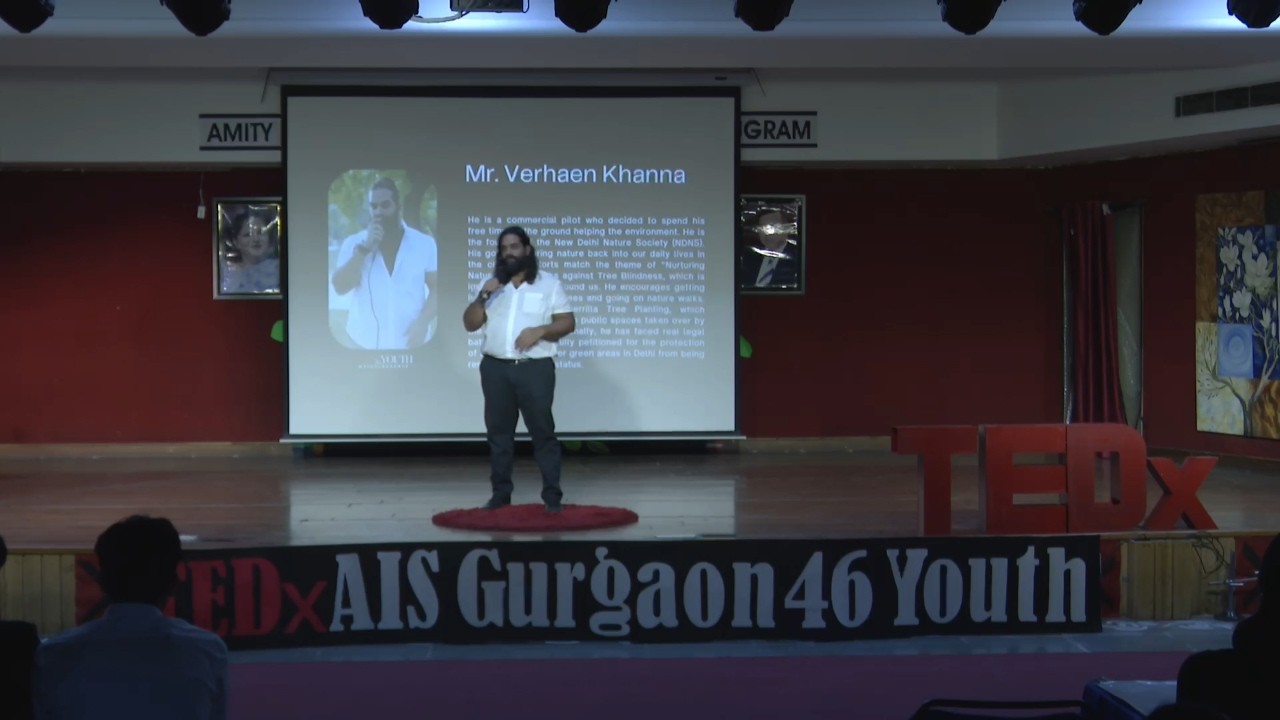
Nurturing Nature | Verhaen Khanna | TEDxAIS Gurgaon 46 Youth
Keywords
Summary
159 words
Critical Evaluation
Value of the Information & Strength of the Argument
The talk’s value lies in its practical, experiential approach to environmentalism, offering concrete examples of activities like plogging and nature walks. However, the argumentation is largely anecdotal and relies on emotional appeal rather than scientific evidence. The speaker’s claims, such as the health benefits of nature connection and the rate of tree felling, are presented without supporting data. The narrative is coherent, moving from problem identification (’tree blindness’) to proposed solutions (experiential engagement, legal action), but it lacks depth in analyzing the systemic or policy-level challenges.
Scientific Rigor, Source Quality, Title Accuracy
The talk demonstrates low scientific rigor, with no citations of academic studies or official reports. The speaker references ‘scientifically documented’ nature of ’tree blindness’ but provides no sources. The only external link in the description is to the general TEDx website. The title accurately reflects the content, which is a call to action for nurturing nature through personal connection. The speaker’s credibility is based on his practical experience as an activist, not on formal scientific expertise.
177 words
Title / Content Match
The title 'Nurturing Nature' accurately reflects the talk's central theme of fostering a personal connection with nature to drive conservation efforts.
Quality & Reliability
5/10
The talk is a personal testimony and advocacy piece from an NGO founder. It lacks verifiable data, scientific citations, or references to specific studies. Claims about health impacts and tree felling rates are anecdotal or based on unverified reports. The speaker's expertise is practical, not academic, and the content is largely motivational.
Key Moments
Markers derived by PSI from the transcript: the creator did not define chapters.
- Introduction of the speaker and his NGO, the New Delhi Nature Society.
- Introduction of the concept of 'tree blindness' and its symptoms in urban environments.
- Proposal of experiential cures for 'tree blindness', including tree climbing and hugging.
- Discussion on legal aspects of tree protection, including fines for nailing trees and cementing around them.
- Personal story about the realization that he must be the one to save trees, leading to his activism.
- Mention of firefly walks and the need to protect their habitats from degradation.
- Description of plogging activities during nature walks to clean up plastic waste.
- Call to action for individuals to use their skills for environmental protection and to start making small changes.
Cited Sources
- TEDx Program — General information about the TEDx event format, mentioned in the video description.
Concurring Sources
- Biophilia hypothesis — Supports the idea that humans have an innate connection to nature, which the speaker advocates for.
- Attention restoration theory — Provides a scientific basis for the benefits of nature exposure mentioned in the talk.
Contribution & Novelties
The talk’s primary contribution is its focus on ’tree blindness’ as a psychological barrier to environmental action, and its advocacy for experiential, hands-on methods to overcome it. It presents a grassroots, NGO-led perspective on urban conservation in Delhi, highlighting specific local challenges and actions.
Pour aller plus loin :
- Biophilia hypothesis — The idea that humans have an innate tendency to seek connections with nature, which underpins the talk’s premise.
- Attention restoration theory — A psychological framework suggesting that nature can restore cognitive function, supporting the speaker’s claims about the benefits of nature connection.
- Urban forestry — The management of trees in urban environments, directly relevant to the talk’s focus on city trees and their protection.
116 words
Radar Profile
The radar profile shows a talk that is low on technical depth and information quality, but slightly higher on the quantity of information and overall reliability, reflecting its anecdotal and motivational nature. The scores suggest a presentation that is more about personal experience and calls to action than about rigorous scientific analysis.