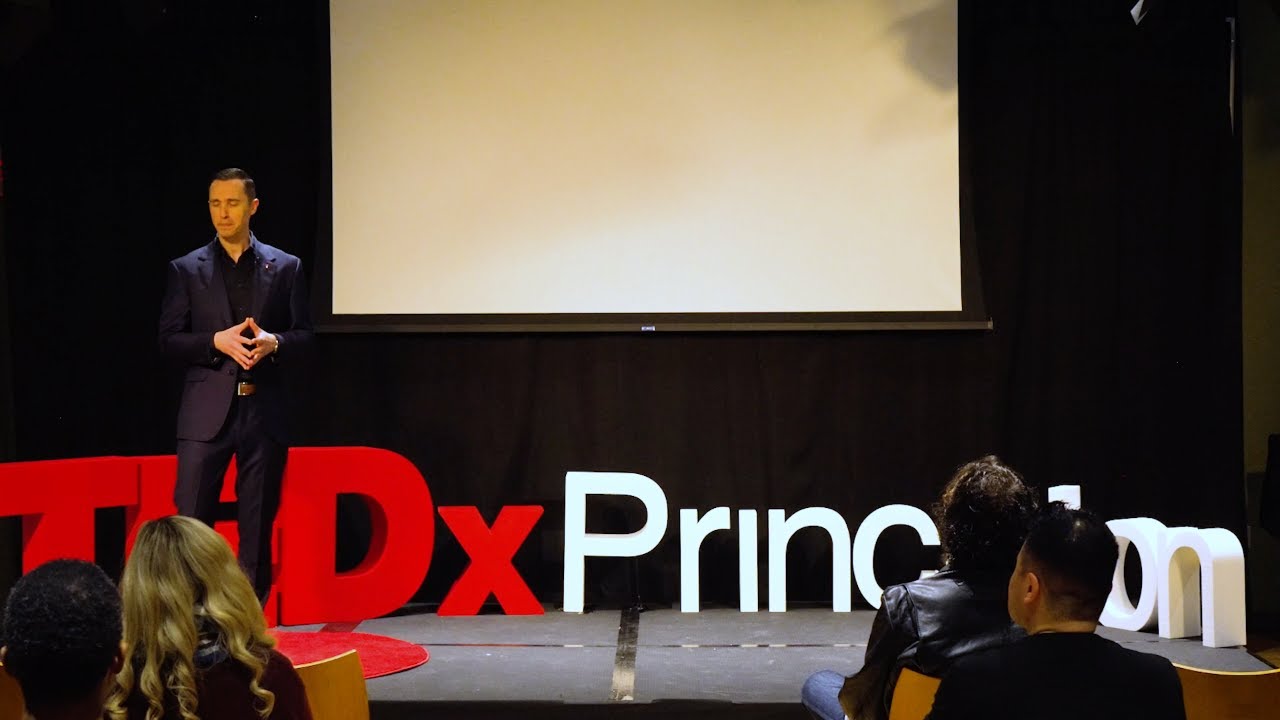
Teams Need Leadership, Not Leaders | Michael Morand | TEDxPrinceton
Keywords
Summary
132 words
Critical Evaluation
The talk presents a compelling and well-articulated argument for shifting from leader-centric to leadership-centric team dynamics. Morand’s personal anecdotes from military and corporate contexts lend authenticity and practical grounding. The reference to established research (MIT, Carnegie Mellon, Google) adds credibility, though specific studies are not cited, limiting the ability to verify claims. The argument is logically structured, moving from personal experience to broader research and practical implications. However, the talk remains at a conceptual level, lacking concrete implementation strategies or potential challenges. The emphasis on psychological safety aligns with current organizational psychology literature, but the presentation does not delve into nuances or counterarguments. The title accurately reflects the content, and the message is relevant for modern workplaces. Overall, the talk is insightful and persuasive, but its scientific rigor is moderate due to anecdotal evidence and lack of detailed citations.
139 words
Title / Content Match
The title accurately reflects the core message: the distinction between leadership as a collective capacity and individual leaders.
Quality & Reliability
7/10
The talk is based on the speaker's personal experience and references to academic studies (MIT, Carnegie Mellon, Google) but lacks specific citations or verifiable data. The arguments are coherent and align with established research on psychological safety and shared leadership, but the presentation is anecdotal and lacks rigorous scientific detail.
Key Moments
Markers derived by PSI from the transcript: the creator did not define chapters.
- Introduction: Morand shares his personal struggle with wanting to be a leader.
- Definition of leadership as an action, not a person.
- Afghanistan deployment story illustrating distributed leadership in crisis.
- Johnson & Johnson gene therapy team example of shared leadership.
- Research findings: MIT, Carnegie Mellon, Google on psychological safety.
- Personal transformation: letting go of ego and fostering team leadership.
- Conclusion: Build teams that don't need heroes.
Cited Sources
- TEDx Talks — Official TEDx page providing information about the TEDx format and possibly related talks.
Concurring Sources
- Psychological safety — Wikipedia article on psychological safety, a key concept in the talk.
- Shared leadership — Wikipedia article on shared leadership, aligning with the talk's thesis.
Contribution & Novelties
The talk offers a fresh perspective on leadership by emphasizing the collective nature of leadership actions rather than individual traits. It synthesizes personal experience with research on psychological safety and shared leadership, providing a compelling narrative for organizational change.
Pour aller plus loin :
- Psychological safety — Foundational concept for team performance.
- Shared leadership — Academic concept of distributed leadership.
- Google’s Project Aristotle — Research on team effectiveness and psychological safety.
71 words
Radar Profile
The radar profile shows high scores in quality of information and reliability, moderate in quantity, and lower in technical level, reflecting a well-argued but non-technical presentation.
💬 Très positif. Sur les 30 commentaires analysés, la grande majorité exprime un accord enthousiaste avec le message, soulignant la pertinence de la distinction entre leadership et leaders, et partageant des expériences personnelles qui valident les propos.