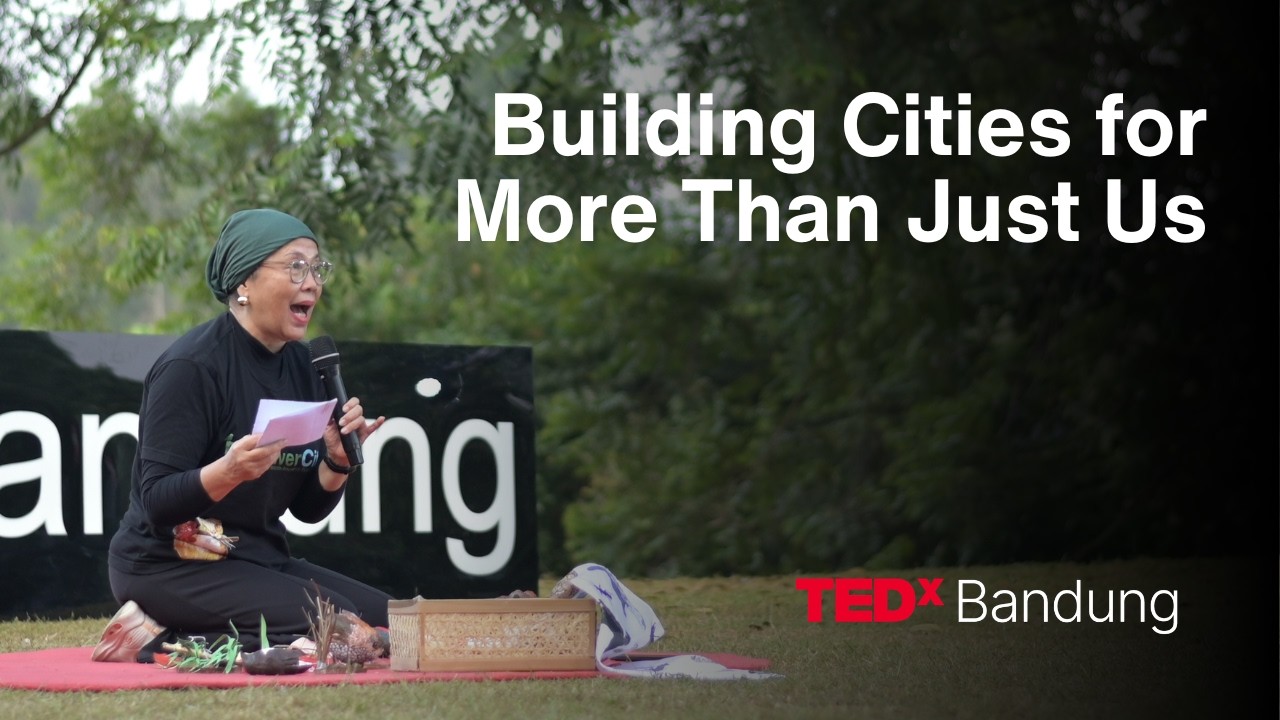
Biodiver(c)ity, Rediscovering Nature in Our Cities
Keywords
Summary
180 words
Critical Evaluation
Value of the Information & Strength of the Argument
The talk provides valuable insights into practical urban biodiversity conservation, grounded in a year of hands-on projects. The argumentation is persuasive, using relatable examples (e.g., sukun tree yield, squirrel crossings) and concrete outcomes (e.g., 19 Miyawaki forests, 447 data points). The emphasis on citizen science and open data is well-supported by the described initiatives. However, the talk lacks quantitative evidence for some claims (e.g., sukun yield) and does not provide comparative data or rigorous evaluation of the projects’ ecological impact. The argument for the Miyawaki method is presented without discussing potential limitations or alternatives.
Scientific Rigor, Source Quality, Title Accuracy
The talk is based on the speaker’s own experience and community projects, but it does not cite external scientific sources or peer-reviewed literature. The only link provided is to TEDx, which is not a scientific reference. The title is clever and accurately reflects the content, focusing on urban biodiversity. The talk is more of a call to action than a rigorous scientific presentation, but it does mention specific tools (iNaturalist) and methods (Miyawaki) that are verifiable. The lack of formal citations reduces the scientific rigor, but the practical examples and community engagement add credibility.
203 words
Title / Content Match
The title cleverly plays on 'biodiversity' and 'city', and the content directly addresses urban biodiversity in Bandung, matching the title well.
Quality & Reliability
7/10
The talk is based on a year of field observations and citizen science projects, with concrete examples and data (e.g., 447 data points in 2 hours). However, it lacks formal citations and peer-reviewed references, and some claims (e.g., sukun yield) are presented without sources.
Key Moments
Markers derived by PSI from the transcript: the creator did not define chapters.
- Introduction of the five taxa: plants, insects, birds, amphibians, reptiles as bioindicators.
- Discussion of Bandung's Garden City concept and its current population pressure.
- Introduction of citizen science and the use of iNaturalist for documenting urban biodiversity.
- Description of community activities: taxa exploration walks and data collection with schools.
- Introduction of the 'talun baladahan mikro' concept and Miyawaki method for creating mini forests.
- Details on the 19 Miyawaki forest sites in Bandung, including one at the city hall.
- Restoration of Ranca Bolang retention pond to support the blekok bird and other species.
- Partnerships with schools and community groups, emphasizing intergenerational learning.
- Conclusion: call for knowledge-based, collaborative action to build resilient cities.
Cited Sources
- TEDx Program — Mentioned as the organizing body for the talk.
Concurring Sources
- Miyawaki method — Supports the talk's description of the Miyawaki method for creating dense native forests.
- iNaturalist — Aligns with the talk's promotion of citizen science for biodiversity documentation.
Dissenting Sources
- No discordant sources found — The talk does not present conflicting information, but lacks external scientific validation.
Contribution & Novelties
The talk contributes a practical, community-based approach to urban biodiversity conservation in a Southeast Asian context, emphasizing citizen science and low-cost, replicable methods like the Miyawaki technique. It highlights the importance of local knowledge and cross-sector collaboration, offering a model that could be adapted to other cities.
Pour aller plus loin :
- Miyawaki method — A reforestation technique that creates dense, native forests, relevant to the talk’s mini-forest initiative.
- iNaturalist — A citizen science platform used to document biodiversity, directly mentioned in the talk.
- Urban biodiversity — Overview of biodiversity in urban environments, providing context for the talk’s themes.
- Garden city movement — Historical urban planning concept referenced in the talk regarding Bandung’s design.
114 words
Radar Profile
The radar profile shows moderate to high scores in information quantity and quality, with lower technical depth and reliability. This reflects a talk that is informative and engaging but not deeply technical or heavily sourced, suitable for a general audience interested in urban ecology.