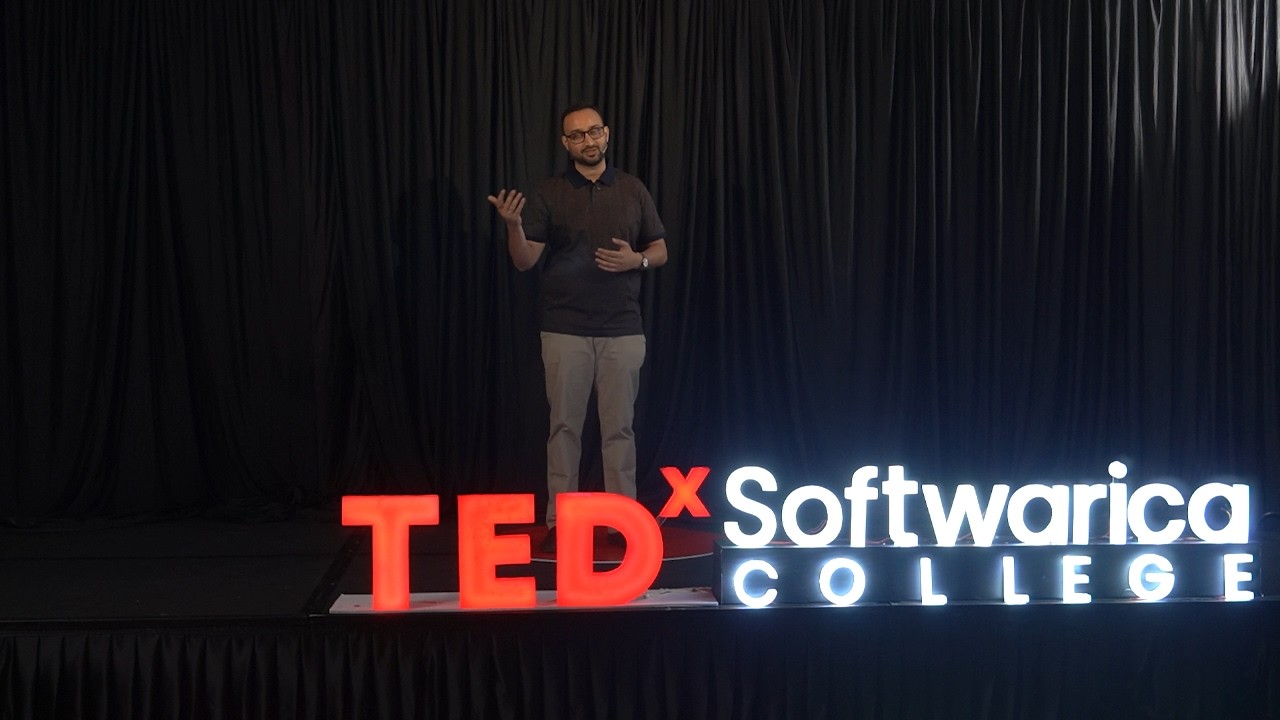
The key to digital transformation | Amit Agrawal | TEDxSoftwarica College
Keywords
Summary
180 words
Critical Evaluation
The talk offers a compelling narrative about digital transformation in an emerging market, drawing on the speaker’s extensive experience in Nepal’s fintech sector. The strength of the talk lies in its practical examples, such as the SMS-based services for vegetable prices and labor permit status, which vividly illustrate how simple technologies can have profound impacts on people’s lives. The distinction between digitization, digitalization, and digital transformation is clearly articulated and useful for framing the discussion. However, the talk lacks rigorous scientific evidence or references to external studies, relying primarily on anecdotal evidence and personal experience. While this is common for TEDx talks, it limits the generalizability and verifiability of the claims. The speaker’s argument that digital transformation is about solving problems rather than adopting high-tech solutions is persuasive and aligns with broader discussions in development economics, but it could be strengthened by referencing relevant literature or data. The talk also touches on the potential of AI, but this section is brief and somewhat superficial, lacking concrete examples or guidance. Overall, the talk is inspiring and informative for a general audience, but it does not provide deep analytical depth or new academic insights. The title accurately reflects the content, and the talk is well-structured and engaging. The audience’s comments, if any, were not provided, so no analysis of public reception is possible.
221 words
Title / Content Match
The title accurately reflects the content, which focuses on the key to digital transformation as solving real-world problems rather than adopting high-tech solutions.
Quality & Reliability
6/10
The talk is based on personal experience and anecdotal evidence, with no citations or references to external studies. It provides practical insights but lacks rigorous scientific backing.
Key Moments
Markers derived by PSI from the transcript: the creator did not define chapters.
- Introduction: Digital transformation is not about high-tech, but about positive change in people's lives.
- Explains the difference between digitization, digitalization, and digital transformation.
- Personal journey: From dial-up internet to WhatsApp, illustrating digital transformation over time.
- Sparrow SMS examples: vegetable prices and labor permit status services, showing impact on farmers and migrant workers.
- SLC results via SMS: reducing wait times and helping students.
- Evolution of Khalti: from bill payments to QR code payments, transforming daily transactions.
- Potential of NID: connecting with health records, banking, and enabling collateral-free lending.
- Call to action: focus on solving local problems and use AI as an assistant to drive transformation.
Cited Sources
- TEDx Program — Mentioned in the description as the organizing body for TEDx events.
Concurring Sources
- Digital transformation - Wikipedia — Provides a general framework that aligns with the speaker's distinction between digitization, digitalization, and transformation.
Contribution & Novelties
The talk provides a unique perspective on digital transformation from the context of an emerging market, emphasizing the importance of simple, problem-solving solutions over high-tech adoption. It offers practical examples from Nepal’s fintech ecosystem, such as SMS-based services and QR payments, which are often overlooked in mainstream discussions. The speaker’s call to focus on local problems and leverage AI as a tool for transformation is a valuable takeaway for entrepreneurs and students.
Pour aller plus loin :
- Digital transformation - Wikipedia — Provides a comprehensive overview of digital transformation concepts and frameworks.
- Financial inclusion - World Bank — Discusses the role of digital payments in promoting financial inclusion, relevant to the talk’s themes.
- National ID systems and development - World Bank — Explores the potential of national ID systems in enabling access to services, aligning with the speaker’s vision for NID.
141 words
Radar Profile
The radar profile shows moderate scores across all dimensions, with the highest in quantity of information and the lowest in technical level. This reflects a talk that is informative but not deeply technical, focusing on practical examples rather than advanced concepts.