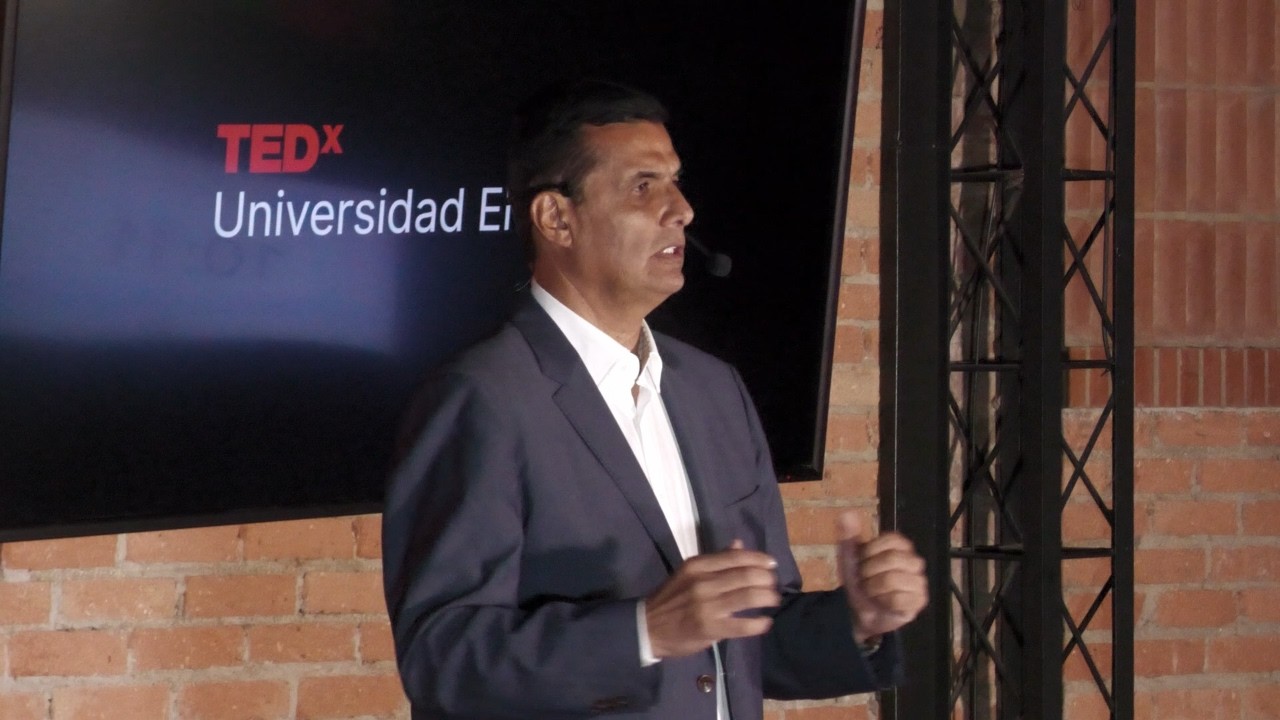
Bioética y crisis humanitarias | Hernando Augusto Clavijo | TEDxUniversidad El Bosque
Keywords
Summary
200 words
Critical Evaluation
The talk provides a thoughtful and personal perspective on bioethical issues during humanitarian crises, particularly the COVID-19 pandemic. The speaker’s credentials lend credibility, and his use of personal anecdotes humanizes the subject. He effectively introduces key bioethical concepts such as vulnerability, solidarity, and posthumous dignity, and connects them to real-world examples. However, the talk is more of an opinion piece than a rigorous scientific analysis. While he cites WHO statistics, he does not provide specific sources for many claims, such as the 80% misinformation statistic or the vaccination inequities. The reference to Albert Camus’ ‘The Plague’ is apt but not a scientific source. The argumentation is coherent but relies heavily on emotional appeal and personal experience. The discussion of AI in healthcare is brief and lacks depth, but it raises an important ethical question. The talk would benefit from more concrete data and citations to strengthen its scientific rigor. Overall, it is a valuable contribution to public discourse on bioethics, but it is not a systematic review or original research. The title accurately reflects the content, and the talk is well-structured and engaging. The speaker’s call for deliberation and solidarity is timely and relevant.
194 words
Title / Content Match
The title accurately reflects the content, which discusses bioethical perspectives on humanitarian crises, particularly the COVID-19 pandemic.
Quality & Reliability
7/10
The speaker is a PhD in bioethics and professor, providing expert opinion grounded in experience during the COVID-19 pandemic. He cites WHO statistics and references Albert Camus' 'The Plague', but lacks detailed citations for many claims. The talk is a personal reflection rather than a systematic review, but it is coherent and well-structured.
Key Moments
Markers derived by PSI from the transcript: the creator did not define chapters.
- Introduction and thought experiment about a new virus outbreak
- Discussion of vulnerability and layers of vulnerability
- Definition of bioethics and its role in pluralistic societies
- Personal anecdote about donating masks and healthcare worker vulnerability
- WHO statistics on healthcare worker deaths and vaccination inequities
- Discrimination and stigmatization of healthcare workers; reference to Camus' 'The Plague'
- Discussion of posthumous dignity and mishandling of corpses
- Infodemic and misinformation; role of AI in healthcare decisions
- Solidarity examples and closing quote from Camus
Cited Sources
- TEDx Talks — The talk was given at a TEDx event, and this link provides general information about TEDx.
Concurring Sources
- World Health Organization — WHO statistics on healthcare worker deaths and vaccination inequities are referenced.
Contribution & Novelties
The talk offers a personal and reflective perspective on bioethical challenges during the COVID-19 pandemic, emphasizing vulnerability, solidarity, and the ethical treatment of healthcare workers. It introduces concepts like ’layers of vulnerability’ and ‘posthumous dignity’ to a general audience. The discussion on AI in life-or-death decisions is timely.
Pour aller plus loin :
- Bioethics — Overview of the field.
- Vulnerability in bioethics — General concept.
- COVID-19 pandemic — Context.
- Albert Camus’ The Plague — Literary reference.
- Infodemic — Definition and relevance.
81 words
Radar Profile
The radar profile shows balanced scores across information quantity, quality, technical level, and reliability, with a slight emphasis on quality and reliability. This suggests a well-rounded but not deeply technical talk.