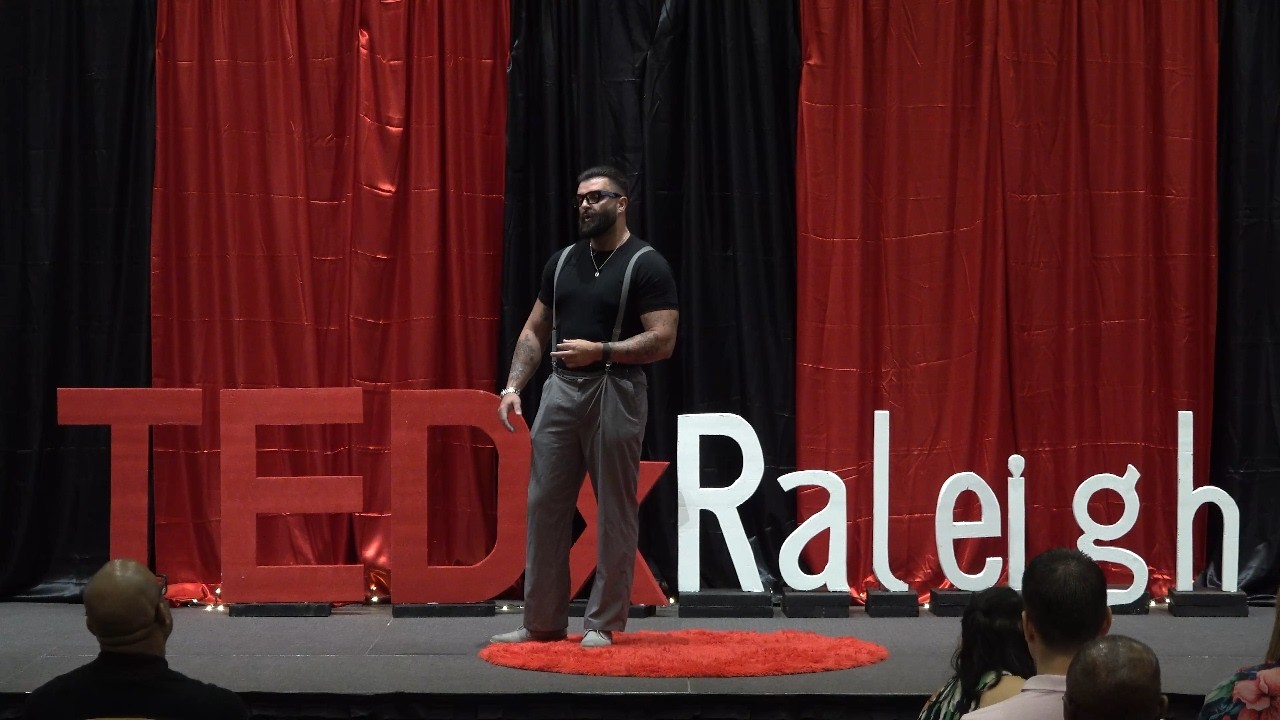
Stop Making 5 Year Plans | Anthony Rapillo | TEDxRaleigh
Keywords
Summary
130 words
Critical Evaluation
Value of the Information & Strength of the Argument
The talk offers a compelling and accessible argument for focusing on short-term goals. The speaker’s personal anecdotes, such as his mother’s influence and his own entrepreneurial struggles, make the message relatable. He effectively uses the marathon analogy to illustrate the difference between outcome-focused and process-focused thinking. However, the argumentation is largely anecdotal and relies on a simplified interpretation of psychological research. The speaker does not delve into potential drawbacks or nuances, such as the risk of losing sight of long-term vision or the need for flexibility. The scientific references are mentioned but not deeply explored, and the speaker’s interpretation of the ‘progress principle’ is presented as universally applicable without addressing individual differences or contextual factors.
Scientific Rigor, Source Quality, Title Accuracy
The talk cites two studies: a Harvard Business School analysis of diary entries and a 1981 study by Bandura and Schunk. These references are relevant and lend some credibility, but the speaker provides limited details, making it difficult to assess their exact methodology and findings. The title accurately reflects the content, which is a clear and consistent message about prioritizing short-term goals. The talk is a personal opinion piece rather than a rigorous scientific review, and the speaker’s authority is based on his entrepreneurial experience rather than academic expertise. The description includes a link to TEDx, which is a reputable platform, but no direct sources are provided in the description.
240 words
Title / Content Match
The title accurately reflects the core message: prioritizing short-term goals over long-term plans.
Quality & Reliability
6/10
The talk is a personal narrative supported by references to a Harvard Business School study and a 1981 study by Bandura and Schunk, but details are imprecise and not fully verifiable from the talk alone. The speaker's expertise is entrepreneurial rather than academic.
Key Moments
Markers derived by PSI from the transcript: the creator did not define chapters.
- Introduction: personal story about his mother and the lesson of winning.
- Discussion of the 'progress principle' from Harvard Business School research.
- Explanation of dopamine release and reinforcement of small wins.
- Marathon analogy contrasting long-term and short-term goal focus.
- Reference to Bandura and Schunk study on goal structures in children.
- Personal reflection on preparing for TED talk and the importance of celebrating small steps.
Cited Sources
- TEDx Program — The talk was given at a TEDx event, and this link provides information about the TEDx program.
Concurring Sources
- The Progress Principle — This Harvard Business Review article by Teresa Amabile and Steven Kramer discusses the research on the progress principle, which aligns with the talk's central idea.
Dissenting Sources
- The Dark Side of Goal Setting — This article discusses potential negative consequences of goal setting, such as unethical behavior and reduced intrinsic motivation, which contrasts with the talk's unqualified endorsement of goal setting.
Contribution & Novelties
The talk provides a personal and motivational perspective on goal setting, emphasizing the psychological benefits of short-term wins. It synthesizes existing research on motivation and habit formation into a practical framework. The speaker’s entrepreneurial background adds a real-world application angle.
Pour aller plus loin :
- Progress Principle — Wikipedia article on the concept from the Harvard Business Review.
- Goal-setting theory — Wikipedia article on Locke and Latham’s goal-setting theory, which provides a broader academic context.
- Dopamine and reward system — Wikipedia article on the neuroscience of reward, relevant to the talk’s discussion of dopamine.
94 words
Radar Profile
The radar profile shows a balanced but moderate performance across all dimensions, with slightly higher scores in information quantity and quality, and lower in technical level. This suggests the talk is informative and credible but not deeply technical or novel.