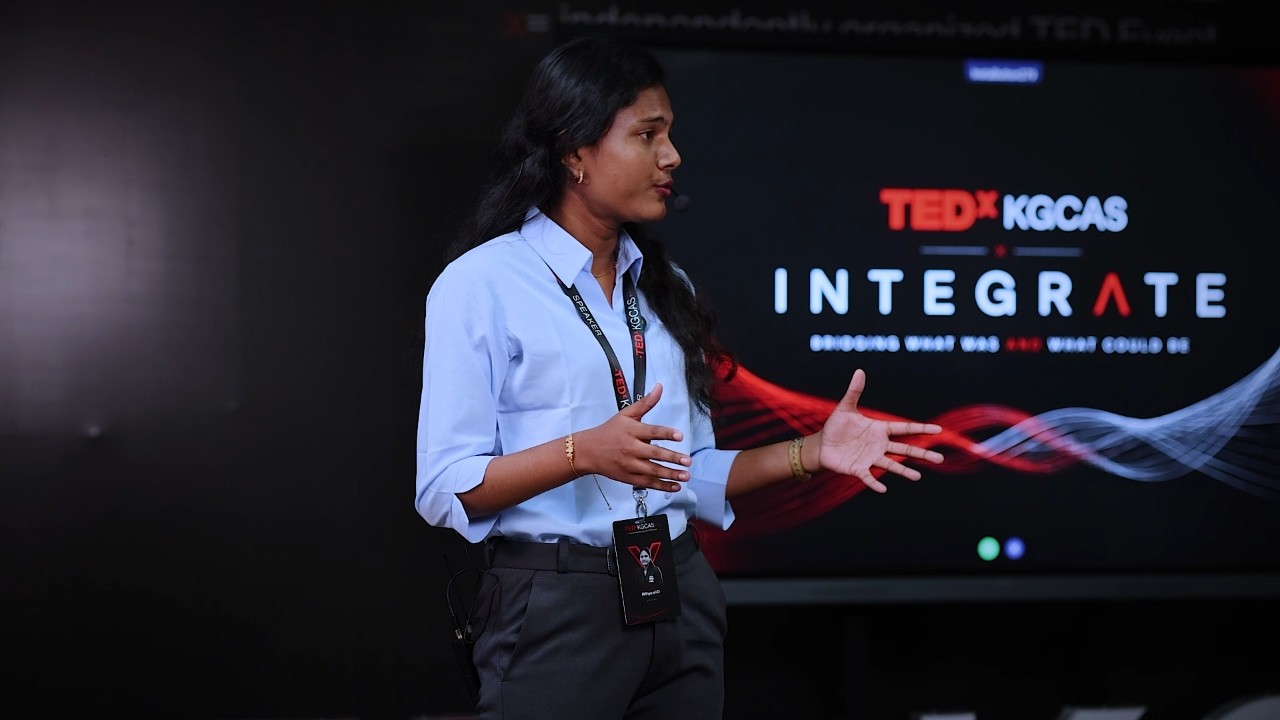
Care, served on a plate | Nithyasri D | TEDxKGCAS
Keywords
Summary
164 words
Critical Evaluation
Value of the Information & Strength of the Argument
The talk’s value lies in its emotional and cultural perspective on traditional food practices, highlighting their role in care during key life stages. The argumentation is primarily anecdotal, relying on personal experiences and a few scientific references. The speaker does not provide a balanced view of the scientific evidence, nor does she address potential limitations or contradictions. The narrative is compelling but lacks rigorous analysis, making it more of a personal testimony than a scientific review.
Scientific Rigor, Source Quality, Title Accuracy
The scientific references are mentioned but not detailed, with no specific citations or links provided. The speaker cites a 2026 review and a 2024 meta-analysis but does not give enough information to verify these claims. The title accurately reflects the content, which is a personal reflection on care through food. The talk is not a rigorous scientific presentation but rather an inspirational narrative, which is typical for TEDx talks.
160 words
Title / Content Match
The title accurately reflects the content, which focuses on traditional food as a form of care during menstruation and postpartum.
Quality & Reliability
6/10
Personal narrative with some scientific references (2026 review, 2024 meta-analysis) but lacks detailed citations and rigorous methodology. The speaker is a student, not an expert in nutrition, and the claims are presented anecdotally.
Key Moments
Markers derived by PSI from the transcript: the creator did not define chapters.
- Introduction: The speaker asks the audience to recall a time when care was given before it was needed.
- Personal story: First menstruation and the traditional foods prepared by family.
- Reflection on the nutritional value of traditional foods like black gram and finger millet.
- Aunt's postpartum experience and the use of moringa leaves.
- Citing a 2026 review on moringa and milk production, and a 2024 meta-analysis on anemia in Indian girls.
- Conclusion: Encouraging the audience to recognize and appreciate traditional care practices.
Cited Sources
- TEDx Program — The talk was given at a TEDx event, and this link provides information about the TEDx program.
Concurring Sources
- Moringa oleifera — Moringa leaves are rich in iron, calcium, and vitamins, supporting the speaker's claims about their nutritional value.
Dissenting Sources
- No specific discordant sources found — The talk does not present conflicting views, but the lack of detailed citations makes it difficult to assess scientific consensus.
Contribution & Novelties
The talk offers a personal and cultural perspective on traditional food practices as a form of care, which is often overlooked in scientific discourse. It bridges personal experience with nutritional science, highlighting the importance of recognizing traditional knowledge.
Pour aller plus loin :
- Moringa oleifera — A plant rich in nutrients, often used in traditional medicine and postpartum care.
- Iron deficiency anemia — A common condition, especially among adolescent girls in India, as mentioned in the talk.
- Traditional food systems — The role of traditional foods in cultural identity and nutrition.
91 words
Radar Profile
The radar profile shows moderate scores in information quantity and quality, with a lower technical level and reliability, reflecting the talk's personal and anecdotal nature rather than a rigorous scientific presentation.
💬 No comments were provided for analysis.