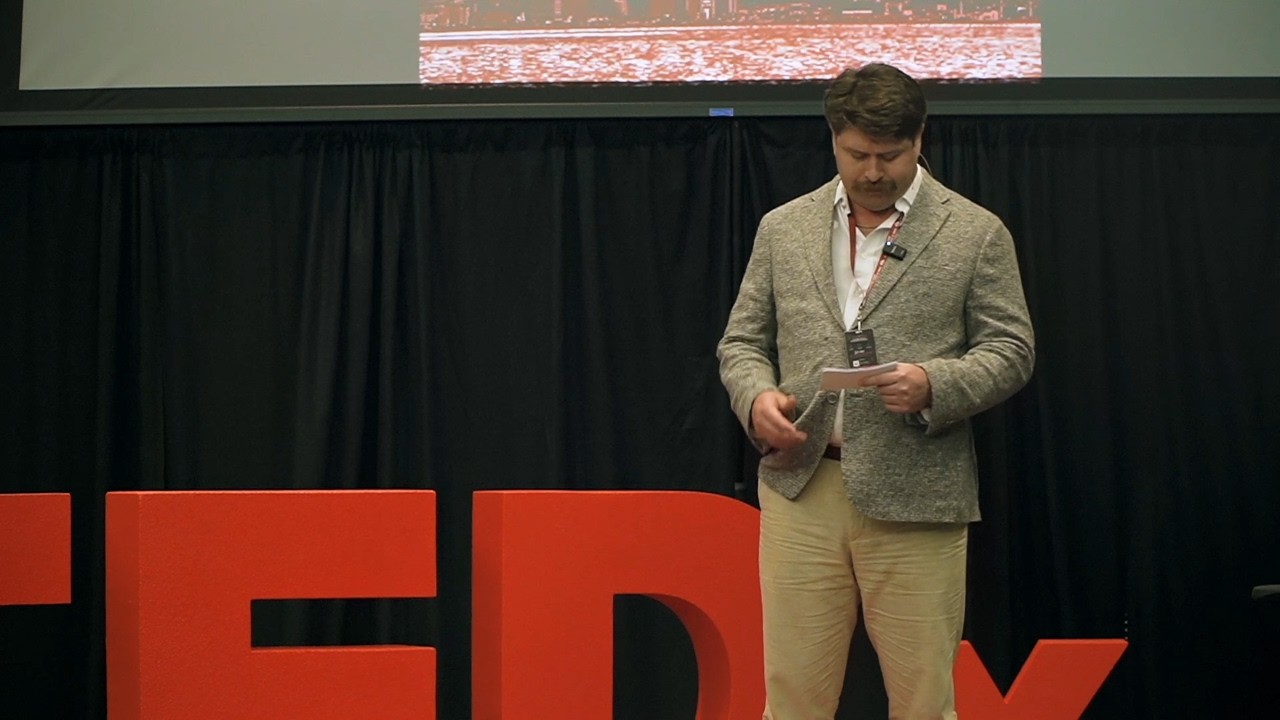
Skepticism vs. Cynicism | Simon Alviar | TEDxSST Corpus Christi Youth
Keywords
Summary
124 words
Critical Evaluation
The talk provides a clear and accessible introduction to the conceptual difference between skepticism and cynicism, using a memorable narrative to illustrate the core ideas. The speaker effectively contrasts the two attitudes, highlighting that cynicism often stems from past disappointments and leads to a defensive, disengaged stance, while skepticism involves a balanced, inquisitive approach. The examples from social, political, scientific, and personal domains help ground the abstract concepts in relatable scenarios. However, the argumentation relies heavily on anecdotal evidence and personal opinion, lacking empirical support or references to psychological or philosophical literature. The speaker does not cite any studies, experts, or formal definitions, which weakens the scientific rigor of the presentation. The distinction between skepticism and cynicism is presented as binary, but in reality, these attitudes exist on a spectrum, and the talk oversimplifies the nuances. Additionally, the claim that ’the most disciplined expression of skepticism is the scientific method’ is a strong assertion that is not elaborated or justified. The talk’s strength lies in its motivational and rhetorical appeal, but it falls short as a rigorous scientific analysis. The title accurately reflects the content, and the talk is well-structured, but the lack of sources and empirical grounding limits its credibility. Overall, it serves as an engaging thought piece rather than a scholarly examination.
214 words
Title / Content Match
The title accurately reflects the content, which directly compares skepticism and cynicism throughout the talk.
Quality & Reliability
6/10
The talk presents a clear conceptual distinction between skepticism and cynicism, supported by anecdotal examples and a narrative framework. However, it lacks empirical evidence, citations, or references to scientific literature, relying primarily on personal opinion and illustrative stories. The speaker's credentials as an engineer and bookworm are mentioned, but no formal expertise in philosophy or psychology is established.
Key Moments
Markers derived by PSI from the transcript: the creator did not define chapters.
- Introduction: Three men encounter a berry bush, illustrating different responses to uncertainty.
- The tribes formed by each man: the first tribe moves fast but repeats mistakes, the second avoids risk and becomes irrelevant, the third tests and learns.
- Definition of skepticism vs. cynicism: cynicism avoids risk, skepticism seeks to understand it.
- Application to social interactions: cynicism prevents deception but also prevents being known.
- Political skepticism vs. cynicism: cynicism leads to apathy, skepticism requires work to maintain engagement.
- Science and AI: cynicism assumes all research is flawed, skepticism uses the scientific method.
- Love and relationships: cynicism protects but creates failure, skepticism embraces vulnerability.
- Conclusion: Urges audience to be skeptics, not cynics, to build the future.
Cited Sources
- TEDx Program — Referenced in the description as the organizing body for TEDx events.
Concurring Sources
- Skepticism (Wikipedia) — General definition and philosophical background of skepticism.
- Cynicism (Wikipedia) — Contemporary understanding of cynicism as a disposition.
Dissenting Sources
- No direct discordant sources found — The talk does not cite specific sources, so no direct contradictions can be identified.
Contribution & Novelties
The talk offers a clear and memorable framework for distinguishing skepticism from cynicism, using a narrative to illustrate the practical implications of each mindset. It emphasizes the importance of active inquiry over passive rejection, which is a valuable perspective for personal and professional development.
Pour aller plus loin :
- Skepticism (Wikipedia) — Provides a comprehensive overview of philosophical skepticism.
- Cynicism (Wikipedia) — Discusses the modern usage of cynicism and its psychological implications.
- Scientific method (Wikipedia) — Explains the systematic approach to inquiry that the speaker references.
86 words
Radar Profile
The radar profile shows moderate scores across all dimensions, with slightly higher quality of information and lower technical level. This indicates a balanced but not deeply technical presentation, suitable for a general audience.
💬 No comments were provided for analysis.