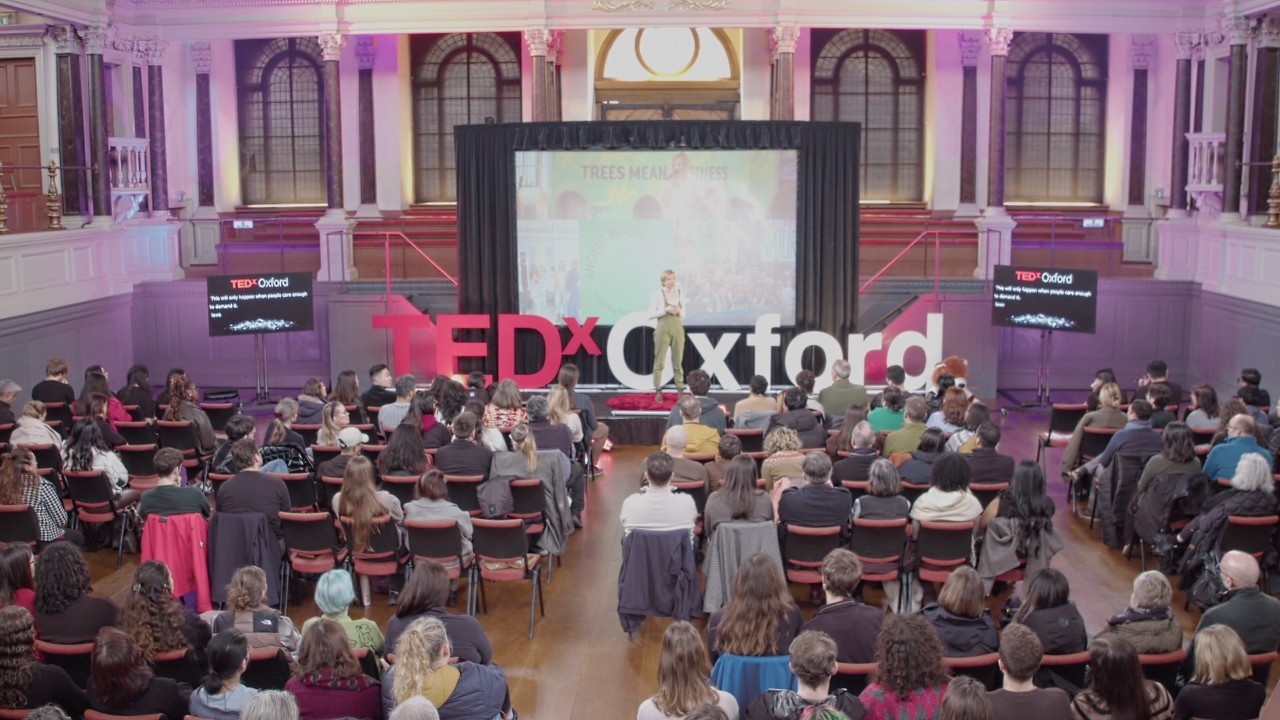
Love, Listen, Protect: The Human-Tree Connection
Keywords
Summary
163 words
Critical Evaluation
Value of the Information & Strength of the Argument
The talk’s value lies in its compelling personal anecdotes and the emotional appeal for woodland conservation. The argumentation is built on a narrative of personal connection leading to collective action, which is persuasive but not deeply evidence-based. The speaker references research on the health benefits of nature and environmental psychology, but does not provide specific studies or data, weakening the scientific foundation. The argument that emotional connection is the missing key to protection is plausible but presented as an assertion rather than a rigorously supported thesis. The talk is more of an inspirational call to action than a scientific analysis.
Scientific Rigor, Source Quality, Title Accuracy
The talk lacks rigorous scientific sourcing; the speaker mentions research findings without citations, and the only provided links are to TEDx guidelines. The title accurately reflects the content, which focuses on the human-tree connection and the need for protection. The talk is based on the speaker’s personal experience and advocacy work, which is transparent but limits its scientific authority. The description includes a note that the talk represents the speaker’s personal views, which is appropriate. Overall, the scientific rigor is moderate, with a clear personal perspective.
201 words
Title / Content Match
The title accurately reflects the talk's focus on the emotional and psychological connection between humans and trees, and the call to protect woodlands.
Quality & Reliability
6/10
The talk is a personal narrative blending anecdotal evidence with some references to environmental psychology and health research, but lacks specific citations or data. The speaker's expertise is in advocacy and youth work, not in scientific research, which limits the scientific rigor.
Key Moments
Markers derived by PSI from the transcript: the creator did not define chapters.
- Introduction: the story of the robin and the forest school, illustrating connection and trust.
- Discussion of trees' benefits: health, flood protection, carbon storage, and emotional healing.
- The Iffley Road beech tree story: community grief and the realization of emotional connection.
- Definition of ancient woodland and its irreplaceable nature, with threats from HS2 and other projects.
- Forest school experiences: Jim's transformation and the police force group's mindfulness activity.
- The founding of Ancient Woodlands UK and the campaign for legal protection, including the Rights of Nature approach.
- The stakeholder consultation and the challenges of youth-led activism.
- Conclusion: invitation to notice, listen, and reconnect with trees.
Cited Sources
- TEDx Content Guidelines — Referenced in the video description as the guidelines for TEDx organizers.
- TEDx Program — Referenced in the video description as the official TEDx page.
Concurring Sources
- TEDx Talks — The platform for the talk, which often features personal perspectives on global issues.
Contribution & Novelties
The talk offers a personal and emotional perspective on woodland conservation, emphasizing the role of human connection in driving policy change. It highlights the underappreciated value of ancient woodlands and the potential of youth-led activism. The speaker’s advocacy for a Rights of Ancient Woodlands Bill is a novel approach that connects local conservation to a global movement.
Pour aller plus loin :
- Rights of Nature — Relevant to the proposed legal framework for ancient woodlands.
- Forest school — Context for the educational approach mentioned.
- Environmental psychology — Supports the claims about human-nature connection.
93 words
Radar Profile
The radar profile shows moderate scores across all dimensions, with a slightly higher score in quality of information due to the coherent narrative and relevant references, but lower in technical level and quantity of information, reflecting the talk's focus on personal experience rather than dense scientific content.