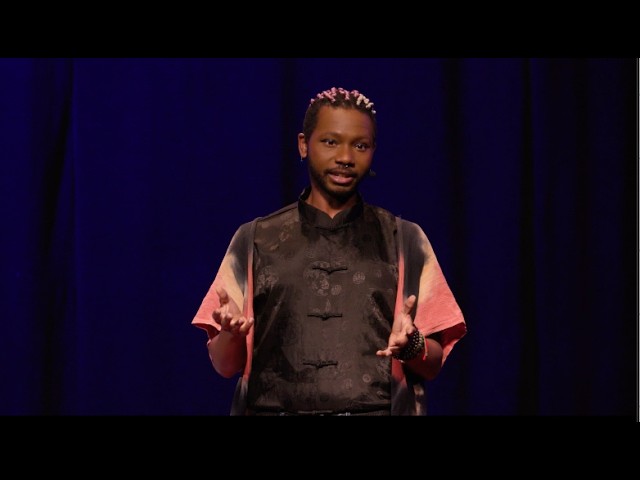
Meditating with Movies: The Scenic Route To Healing | DeVante Love | TEDxTufts
Keywords
Summary
144 words
Critical Evaluation
Value of the Information & Strength of the Argument
The talk offers a novel and accessible framework for integrating mindfulness into everyday media consumption. The argument is built on personal anecdotes and spiritual concepts, which are compelling but not empirically substantiated. The speaker’s credentials in clinical psychology and monastic practice lend some authority, but the lack of scientific evidence or references to research weakens the argument’s rigor. The three-step process is clearly outlined and practical, but its effectiveness is based on subjective experience rather than measurable outcomes.
Scientific Rigor, Source Quality, Title Accuracy
The talk is a personal testimony rather than a scientific presentation. The only sources mentioned are the TEDx content guidelines and the TEDx website, which are not academic references. The speaker references spiritual traditions (Buddhism, Daoism) and psychological concepts (interdependence, soul retrieval) but does not provide citations. The title accurately reflects the content, which is a subjective guide to using movies for healing. The talk includes a disclaimer from TED noting that it represents the speaker’s spiritual views, which is appropriate given the lack of empirical support.
180 words
Title / Content Match
The title accurately reflects the content, which introduces a method of using movies as a meditative tool for healing.
Quality & Reliability
6/10
The talk presents a personal framework for cinema meditation, grounded in the speaker's experience as a lay monk and psychoanalyst. It includes anecdotal evidence and references to spiritual traditions, but lacks empirical research or citations. The TEDx disclaimer notes that the content represents the speaker's spiritual views, not scientifically validated claims.
Key Moments
Markers derived by PSI from the transcript: the creator did not define chapters.
- Introduction: asking audience about movie-going habits and the Nicole Kidman monologue.
- Story of a student using Frankenstein to explore emotional intelligence.
- Introduction of the concept of interdependence and personal background as a lay monk.
- Personal story about Black Panther and embracing queer identity.
- Story about Wonka and soul retrieval, leading to the three-step process.
- Explanation of the three-step process: before, during, and after the movie.
- Writing a reflective letter and closing with the central question.
Cited Sources
- TEDx Content Guidelines — Referenced in the description as a note from TED about the talk's content.
- TEDx Program — Mentioned in the description as the organizing body for TEDx events.
Concurring Sources
- Cinema therapy — Supports the idea that movies can be used therapeutically.
Dissenting Sources
- Empirical evidence for meditation — While meditation has research support, the specific claims about cinema meditation are not empirically validated.
Contribution & Novelties
The talk introduces a unique framework for integrating meditation with movie-watching, which is not commonly discussed in academic literature. It offers a practical, step-by-step method that is accessible to a general audience. The emphasis on interdependence and soul retrieval provides a spiritual dimension that is often absent in mainstream psychology.
Pour aller plus loin :
- Cinema therapy — Overview of the therapeutic use of films.
- Mindfulness-based stress reduction — A structured program that incorporates mindfulness practices.
- Interdependence theory — A social psychology theory relevant to the speaker’s concept of interdependence.
90 words
Radar Profile
The radar profile shows moderate scores across all dimensions, indicating a balanced but not highly rigorous presentation. The talk is strong in providing practical information but weaker in scientific backing and technical depth.