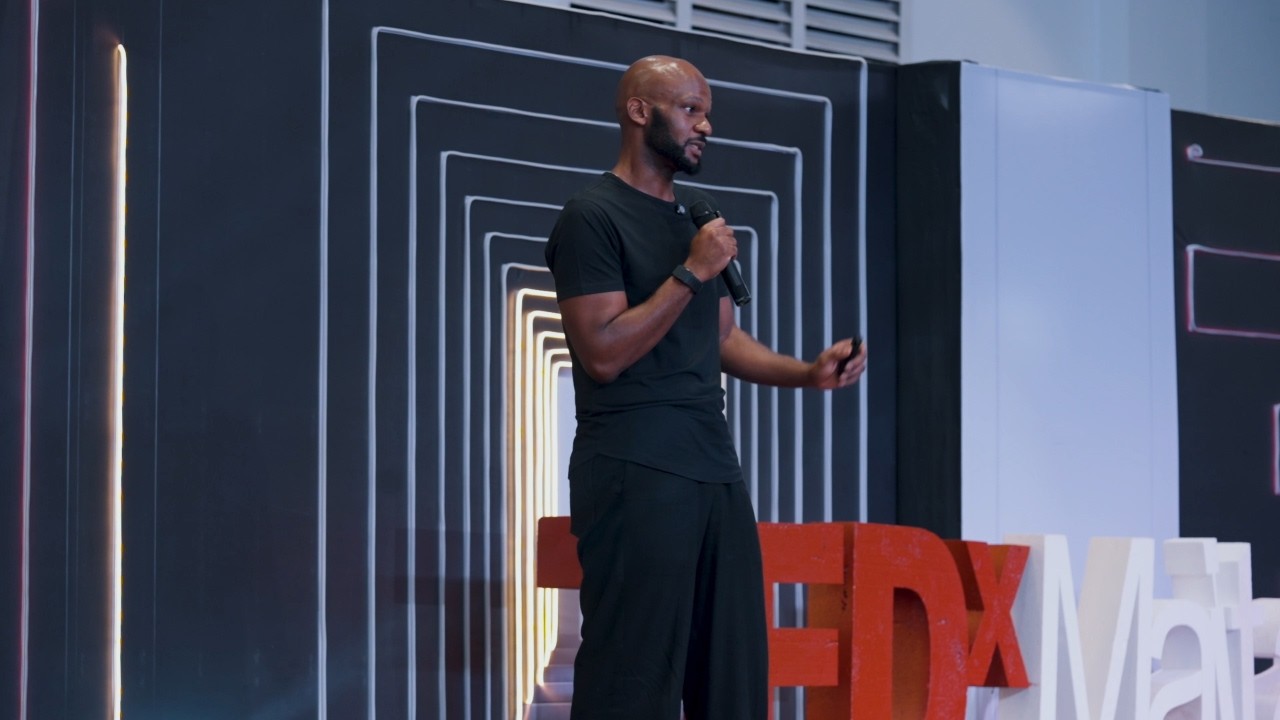
The Question That Can Change Everything | Soji Maurice-Diya | TEDxMaitama
Keywords
Summary
153 words
Critical Evaluation
Value of the Information & Strength of the Argument
The talk’s value lies in its motivational and practical message: questioning assumptions can lead to innovation and personal growth. The speaker uses personal anecdotes and business examples to illustrate his points, making the argument relatable and engaging. However, the argumentation is largely anecdotal and lacks empirical evidence or references to research on curiosity or organizational behavior. The reasoning is coherent but relies on the speaker’s authority and experience rather than systematic analysis.
Scientific Rigor, Source Quality, Title Accuracy
The talk is a personal narrative and opinion piece, not a scientific presentation. It does not cite any external sources or studies. The only link provided is to the general TEDx platform. The title accurately reflects the content, which consistently focuses on the transformative power of questioning. The speaker’s credibility is established through his professional background, but the lack of citations limits the scientific rigor.
152 words
Title / Content Match
The title accurately reflects the core message: the power of asking better questions to drive change. The content consistently supports this theme.
Quality & Reliability
6/10
The talk is an inspirational and anecdotal presentation by a business leader, not a scientific study. It relies on personal stories and general observations rather than empirical evidence or citations. The information is plausible and aligns with common leadership and psychology concepts, but lacks rigorous sourcing.
Key Moments
Markers derived by PSI from the transcript: the creator did not define chapters.
- Introduction: Most people make suboptimal decisions; story of the turkey preparation.
- Reflection on inherited rules and the story's impact on the speaker.
- University anecdote: Jasmine challenges the professor, teaching the speaker about curiosity.
- Introduction of SSQO (Stupid Question of the Day) and its benefits.
- Application of curiosity in career and business transformation at Ntel.
- Conclusion: Curiosity as a leadership necessity and challenge to ask stupid questions.
Cited Sources
- TEDx Program — General reference to the TEDx platform where the talk was given.
Concurring Sources
- Curiosity (Wikipedia) — General concept of curiosity as a driver of learning and exploration.
Contribution & Novelties
The talk offers a compelling personal perspective on the importance of curiosity in leadership, illustrated with vivid anecdotes. It reinforces known concepts about questioning assumptions and fostering a growth mindset, but does not introduce novel scientific insights. The practical challenge to ask a stupid question daily is a simple, actionable takeaway.
Pour aller plus loin :
- Curiosity (Wikipedia) — Provides an overview of curiosity as a psychological concept.
- Growth Mindset (Wikipedia) — Related to the idea of being open to learning and questioning.
- The Five Whys (Wikipedia) — A technique for root cause analysis that aligns with the speaker’s emphasis on questioning.
102 words
Radar Profile
The radar profile shows moderate scores across information quantity, quality, technical level, and reliability, reflecting a motivational talk with anecdotal evidence rather than deep technical or scientific content. The highest score is in quality of information, indicating the message is coherent and relevant, but the low technical level and moderate reliability suggest it is not a rigorous scientific source.