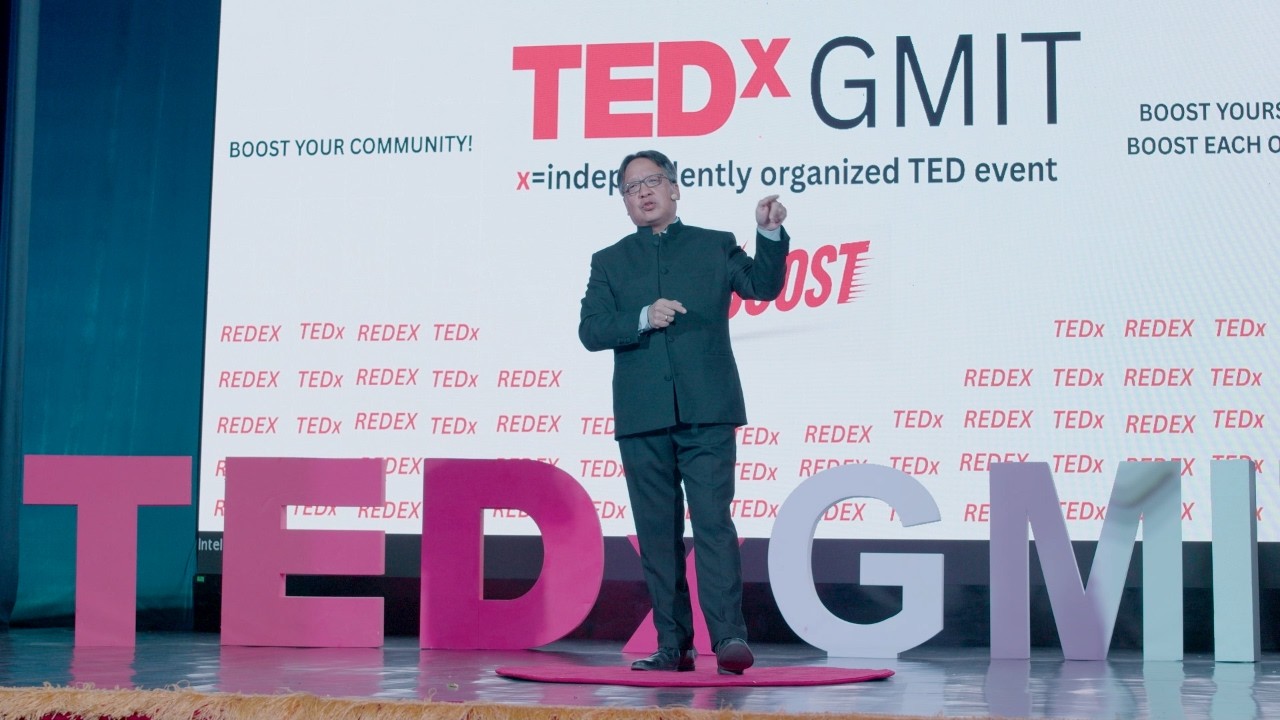
Every Drop Matters | Batbayar Zeneemyadar | TEDxGMIT
Keywords
Summary
190 words
Critical Evaluation
The talk is a compelling and emotionally charged call to action regarding water conservation in Mongolia. The speaker, with his background as a lawyer and former head of the Water Agency, brings a certain authority to the subject. However, the presentation lacks scientific rigor: many claims are made without citing specific sources or data, and the reasoning is often anecdotal. For instance, the statement that 2050 will see the disappearance of glaciers in Mongolia is presented as a fact without reference to a study. Similarly, the figures about the number of wells and latrines, while striking, are not sourced. The argumentation is primarily rhetorical, relying on emotional appeals and cultural references rather than systematic evidence. The story of Al Gore, while illustrative, is a tangent that does not directly support the water conservation thesis. The speaker’s point about the interconnectedness of rivers and the contribution of the Tuul River to Lake Baikal is interesting but presented without quantitative backing. The cultural comparison between the ancient symbol of three waves and the molecular structure of water is a nice rhetorical flourish but not a scientific argument. Overall, the talk raises awareness about a critical issue but does not provide a rigorous analysis or concrete solutions. The title ‘Every Drop Matters’ is appropriate, and the talk is well-delivered, but the content would benefit from more robust evidence and a clearer call to action.
231 words
Title / Content Match
The title 'Every Drop Matters' accurately reflects the core message about the importance of water conservation, though the talk focuses specifically on Mongolia's water crisis.
Quality & Reliability
6/10
The talk is a personal and emotional plea for water conservation in Mongolia, based on the speaker's experience as a former head of the Water Agency. It includes some factual data (e.g., 18,000 wells, 68,000 latrines in Ulaanbaatar, water contribution percentages to Lake Baikal) but lacks citations and scientific rigor. The speaker's authority is notable, but the content is largely anecdotal and rhetorical.
Key Moments
Markers derived by PSI from the transcript: the creator did not define chapters.
- Speaker engages audience with a hypothetical scenario of extreme thirst and flood.
- Story of Al Gore and his son's accident, leading to his climate activism.
- Discussion of Tuul River pollution and its impact on health.
- Warning about the disappearance of glaciers in Mongolia by 2050.
- Statistics on wells and latrines in Ulaanbaatar, linking sanitation to water contamination.
- Cultural reference to the three waves symbol and the water molecule, urging reflection on water's value.
Cited Sources
- TEDx Talks — The talk was given at a TEDx event using the TED conference format but independently organized by a local community.
Concurring Sources
- Water scarcity in Mongolia — Supports the claim of water scarcity issues in Mongolia.
Dissenting Sources
- No specific discordant sources found — The talk does not directly contradict established scientific consensus, but its claims lack citations.
Contribution & Novelties
The talk provides a personal perspective on Mongolia’s water crisis, emphasizing the cultural and spiritual connection to water. It highlights the urgent need for integrated water management and sanitation improvements. The speaker’s call to action is emotionally compelling, but the scientific novelty is limited.
Pour aller plus loin :
- Water scarcity in Mongolia — Overview of water issues in Mongolia.
- Lake Baikal — The world’s largest freshwater lake by volume, relevant to the talk’s mention of its importance.
- Water pollution — General concept of water contamination, relevant to the talk’s discussion of pollution.
93 words
Radar Profile
The radar profile shows moderate scores across all dimensions, with slightly higher scores in quantity of information and lower in technical level. This reflects a talk that is informative but not deeply technical or rigorously sourced.
💬 No comments provided.