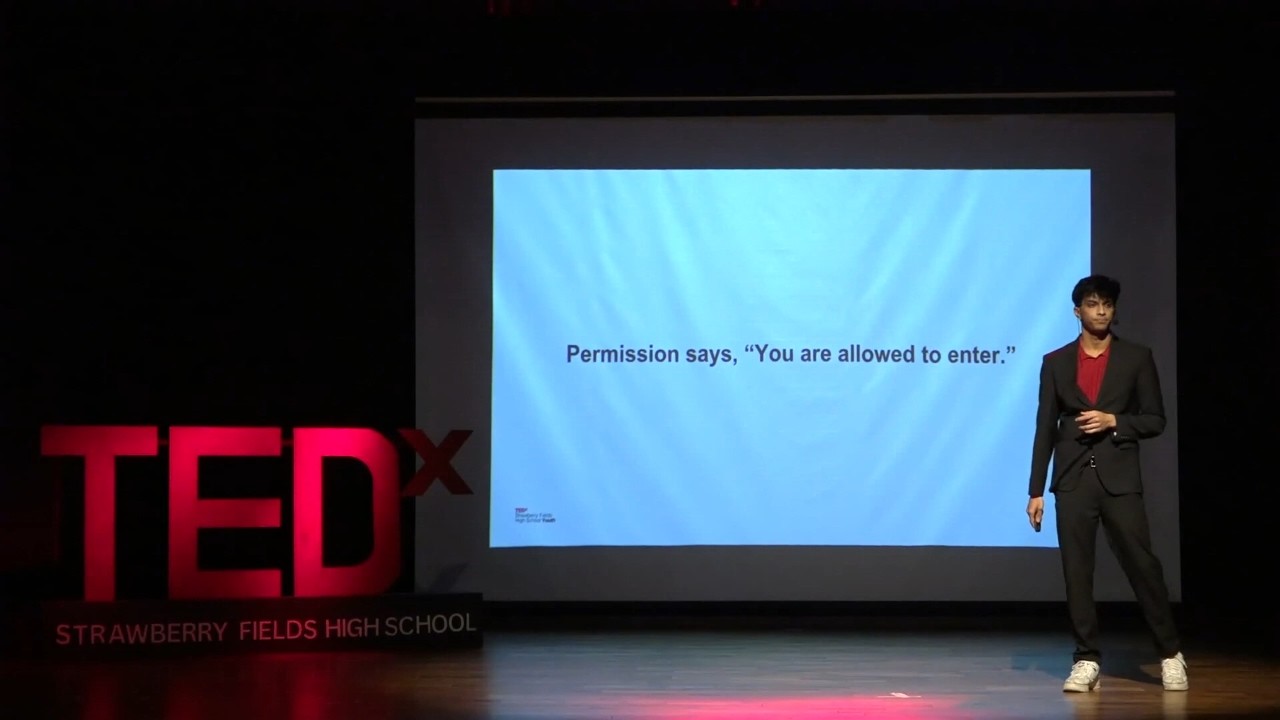
Belonging begins with an invitation | Asav Kumar | TEDxStrawberry Fields High School
Keywords
Summary
173 words
Critical Evaluation
Value of the Information & Strength of the Argument
The talk offers valuable insights into the psychology of belonging, particularly for immigrants and those navigating multiple cultures. The distinction between permission, inclusion, and belonging is a useful framework. The argument is built on personal anecdotes, which are relatable and emotionally engaging, but the reasoning is largely anecdotal. The speaker references academic research (Baumeister & Leary, Taylor) to support his points, but does not provide specific details or citations, weakening the scientific rigor. The call to action—to become ‘one of their people’—is compelling and actionable, but the talk could benefit from more concrete examples or strategies for implementation.
Scientific Rigor, Source Quality, Title Accuracy
The talk references two key academic sources: the work of Mark Leary and Roy Baumeister on the need to belong, and philosopher Charles Taylor’s work on recognition and identity. However, these references are brief and lack specific citations, making it difficult to verify or explore further. The title accurately reflects the content, which focuses on the idea that belonging is initiated by invitations. The talk is a personal narrative and expert opinion, not a scientific study, so the rigor is appropriate for its genre. The description mentions the speaker’s background as an AI engineer and podcast host, which adds credibility but is not directly relevant to the topic.
221 words
Title / Content Match
The title accurately reflects the core message: belonging is created through invitations, not found.
Quality & Reliability
6/10
Personal narrative with references to established research (Baumeister & Leary, Charles Taylor) but no detailed citations or data; arguments are anecdotal and philosophical rather than empirically rigorous.
Key Moments
Markers derived by PSI from the transcript: the creator did not define chapters.
- Introduction: Growing up in India with a plan to leave.
- Arrival at college and the onset of impostor syndrome.
- Reference to Baumeister and Leary's research on belonging as a fundamental motivation.
- Example of self-translation: being told to dial down energy, leading to self-suppression.
- Introduction of Charles Taylor's concept of recognition and identity.
- Distinction between permission, inclusion, and belonging.
- Story of the Thanksgiving invitation from a professor.
- Argument that belonging has two authors and the call to action.
- Conclusion: Home is where your answer to 'Where are you from?' can be long.
Cited Sources
- TEDx Talks — Official TEDx page providing information about the TEDx format and organization.
Concurring Sources
- Baumeister & Leary (1995) - The need to belong — Referenced in the talk as foundational research on belonging as a fundamental human motivation.
Contribution & Novelties
The talk offers a personal and accessible perspective on belonging, framing it as a co-created process rather than a personal quest. It introduces a clear tripartite distinction between permission, inclusion, and belonging, which is a useful conceptual tool. The emphasis on the ’two authors’ of belonging—the arriver and the host—provides a novel framework for understanding and fostering inclusion.
Pour aller plus loin :
- Need to Belong Scale — Overview of the psychological concept of the need to belong.
- Social Identity Theory — Relevant framework for understanding group membership and identity.
- Charles Taylor’s ‘The Politics of Recognition’ — Background on the philosopher’s ideas on recognition and identity.
106 words
Radar Profile
The radar profile shows moderate scores across all dimensions, with a slightly higher emphasis on qualitative information and reliability, reflecting the talk's strength in personal narrative and credible references, but lower on technical depth and quantity of information.
💬 Sur les 0 commentaires analysés, aucune tendance n'est disponible.