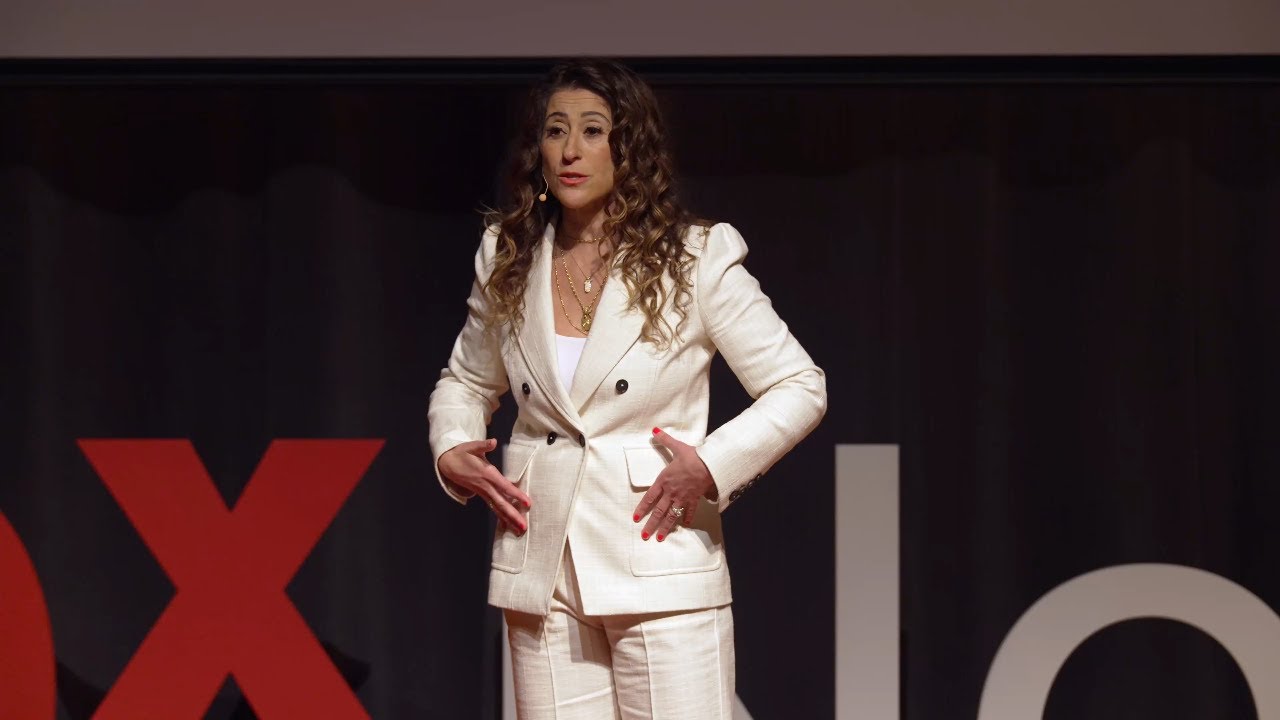
The Prescription Pad of Misogyny: Why Women in Menopause Need Better Care | Esther Blum | TEDxNormal
Keywords
Summary
144 words
Critical Evaluation
Value of the Information & Strength of the Argument
The talk provides a compelling personal and professional perspective on a significant women’s health issue. It highlights real problems in menopause care, such as lack of training and the impact of the WHI study. However, the argumentation is largely anecdotal and relies on the speaker’s authority rather than systematic evidence. Some claims are oversimplified or controversial, such as ‘hormones do not cause cancer,’ which is not universally accepted. The speaker’s advocacy for self-advocacy and finding a supportive provider is valuable, but the presentation lacks nuance and may overstate the benefits of hormone therapy while downplaying risks.
Scientific Rigor, Source Quality, Title Accuracy
The talk is not a rigorous scientific review; it is an opinion piece based on clinical experience. The description includes footnotes and links to reputable sources (e.g., FDA, ACOG, Menopause Society) that provide context and clarify some points, but these are not cited during the talk itself. The title is catchy but somewhat sensational. The talk’s content aligns with the title, but the scientific rigor is limited by the lack of in-talk citations and the presence of potentially misleading statements.
191 words
Title / Content Match
The title accurately reflects the talk's central thesis that women's menopausal symptoms are often dismissed or treated with prescriptions rather than addressing hormonal imbalances.
Quality & Reliability
6/10
The talk is a personal narrative and clinical opinion from a registered dietitian, not a systematic review. It includes some factual claims about menopause and hormones, but also contains oversimplifications and controversial statements (e.g., 'hormones do not cause cancer') that are not fully supported by evidence. The TEDx disclaimer and footnotes acknowledge limitations and the need for individualized medical advice.
Key Moments
Markers derived by PSI from the transcript: the creator did not define chapters.
- Introduction: The 'prescription pad of misogyny' - antidepressants, birth control, wine.
- Anecdotes of dismissive medical advice.
- Critique of medical education and the WHI study's impact.
- Myth-busting: hormones do not cause cancer, can be used at any age.
- Nutrition advice: protein intake and refueling.
- Self-advocacy: tracking symptoms and finding a hormone-literate provider.
- Benefits of estrogen, progesterone, testosterone, and vaginal estrogen.
- Conclusion: Menopause is not the end; thrive, don't just survive.
Cited Sources
- TEDx Content Guidelines — Referenced in the description as the guidelines for TEDx organizers.
- The Menopause Society comments on the FDA announcement on hormone therapy — Footnote for context on hormone therapy safety.
- Menopause treatment - womenshealth.gov — Footnote for context on menopause treatment.
- Compounded Bioidentical Menopausal Hormone Therapy - ACOG — Footnote clarifying distinction between FDA-approved and compounded bioidentical hormones.
- Hormone Replacement Therapies Can Help Women with Bothersome Menopausal Symptoms - FDA — Footnote for context on hormone therapy.
- FDA on Menopause and Bioidentical Hormones — Footnote clarifying FDA stance on compounded bioidentical hormones.
- Article on hormone therapy and cancer risk (2026) — Footnote for context on cancer risk and bioidentical hormones.
- TEDx official page — Mentioned in the description for more information about TEDx events.
Concurring Sources
- Menopause - Mayo Clinic — Supports the idea that menopause symptoms can be managed with various treatments.
- Hormone therapy for menopause - NIH — Supports the benefits of hormone therapy for symptom relief.
Dissenting Sources
- Menopausal hormone therapy and cancer risk - American Cancer Society — The claim that 'hormones do not cause cancer' is contradicted by evidence that certain hormone therapies are associated with increased risks of breast cancer and other cancers.
Contribution & Novelties
The talk brings attention to the issue of medical gaslighting in menopause care, a topic that is increasingly discussed but still under-recognized. It offers a practical framework for women to advocate for themselves, combining nutrition, hormones, and self-advocacy. However, the scientific novelty is limited, as the information is largely a summary of existing knowledge and opinions.
Pour aller plus loin :
- Menopause - Mayo Clinic — Overview of menopause symptoms and treatments.
- Hormone therapy for menopause - National Institutes of Health — NIH research summary on hormone therapy.
- Women’s Health Initiative — The study that shaped hormone therapy perceptions.
- The Menopause Society — Professional organization with evidence-based guidelines.
108 words
Radar Profile
The radar profile shows moderate scores across all dimensions, indicating a talk that is informative but not deeply technical or highly rigorous. The balance between quantity and quality of information is fairly even, with a slight emphasis on practical advice over scientific depth.