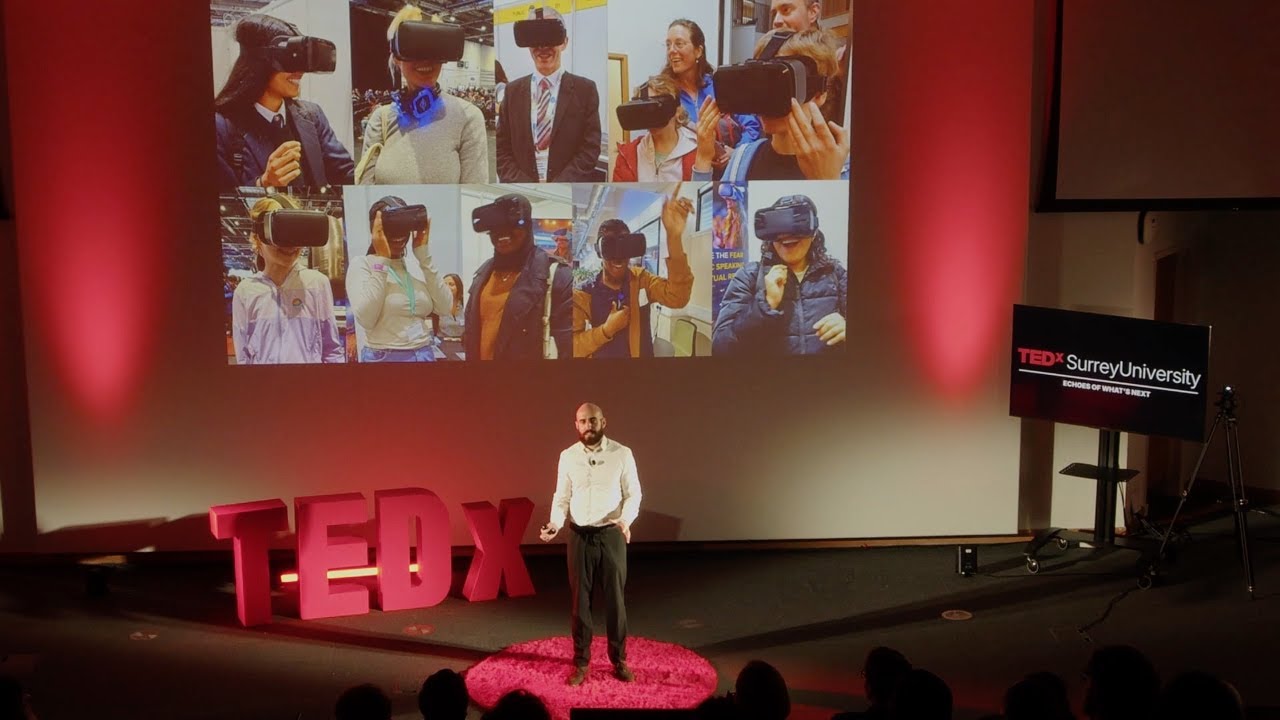
How virtual reality cures your fear of public speaking | Dr Chris Macdonald | TEDxSurreyUniversity
Keywords
Summary
265 words
Critical Evaluation
The talk presents a compelling narrative about using virtual reality to treat fear of public speaking, backed by the speaker’s personal experience and some trial data. The speaker, Dr Chris Macdonald, is a scientist and founder with a background in technology and healthcare, which lends credibility. He references a published trial in Frontiers, which is a reputable peer-reviewed journal, and mentions collaborations with UCL and the University of Cambridge, adding scientific weight. However, the talk is a TEDx presentation, which is designed for idea sharing rather than rigorous scientific exposition. The speaker does not provide detailed methodology, statistical results, or independent replication, which limits the strength of the claims. The concept of ‘overexposure therapy’ is intriguing but lacks empirical evidence beyond the speaker’s own trials. The emphasis on accessibility and free access is commendable and addresses a real gap in mental health care. The speaker’s human-centered approach, involving diverse feedback, is a strength. The talk also touches on broader ethical considerations about technology, warning against monetization and advocating for public service, which is thought-provoking. However, the talk could be criticized for potential overgeneralization from limited data and for not addressing potential drawbacks or risks of VR-based therapy, such as cybersickness or the need for professional supervision. The adéquation between title and content is good, as the talk indeed focuses on VR for fear of public speaking. Overall, the talk is informative and inspiring, but it should be viewed as a promising development rather than a proven cure. The scientific rigor is moderate, and further research is needed to validate the long-term efficacy and generalizability of the approach.
267 words
Title / Content Match
The title accurately reflects the content, which focuses on using virtual reality to treat fear of public speaking.
Quality & Reliability
7/10
The talk is based on the speaker's own research and development, with references to published trials in Frontiers and collaborations with UCL and Cambridge. However, it is a TEDx talk, which is a platform for sharing ideas, not a peer-reviewed presentation. The speaker presents personal success stories and future visions without detailed methodology or independent verification. The claims are plausible but not fully substantiated in the talk.
Key Moments
Markers derived by PSI from the transcript: the creator did not define chapters.
- Introduction: Dr Chris Macdonald sets the goal of creating an effective treatment for fear of public speaking and making it freely available.
- Discussion on glossophobia and its prevalence and negative impacts.
- Explanation of exposure therapy and its limitations.
- Introduction of the online platform and VR training simulations, gamified and accessible via smartphones.
- Concept of overexposure therapy with hyper-extreme scenarios.
- Incorporation of neuroscience insights and co-development with the public.
- Presentation of trial results: single 30-minute session reduces anxiety and increases confidence.
- Personal feedback and the story of his nephew's transformation.
- Future applications of immersive technologies and ethical considerations.
- Conclusion: call for ambitious, ethical, and accessible technology.
Cited Sources
- TEDx Program — The talk was given at a TEDx event, and this link provides information about the TEDx program.
Concurring Sources
- Frontiers in Psychology — The speaker mentions a trial published in Frontiers, which is a peer-reviewed journal, supporting the efficacy of the treatment.
Dissenting Sources
- No direct discordant sources provided — The talk does not mention any sources that contradict its claims. However, the lack of independent verification and potential overstatement of results could be considered a limitation.
Contribution & Novelties
The talk introduces the concept of ‘overexposure therapy’ using virtual reality, which goes beyond traditional exposure therapy by simulating hyper-extreme scenarios to build resilience. It also emphasizes accessibility by using smartphones as VR headsets, making treatment freely available. The speaker’s human-centered co-development approach and the integration of neuroscience insights are notable. The talk advocates for ethical technology use, warning against monetization that can exacerbate inequalities.
Pour aller plus loin :
- Exposure therapy — Foundational concept for the treatment approach.
- Virtual reality therapy — Overview of VR applications in mental health.
- Glossophobia — Definition and context of fear of public speaking.
- Joseph Wolpe — Pioneer of systematic desensitization and exposure therapy.
110 words
Radar Profile
The radar profile shows moderate to high scores across all dimensions, with the highest in quantity and quality of information, reflecting the speaker's expertise and the inclusion of trial data. The level of technical detail is moderate, suitable for a general audience. The overall reliability is good but not exceptional, given the nature of a TEDx talk.