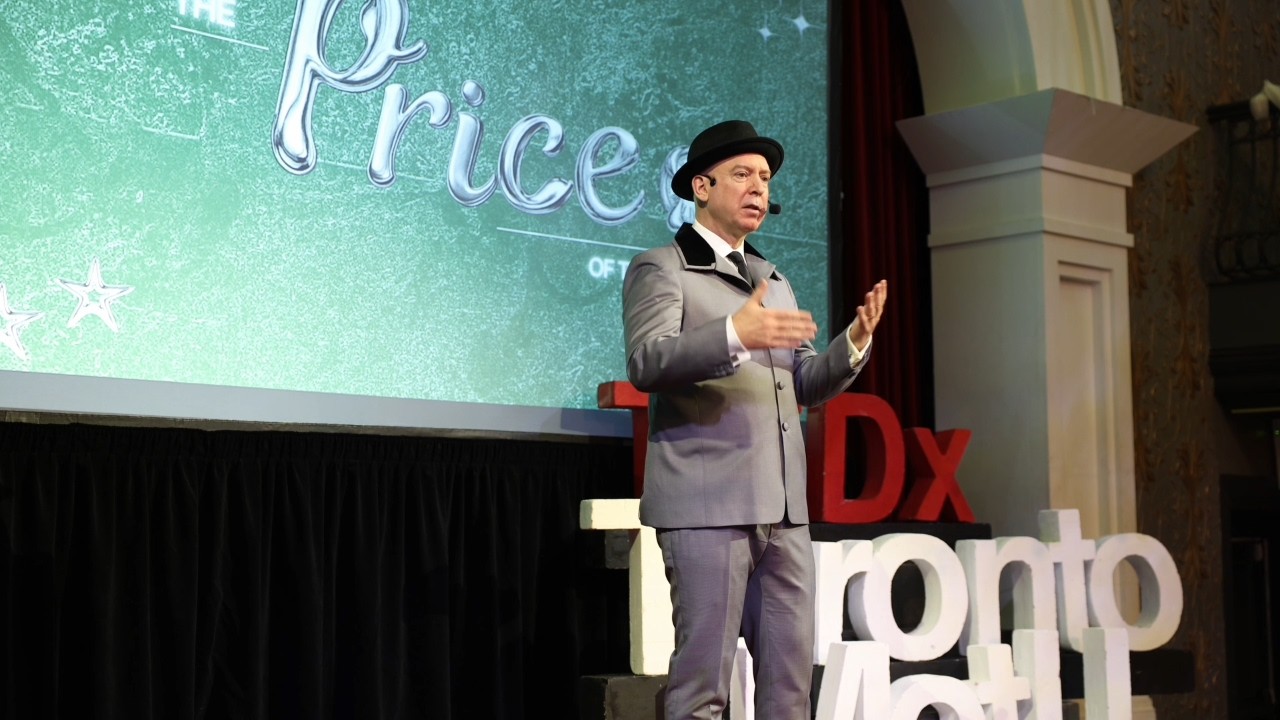
What Work Gets Wrong About Age | Dan Pontefract | TEDxTorontoMetU
Keywords
Summary
115 words
Critical Evaluation
The talk addresses an important and timely issue: ageism in the workplace. Pontefract effectively uses personal anecdotes to illustrate the problem, making it relatable. However, the argument lacks rigorous scientific backing. He cites statistics like fertility rates and home ownership costs but does not provide sources, which weakens the credibility. The generational stereotyping he criticizes is indeed a common but oversimplified framework; his alternative ’eras’ model is intuitive but not empirically validated. The talk is more persuasive than evidence-based, relying on rhetorical devices and emotional appeal. The speaker’s expertise in leadership and culture adds authority, but the content is more opinion than research. The title is accurate, and the talk is well-structured. Overall, it offers valuable insights but would benefit from more concrete data and references.
126 words
Title / Content Match
The title accurately reflects the content, which focuses on ageism and demographic changes in the workplace.
Quality & Reliability
6/10
The talk is based on personal anecdotes and general observations rather than rigorous scientific evidence. While the speaker cites some statistics (e.g., fertility rates, home ownership), these are presented without specific sources. The argument is persuasive but relies on rhetorical appeal and personal experience.
Key Moments
Markers derived by PSI from the transcript: the creator did not define chapters.
- Introduction: age as an issue at cocktail parties and in the workplace.
- Personal story: being fired from a speakers bureau due to age.
- Story of Maureen, a tech worker called a 'dino' for not knowing Slack.
- Demographic data: fertility rates, home ownership, and longevity.
- Story of Haruki, a 74-year-old taxi driver in Tokyo.
- Critique of generational stereotypes and their harmful effects.
- Proposal of 'eras' (rivers, rocks, rubies) and 'career canvas'.
- Conclusion: call for organizations to value all ages.
Cited Sources
- TEDx Talks — The talk is part of TEDx, and the description links to the TEDx program.
Concurring Sources
- Ageism in the workplace — WHO highlights ageism as a widespread issue with negative impacts.
Dissenting Sources
- Generational differences are real — Pew Research suggests generational differences exist, though they may be overstated.
Contribution & Novelties
The talk offers a fresh perspective on ageism by proposing a shift from generational labels to career ’eras’ and a ‘career canvas’ model. It emphasizes the value of experience and wisdom, challenging the youth-centric focus in workplaces.
Pour aller plus loin :
- Ageism in the workplace — WHO overview on ageism and its impact.
- Generational stereotypes in the workplace — Harvard Business Review article on the flaws of generational labels.
- Crystallized intelligence — Wikipedia entry on fluid and crystallized intelligence, relevant to the ‘rocks’ era.
85 words
Radar Profile
The radar shows moderate scores across all dimensions, indicating a balanced but not deeply technical talk. The highest score is in 'quantite_information' and 'qualite_information', reflecting the breadth of topics covered, while 'niveau_technique' is lower due to the non-technical nature.
💬 No comments were provided for analysis.