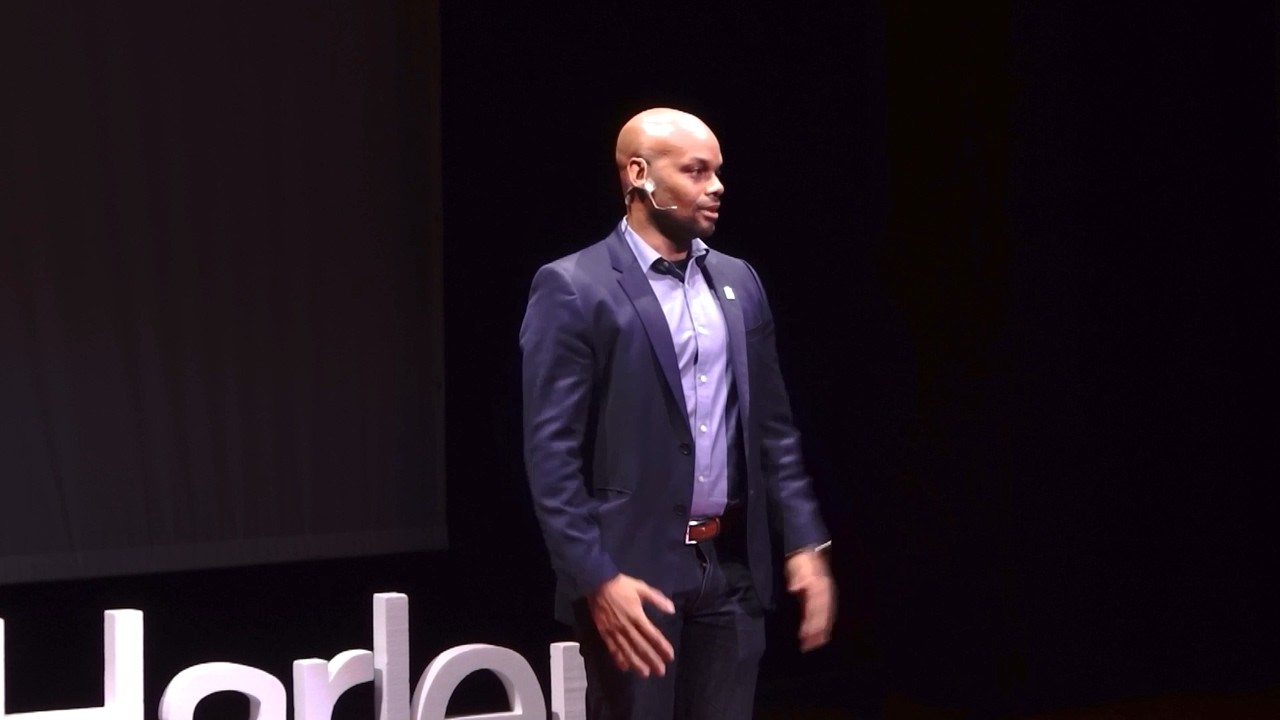
Reflections on gentrification from a neurologist | Dr. Philippe Douyon | TEDxHarlem
Keywords
Summary
182 words
Critical Evaluation
Value of the Information & Strength of the Argument
The talk offers a unique perspective on gentrification by framing it as a neurological and psychological phenomenon rather than purely economic. The speaker uses compelling anecdotes to illustrate his points, such as the patient James and Thomas, which make the content relatable and engaging. However, the argumentation relies heavily on metaphor and analogy, with limited scientific evidence to support the claims. The speaker’s expertise in neurology lends some credibility, but the extrapolation from individual brain function to collective community behavior is speculative and not rigorously substantiated. The value lies in its thought-provoking nature and the practical advice offered, but the scientific foundation is weak.
113 words
Title / Content Match
The title accurately reflects the content, as the speaker, a neurologist, discusses gentrification through a neurological lens.
Quality & Reliability
5/10
The talk is an opinion piece with anecdotal evidence and metaphorical reasoning, lacking scientific rigor and empirical support. The speaker's personal views are acknowledged in the TED note, and the content is largely subjective.
Key Moments
Markers derived by PSI from the transcript: the creator did not define chapters.
- Introduction: Dr. Douyon introduces the story of his patient James, who suddenly couldn't walk.
- Explanation of conversion disorder and its relevance to gentrification.
- Discussion on how gentrification starts with a story and the false choices communities face.
- The importance of connection in the brain and in communities.
- Story of patient Thomas and the power of labels.
- Four actionable steps for communities to influence their evolution.
Cited Sources
- TEDx Content Guidelines — Referenced in the description as a note from TED regarding the talk's content.
- TEDx Main Page — Provided in the description as a resource for TEDx events.
Contribution & Novelties
The talk offers a novel perspective on gentrification by linking it to neurological concepts such as conversion disorder and the collective brain. It emphasizes the role of mindset, identity, and storytelling in community development. While the ideas are thought-provoking, they lack empirical support and are presented as personal opinions.
Pour aller plus loin :
- Conversion disorder - Wikipedia — Provides background on the neurological condition mentioned.
- Collective memory - Wikipedia — Relevant to the concept of shared identity and memory in communities.
- Place attachment - Wikipedia — Discusses the emotional bond between people and places, relevant to community connection.
99 words
Radar Profile
The radar profile shows low scores across all dimensions, indicating a talk with limited scientific depth, moderate information quantity, and low technical level. The overall quality is weak, with a global score of 2 out of 5.