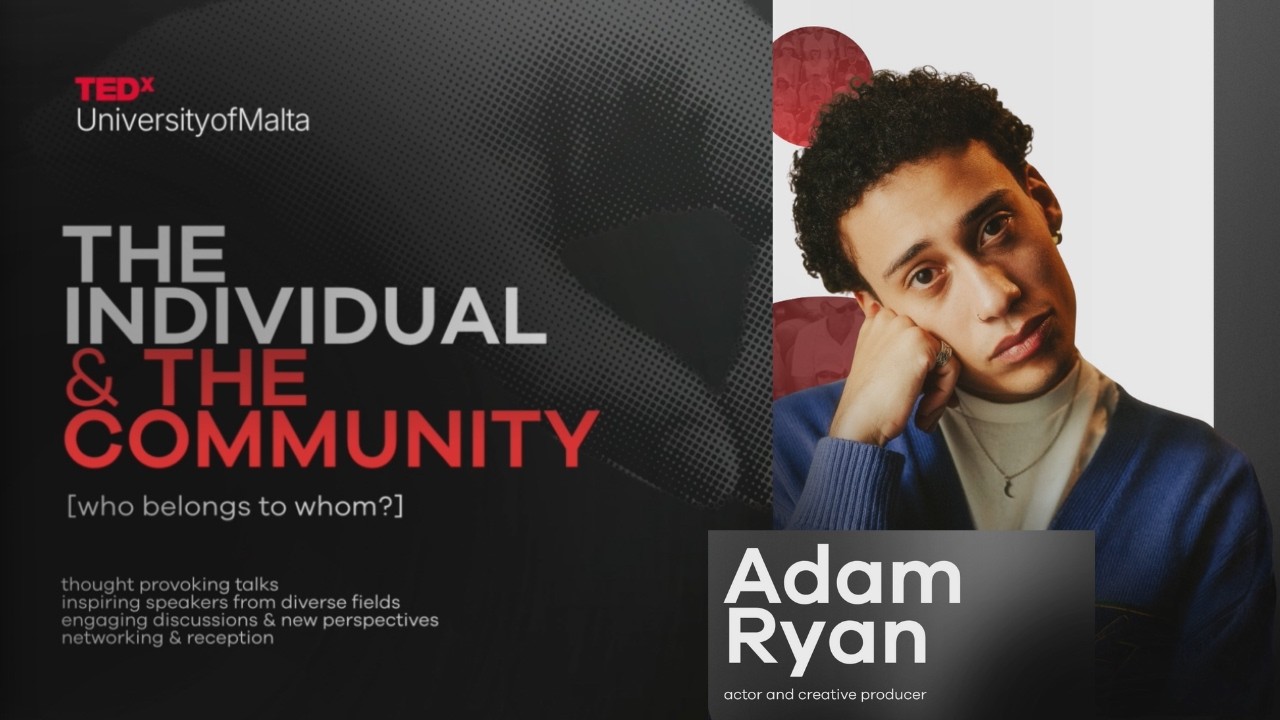
What stories can art & theatre tell about ourselves & society?
Keywords
Summary
165 words
Critical Evaluation
Value of the Information & Strength of the Argument
The talk offers valuable insights into the role of art in society, drawing on the speaker’s personal and professional experience. The argument is structured around a clear personal-to-societal framework, which is compelling and accessible. However, the reasoning relies heavily on anecdotal evidence and broad generalizations, lacking empirical support. The speaker’s examples, such as the comparison of American musicals to the American dream, are illustrative but not deeply analyzed. The argumentation is persuasive in its enthusiasm but not rigorously substantiated.
Scientific Rigor, Source Quality, Title Accuracy
The talk is a personal essay rather than a scientific presentation, so it does not cite formal sources. The speaker references his own productions and well-known cultural works (e.g., ‘Hamilton’, ‘Billy Elliot’) but provides no external references. The title accurately captures the content, which is a reflective exploration of art’s societal role. The lack of citations and empirical data reduces the scientific rigor, but the speaker’s professional background lends practical credibility. No comments were provided for analysis.
171 words
Title / Content Match
The title accurately reflects the content, as the talk explores how art and theatre mirror and shape societal values and personal identity.
Quality & Reliability
6/10
The talk is a personal and professional reflection rather than a rigorous academic study. It relies on anecdotal evidence and broad cultural observations, with no cited scientific sources. The speaker's experience in theatre lends credibility to his practical insights, but the lack of empirical data limits the overall reliability.
Key Moments
Markers derived by PSI from the transcript: the creator did not define chapters.
- Introduction: Adam Ryan introduces himself and his mission to convince the audience that creativity is universal.
- Personal story: The car ride with his father and the song 'Loving Each Day'.
- Definition of culture and the three-step process: personal, shared, societal.
- Examples of his productions: 'Bocci: Il-Musical' and 'Kif Tgħallimt Insuq'.
- Redefining theatre and art, including culinary arts and lace-making.
- Global examples: post-war Japanese manga and American musicals.
- Conclusion: Encouraging everyone to share their stories and recognize their creativity.
Cited Sources
- TEDx Program — The talk was given at a TEDx event, and this link provides general information about the TEDx program.
Concurring Sources
- TEDx Program — The talk is part of the TEDx series, which shares ideas about society and culture.
Contribution & Novelties
The talk offers a personal and accessible perspective on the role of art in society, emphasizing that creativity is a universal human trait. It introduces a simple framework (personal-shared-societal) that could be useful for educators and community organizers. However, the ideas are not novel; they echo established concepts in cultural studies and sociology. The strength lies in the speaker’s authentic examples and his call to action for everyone to share their stories.
Pour aller plus loin :
- Cultural studies — Provides academic context for analyzing culture and art.
- Theatre for social change — Explores how theatre can be used as a tool for social transformation.
- Participatory art — Relevant to the idea of art as a communal activity.
118 words
Radar Profile
The radar profile shows moderate scores across information quantity, quality, and reliability, with a low technical level. This reflects a talk that is engaging and accessible but lacks depth and empirical grounding. The high score in 'quality_information' relative to 'fiabilite_globale' suggests the content is well-presented but not rigorously sourced.