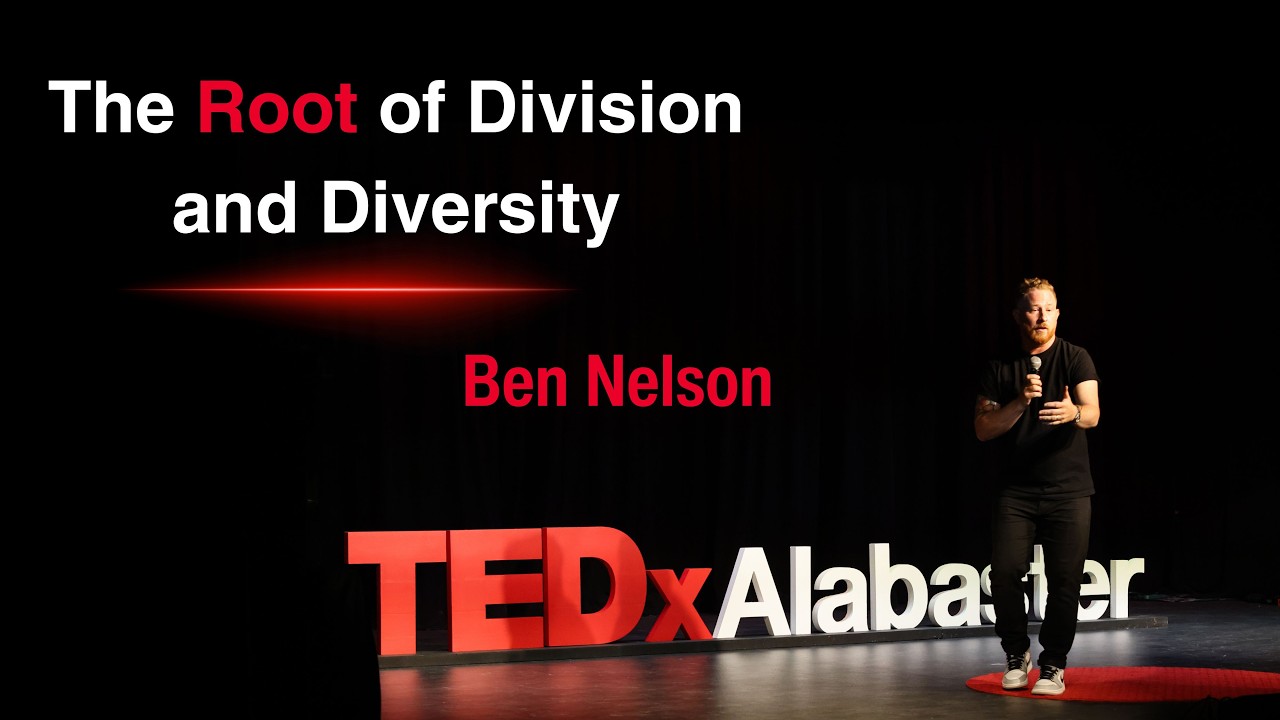
3 ways to disagree better | Ben Nelson | TEDxAlabaster
Keywords
Summary
162 words
Critical Evaluation
Value of the Information & Strength of the Argument
The talk provides a clear and accessible framework for understanding and managing differences. The speaker’s personal experiences and anecdotes add authenticity and emotional appeal. The argument that division is optional and that differences can lead to diversity is compelling. However, the argumentation relies heavily on anecdotal evidence and lacks empirical or scientific backing. The three practices offered are practical and actionable, but they are presented as common-sense advice rather than evidence-based strategies. The speaker’s credibility is established through his work in community building, but the lack of data or references weakens the scientific rigor.
Scientific Rigor, Source Quality, Title Accuracy
The talk does not cite any scientific sources or studies. The only external reference is the general TEDx platform. The speaker’s authority comes from his professional experience, but no verifiable sources are provided. The title accurately reflects the content, as the speaker indeed presents three ways to disagree better. The talk is more of an inspirational and practical guide than a scientifically rigorous analysis. The lack of sources and empirical evidence limits its reliability as a scientific resource.
187 words
Title / Content Match
The title accurately reflects the content, as the speaker presents three practical strategies for constructive disagreement.
Quality & Reliability
5/10
The talk is based on personal experience and anecdotal evidence, with no scientific references or data. It offers practical advice but lacks empirical support.
Key Moments
Markers derived by PSI from the transcript: the creator did not define chapters.
- Introduction: Differences are not the problem; division is optional.
- Personal story about working in Bulgaria with Roma people and observing division.
- Anecdote about his son and the traffic light, illustrating how we define people by their differences.
- Framework: Differences met with fear lead to division; differences met with control lead to uniformity.
- Introduction of three practices: curiosity over certainty, honor over winning, repair over resentment.
- Conclusion: Encouragement to apply these practices and choose unity over division.
Cited Sources
- TEDx Talks — The talk is part of the TEDx program, which is independently organized.
Concurring Sources
- Nonviolent Communication — Supports the practice of curiosity and empathetic listening.
- Intergroup Contact Theory — Supports the idea that positive contact across differences can reduce division.
Dissenting Sources
- No direct discordant sources — No sources contradicting the talk's claims were found, but the lack of empirical evidence is a limitation.
Contribution & Novelties
The talk offers a fresh perspective on conflict resolution by framing differences as opportunities for diversity rather than division. It provides a simple, memorable framework (fear/control) and three actionable practices. While not scientifically novel, it synthesizes common principles into a coherent message.
Pour aller plus loin :
- Nonviolent Communication — A communication approach that emphasizes empathy and understanding, relevant to the practice of curiosity.
- The Five Dysfunctions of a Team — A model for team dynamics that includes trust and conflict, relevant to the practice of honor and repair.
- Intergroup Contact Theory — A psychological theory suggesting that contact between groups can reduce prejudice, supporting the idea that differences can lead to unity.
113 words
Radar Profile
The radar profile shows moderate scores in information quantity and quality, low technical level, and moderate reliability. This reflects a talk that is engaging and practical but lacks scientific depth and evidence.
💬 No comments were provided for analysis.