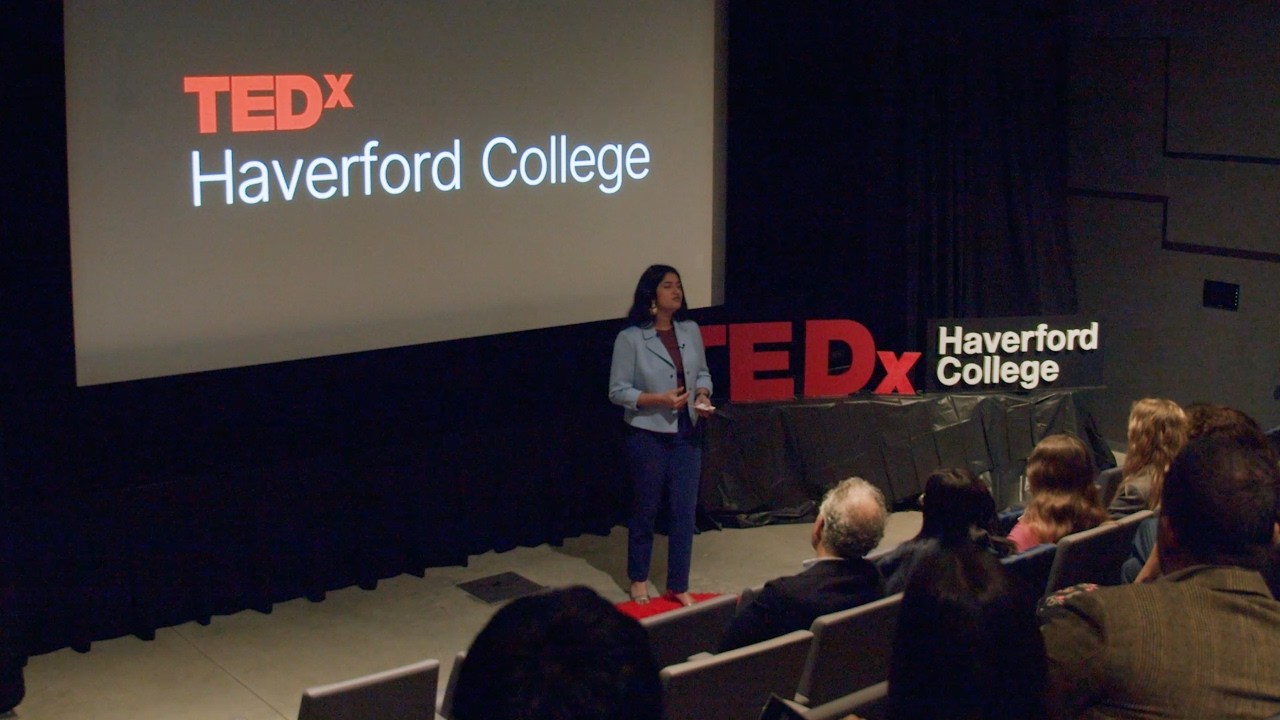
Confronting the other: Violence, desire, fantasies of freedom
Keywords
Summary
119 words
Critical Evaluation
Value of the Information & Strength of the Argument
The talk offers a valuable synthesis of existentialist and poststructuralist thought, applying it to contemporary discussions of sexuality and identity. The argumentation is logically structured, moving from a general philosophical tension to a specific application in erotic encounters. Khanna effectively uses the thinkers to build a nuanced perspective, acknowledging the dual nature of the encounter. However, the argument is exploratory and lacks concrete examples or empirical support, which limits its persuasive power.
Scientific Rigor, Source Quality, Title Accuracy
The talk is rigorous in its engagement with philosophical sources, accurately representing the core ideas of Levinas, Beauvoir, Fanon, and Foucault. The inclusion of contemporary psychoanalytic work by Avgi Saketopoulou adds depth. The title accurately reflects the content. The description provides a link to TEDx, but no direct sources are cited in the video or description.
143 words
Title / Content Match
The title accurately reflects the content, focusing on the philosophical confrontation with the Other, violence, desire, and freedom.
Quality & Reliability
6/10
The talk presents a coherent philosophical argument drawing on established thinkers (Levinas, Beauvoir, Fanon, Foucault) and contemporary psychoanalytic theory (Saketopoulou). However, it is an opinion/expert talk with no empirical data, and the argumentation is exploratory rather than conclusive.
Key Moments
Markers derived by PSI from the transcript: the creator did not define chapters.
- Introduction: the philosophical tension between the encounter as expansive and as violent.
- Discussion of Levinas's ontology of the Other and the production of freedom.
- Introduction of Beauvoir and Fanon's perspective on the encounter as sealing and closing.
- Exploration of the desire for control and the burden of freedom.
- Focus on the erotic confrontation and the libidinal economy of race and sexuality.
- Introduction of Saketopoulou's concepts of self-narrativization and sexual shattering.
- Conclusion: the potential for personal and social revolution through disruption.
Cited Sources
- TEDx Talks — The talk was given at a TEDx event, and this is the general TEDx page.
Concurring Sources
- The Ethics of Ambiguity — Beauvoir's book, referenced in the talk, discusses freedom as a burden.
Contribution & Novelties
The talk’s original contribution lies in bringing together existentialist and poststructuralist philosophy with contemporary psychoanalytic theory to analyze the erotic encounter as a site of both subjection and liberation. It offers a framework for understanding how power relations are reproduced and potentially disrupted in intimate contexts.
Pour aller plus loin :
- Emmanuel Levinas — Overview of Levinas’s philosophy of the Other.
- Simone de Beauvoir — Overview of Beauvoir’s existentialist ethics and feminism.
- Frantz Fanon — Overview of Fanon’s work on race and colonialism.
- Michel Foucault — Overview of Foucault’s theories on power and sexuality.
- Avgi Saketopoulou — Psychoanalyst known for work on sexuality and trauma.
105 words
Radar Profile
The radar profile shows high scores in information quantity, quality, and technical level, but a slightly lower score in reliability, reflecting the exploratory and opinion-based nature of the talk.