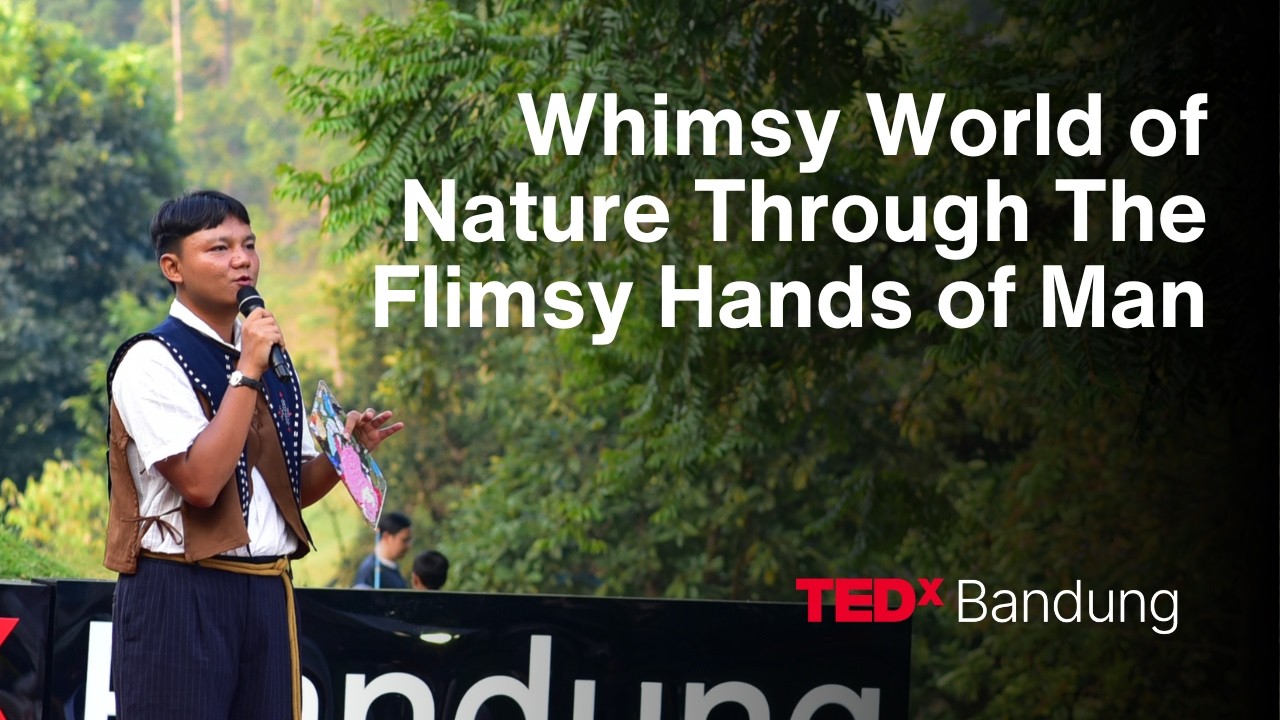
Klanapakis: Nature's Hero Through Art and Empathy | Wastana Haikal | TEDxBandung
Keywords
Summary
157 words
Critical Evaluation
Value of the Information & Strength of the Argument
The talk’s value lies in its accessible integration of ecological concepts (succession, pioneer species) with a personal artistic perspective, making scientific ideas relatable. The argumentation is primarily narrative and anecdotal, relying on the speaker’s experiences and a simplified model of empathy. While the ‘four-loop empathy system’ is presented as fact, it is a simplified and somewhat inaccurate representation of neuroscience, and the connection to Keltner’s work is mentioned but not deeply explored. The argument that art can foster empathy and environmental awareness is compelling but not rigorously supported by evidence.
Scientific Rigor, Source Quality, Title Accuracy
The talk lacks formal citations; the only external reference is Dacher Keltner’s book ‘The Power Paradox’, mentioned without specific details. The description provides a link to TEDx, but no direct sources for the scientific claims. The title accurately reflects the content, which is a blend of storytelling and advocacy for art-based empathy. The scientific accuracy is moderate: the ecological succession of ferns is generally correct, but the neuroscience is oversimplified and potentially misleading. The talk is more of an inspirational and artistic perspective than a rigorous scientific presentation.
193 words
Title / Content Match
The title accurately reflects the content: a narrative about a fictional fern hero (Klanapakis) used to illustrate ecological succession and the role of art in fostering empathy for nature.
Quality & Reliability
6/10
The talk blends personal artistic experience with scientific concepts (fern ecology, mirror neurons, empathy deficit) but relies on anecdotal evidence and simplified neuroscience; no formal citations or peer-reviewed sources are provided.
Key Moments
Markers derived by PSI from the transcript: the creator did not define chapters.
- Introduction: childhood love for dinosaurs and ferns, leading to research.
- Story of Klanapakis, a fern spore, and ecological succession.
- Personal observations of nature at home and during travels.
- Artistic inspiration from nature, patterns, and microscopic organisms.
- Introduction of the 'four-loop empathy system' and mirror neurons.
- Explanation of anthropomorphism as a way to empathize with plants.
- Discussion of empathy deficit in powerful people, citing Keltner.
- Conclusion: the 'art of noticing' and a call to reconnect with nature.
Cited Sources
- TEDx Talks — General TEDx platform, mentioned in the video description.
Concurring Sources
- Ecological succession — The fern story aligns with standard ecological succession concepts.
Dissenting Sources
- Mirror neuron — The talk's description of mirror neurons as an 'empathy switch' is an oversimplification; current research suggests a more complex role.
Contribution & Novelties
The talk offers a personal and artistic perspective on ecological awareness, using a fictional narrative to explain scientific concepts. It highlights the role of ‘art of noticing’ as a tool for environmental empathy, which is a valuable contribution to environmental communication.
Pour aller plus loin :
- Ecological succession — Relevant to the fern story’s depiction of ecosystem recovery.
- Mirror neuron — The talk’s reference to mirror neurons; note that the simplified ’empathy switch’ is not fully supported by current neuroscience.
- Anthropomorphism — Key concept in the talk’s argument for empathizing with nature.
- Dacher Keltner — Author of ‘The Power Paradox’, cited in the talk.
104 words
Radar Profile
The radar profile shows moderate scores across all dimensions, with a slightly higher score in 'quantite_information' and 'qualite_information' compared to 'niveau_technique' and 'fiabilite_globale'. This reflects a talk that is informative and engaging but lacks technical depth and rigorous sourcing.