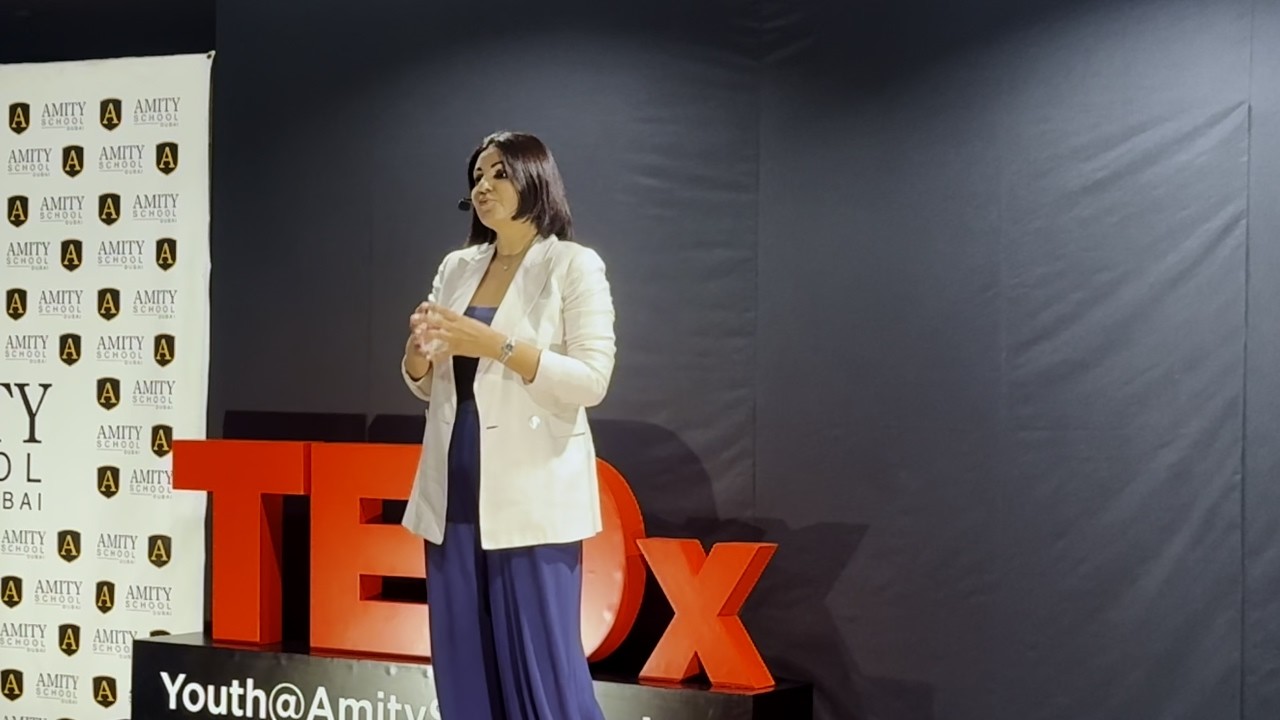
Be the Catalyst for Change | Fariba Zoulfaghari | TEDxAmity School Dubai Youth
Keywords
Summary
186 words
Critical Evaluation
Value of the Information & Strength of the Argument
The talk’s value lies in its inspirational and motivational content, offering personal anecdotes and practical tips for overcoming fear and embracing change. The argumentation is based on personal experience and anecdotal evidence rather than scientific research. The speaker references popular self-help concepts (NLP, Simon Sinek, Marshall Goldsmith) but does not provide empirical support. The reasoning is coherent and relatable, but lacks depth and critical analysis. The speaker’s journey is compelling, but the advice is generic and not backed by data.
Scientific Rigor, Source Quality, Title Accuracy
The talk cites Simon Sinek’s ‘Start with Why’ and Marshall Goldsmith’s ‘What Got You Here Won’t Get You There’ as influences, but these are popular business books, not scientific sources. The speaker mentions NLP, which is widely criticized as a pseudoscience. No academic or peer-reviewed sources are cited. The title accurately reflects the content, which is a personal narrative about becoming a catalyst for change. The talk is a TEDx presentation, which is independently organized and not subject to the same editorial standards as TED.
180 words
Title / Content Match
The title accurately reflects the content: the speaker shares her personal journey and encourages the audience to become proactive agents of change.
Quality & Reliability
4/10
The talk is a personal narrative with anecdotal evidence and references to popular psychology concepts (NLP, Simon Sinek, Marshall Goldsmith) without scientific rigor. No empirical data or peer-reviewed sources are cited.
Key Moments
Markers derived by PSI from the transcript: the creator did not define chapters.
- Introduction: The speaker invites the audience to visualize two doors representing familiar and unfamiliar choices.
- The speaker shares her personal story of leaving Iran at age eight and adapting to life in the UK.
- Discussion of the two innate fears (falling and loud noises) and how other fears are socially constructed.
- Introduction of NLP and the concept of 'failing forward'.
- The speaker recounts her interview with Marshall Goldsmith and his book 'What Got You Here Won't Get You There'.
- The speaker shares her experience of creating six communities and encourages the audience to create their own.
- Conclusion: The speaker emphasizes that we are co-creators of change, not observers.
Cited Sources
- TEDx Talks — The talk was given at a TEDx event, and the description links to the TEDx program.
Concurring Sources
- TEDx Talks — The talk is part of the TEDx series, which provides a platform for sharing ideas.
Contribution & Novelties
The talk offers a personal perspective on embracing change, but the concepts are not novel. It synthesizes ideas from popular self-help literature and NLP, presenting them through the speaker’s life story. The ’two doors’ metaphor is a simple but effective visualization. The talk’s main contribution is its motivational appeal, encouraging the audience to take ownership of their choices.
Pour aller plus loin :
- Neuro-linguistic programming — Provides an overview of NLP and its criticisms.
- Start with Why — Simon Sinek’s book on the importance of purpose.
- What Got You Here Won’t Get You There — Marshall Goldsmith’s book on changing behaviors for success.
103 words
Radar Profile
The radar profile shows low scores across all dimensions, indicating a talk that is low in technical depth, information quality, and reliability. The talk is primarily inspirational, with limited factual content and no scientific backing.