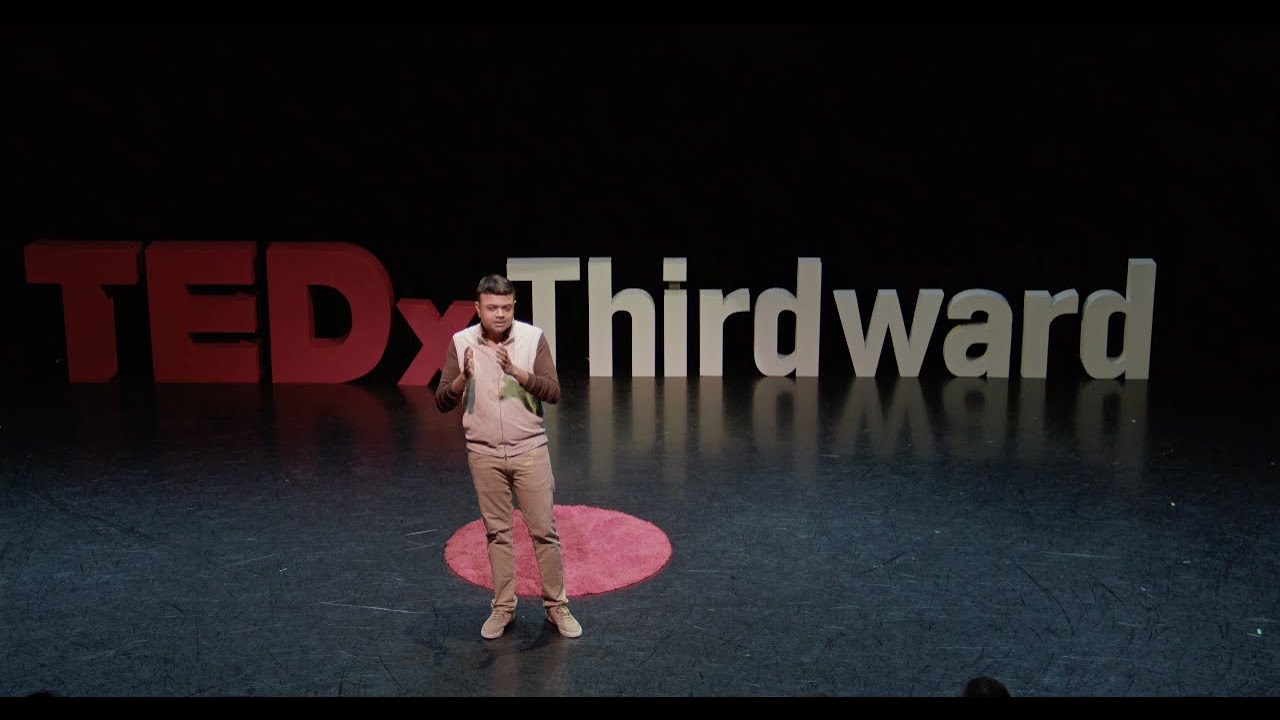
Reframing the meaning of taxes | Divakar Vijayasarathy | TEDxThird Ward
Keywords
Summary
188 words
Critical Evaluation
The talk offers a compelling reframing of taxation, moving from a punitive view to one of alignment and societal participation. The speaker’s personal anecdotes add emotional weight and make the topic accessible. However, the argument relies heavily on anecdotal evidence and broad generalizations. For instance, the claim that ’every nation has its own religion, deity, and ritual’ is a metaphorical simplification that may not hold up under scrutiny. The examples of Tesla and Fortune 500 companies paying no federal taxes are presented without nuance, potentially misleading the audience about the complexity of tax codes and corporate tax avoidance. The historical reference to jizya is used to illustrate alignment, but it lacks context and could be misinterpreted. The speaker’s expertise in tax law lends credibility, but the talk does not provide rigorous data or citations to support its claims. The structure is engaging, with a clear narrative arc from personal failure to philosophical insight. The call to ‘understand the system and align with it’ is pragmatic, but it may overlook legitimate concerns about tax fairness and accountability. Overall, the talk is thought-provoking and well-delivered, but it would benefit from more empirical grounding and a more critical examination of the ethical dimensions of tax avoidance. The adéquation between title and content is strong, as the talk indeed reframes the meaning of taxes. The public comments reflect a positive reception, with many appreciating the mindset shift and the emphasis on societal alignment. However, some commenters express a desire for accountability before alignment, indicating a nuanced audience response.
254 words
Title / Content Match
The title accurately reflects the talk's core message of reframing taxes from a burden to a meaningful societal contribution.
Quality & Reliability
6/10
The talk offers a personal and philosophical perspective on taxation, drawing on anecdotal evidence and historical examples. While the speaker is a tax expert, the claims are not backed by rigorous data or citations, and some generalizations (e.g., about national 'religions') are oversimplified. The content is thought-provoking but lacks empirical depth.
Key Moments
Markers derived by PSI from the transcript: the creator did not define chapters.
- Introduction: Speaker asks audience about belief in unfair tax system.
- Personal story: 2009 contract with African company and tax complications.
- Discovery of jizya tax and realization that tax is about alignment.
- Explanation of tax as language and examples of Tesla and Fortune 500 companies.
- Father's story: losing vision and kidneys, but maintaining positive outlook.
- 2021 lockdown: moving to Serbia and Dubai as a 'better way'.
- Conclusion: Call to understand and align with the tax system.
Cited Sources
- TEDx Program — Mentioned in the video description as the organizing body for TEDx events.
Concurring Sources
- TEDx Program — The talk is part of the TEDx series, which aims to share ideas worth spreading.
Dissenting Sources
Contribution & Novelties
The talk provides a novel perspective on taxation by framing it as a ’language’ of societal alignment rather than a mere financial obligation. It encourages entrepreneurs to view taxes as a signal of what a society values, potentially transforming their approach to compliance and strategy.
Pour aller plus loin :
- Tax policy and economic behavior — Overview of how taxes influence economic decisions.
- Behavioral economics of taxation — Insights into how psychological factors affect taxpayer behavior.
- Corporate tax avoidance — Discussion of legal strategies used by companies to minimize taxes, relevant to the Tesla example.
95 words
Radar Profile
The radar profile shows moderate scores across all dimensions, with slightly higher scores in information quantity and quality, reflecting the talk's engaging narrative but limited technical depth. The low technical score indicates the content is accessible to a general audience, while the moderate reliability score suggests a mix of credible insights and anecdotal claims.
💬 Très positif. Sur les 30 commentaires analysés, la grande majorité exprime une appréciation pour le changement de perspective proposé, soulignant la clarté du message et son impact motivationnel, sans critiques majeures.