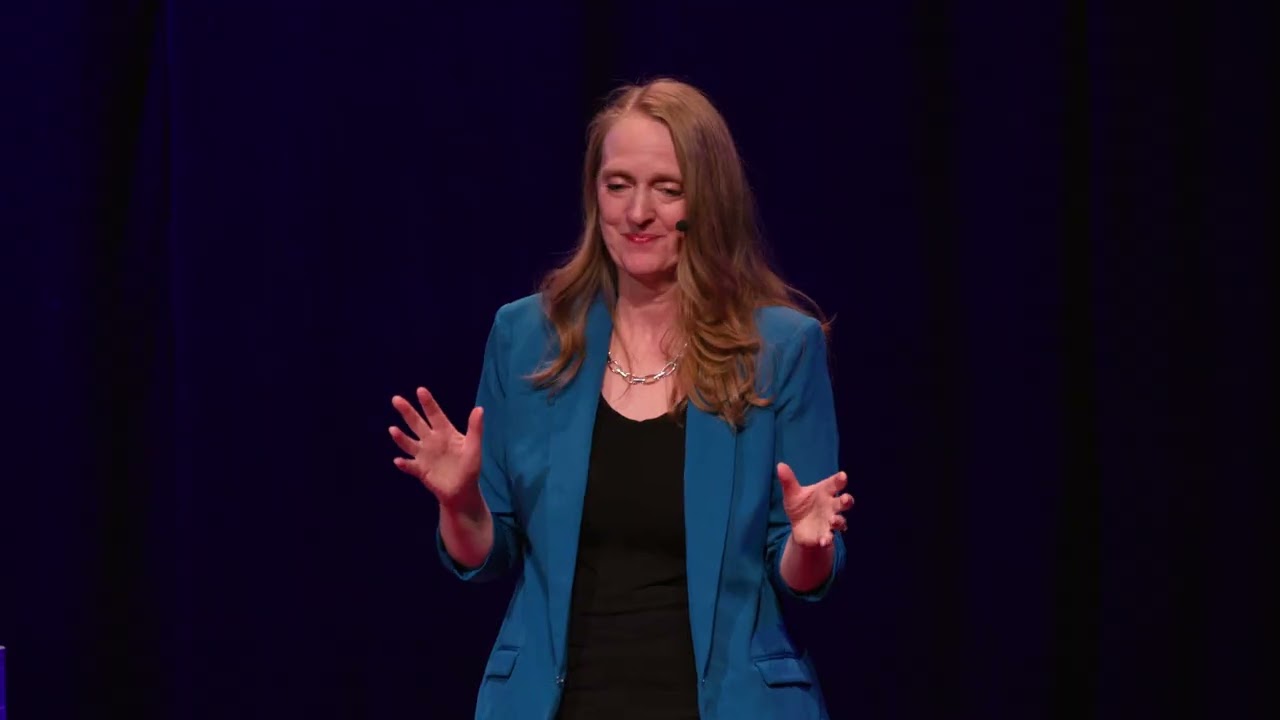
The Future is Fiction | Julie Dalton | TEDxTufts
Keywords
Summary
181 words
Critical Evaluation
The talk presents a compelling and passionate argument for the importance of climate fiction in addressing the climate crisis. Dalton effectively uses personal narrative to illustrate the emotional connection that stories can create, which is a key strength. The historical examples of science fiction predicting future technologies (Verne, Smith) are well-known and serve to support her claim that fiction can anticipate reality. However, the talk is primarily anecdotal and persuasive rather than rigorously scientific. The claim that readers are more likely to engage in pro-climate action after reading climate-themed novels is mentioned without citing specific studies, which weakens the scientific credibility. The argumentation is coherent, but it relies heavily on the authority of the speaker’s experience and the assumed power of storytelling. The talk does not delve into potential counterarguments or limitations of climate fiction, such as its reach or effectiveness compared to other forms of communication. The sources cited are limited to the TEDx website, and no specific academic references are provided. The adéquation between title and content is strong, as the talk consistently explores the idea that fiction can shape the future. Overall, the talk is inspiring and thought-provoking, but it would benefit from more concrete evidence and a more critical examination of the role of fiction in climate action.
212 words
Title / Content Match
The title accurately reflects the central thesis that fiction, particularly climate fiction, can shape and anticipate future realities.
Quality & Reliability
7/10
The talk is a personal and anecdotal argument for the value of climate fiction, supported by references to well-known works and a general claim about research on reader behavior. While the speaker is an established author, the scientific evidence is not detailed, and the talk is primarily persuasive rather than rigorously scientific.
Key Moments
Markers derived by PSI from the transcript: the creator did not define chapters.
- Introduction: Dalton announces her discovery of climate solutions in stories.
- Personal story: walking in the woods as a 13-year-old, her favorite vine tree.
- Discovery of the vine tree cut down and the forest being cleared.
- Transition to the main argument: storytellers as R&D for humanity.
- Historical examples: Jules Verne's submarine and E.E. Smith's tractor beam.
- Introduction of climate fiction examples: The Water Knife and Apple Seed.
- Octavia Butler's Parable of the Sower and its prescience.
- Research claim: readers more likely to engage in pro-climate action after reading climate fiction.
- Personal story: buying and protecting 92 acres of forest.
- Call to action: integrate climate fiction into various fields and pay attention to dreamers.
Cited Sources
- TEDx Program — Mentioned in the description as the organizing entity for TEDx events.
Concurring Sources
- TEDx Program — The talk is part of the TEDx series, which promotes ideas worth spreading.
Contribution & Novelties
The talk offers a personal and passionate perspective on the value of climate fiction, emphasizing its role in emotional engagement and as a source of imaginative solutions. It bridges literature and science, encouraging collaboration. The speaker’s own experience of protecting a forest adds a tangible example of turning narrative into action.
Pour aller plus loin :
- Climate Fiction (Wikipedia) — Overview of the genre and its significance.
- The Parable of the Sower (Wikipedia) — Details on Octavia Butler’s novel and its themes.
- The Water Knife (Wikipedia) — Information on Paolo Bacigalupi’s novel about water scarcity.
- Jules Verne (Wikipedia) — Background on the author and his visionary works.
- E. E. Smith (Wikipedia) — Information on the science fiction writer who imagined the tractor beam.
123 words
Radar Profile
The radar profile shows moderate scores across all dimensions, with slightly higher quality of information and lower technical level. This reflects a talk that is engaging and well-argued but lacks deep scientific detail, making it accessible to a broad audience.