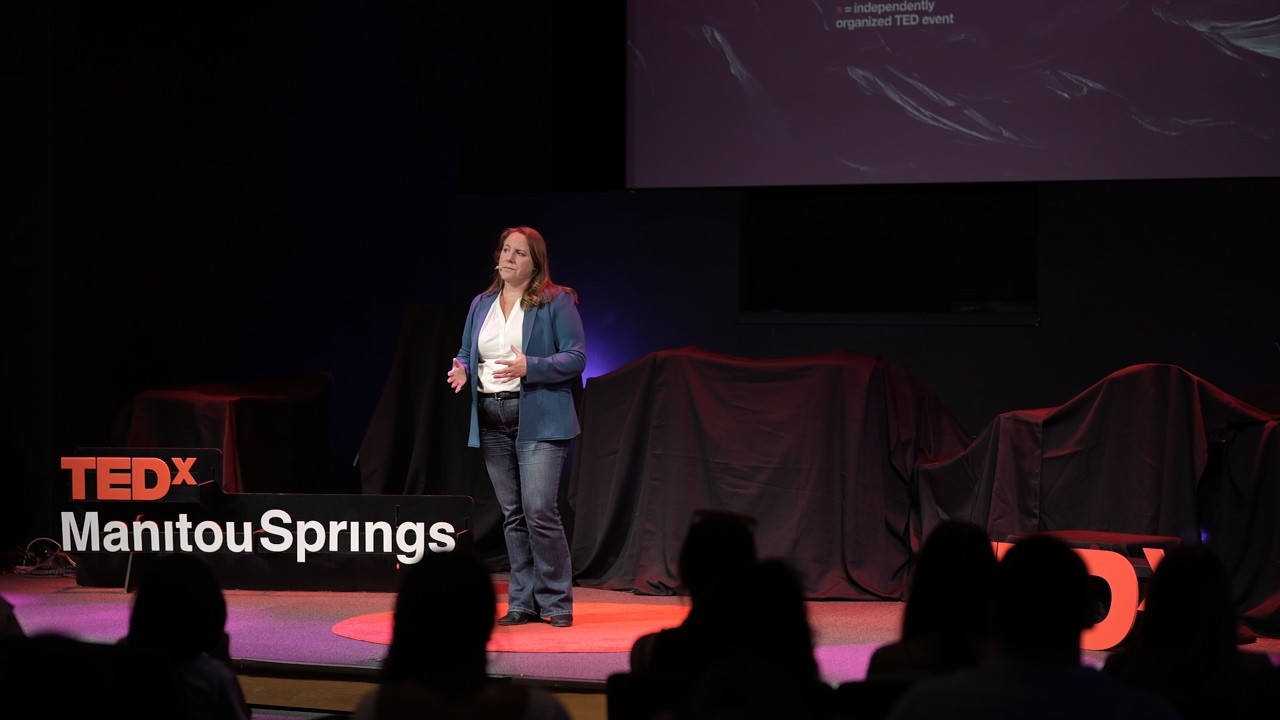
The High Cost of Shoulds | Elizabeth Welch | TEDxManitou Springs Salon
Keywords
Summary
201 words
Critical Evaluation
Value of the Information & Strength of the Argument
The talk provides a compelling personal narrative that illustrates the emotional weight of ‘shoulds’ and the potential for liberation through self-questioning. The argument is built on anecdotal evidence and references to psychological concepts, but it lacks empirical data or specific research citations. The speaker’s credibility as a coach and her personal experience add value, but the scientific foundation is thin. The argumentation is coherent and emotionally resonant, but it relies heavily on personal testimony rather than rigorous evidence.
Scientific Rigor, Source Quality, Title Accuracy
The talk references several psychological concepts (U-curve of happiness, default effect, authenticity research) but does not provide specific sources or citations. The only link in the description is to TEDx general page, which does not offer direct references. The title accurately reflects the content, focusing on the personal and psychological costs of living by ‘shoulds’. The talk is a personal narrative and expert opinion, not a scientific review, so the lack of citations is expected but limits its scientific rigor.
173 words
Title / Content Match
The title accurately reflects the content, focusing on the personal and psychological costs of living by 'shoulds'.
Quality & Reliability
5/10
The talk is a personal narrative with anecdotal evidence and references to psychological concepts (U-curve of happiness, default effect, authenticity research) but lacks specific citations or data. The speaker's credentials as a coach and former CEO lend some authority, but the scientific rigor is low.
Key Moments
Markers derived by PSI from the transcript: the creator did not define chapters.
- Introduction of the personal story: mother's cancer diagnosis and the conflict between duty and desire.
- Discussion of childhood origins of 'shoulds' and the loss of authenticity.
- Explanation of the U-curve of happiness and midlife reckoning.
- The mother's decision to forego treatment and her passing.
- Introduction of the question 'Is this mine?' and the shift from 'should' to 'choose'.
- Conclusion: invitation to unpack 'shoulds' and live by design.
Cited Sources
- TEDx Program — General TEDx page mentioned in the description, not a direct source for the talk's content.
Concurring Sources
- U-curve of happiness — Supports the claim of a midlife dip in happiness.
- Default effect — Supports the behavioral science reference to following familiar paths.
Contribution & Novelties
The talk offers a personal and accessible framework for identifying and challenging internalized expectations, which is valuable for personal development. It synthesizes existing psychological concepts (U-curve, default effect, authenticity) into a practical question: ‘Is this mine?’. The novelty lies in the personal narrative and the actionable advice, rather than new scientific insights.
Pour aller plus loin :
- U-curve of happiness — Relevant to the midlife dip in life satisfaction.
- Default effect — Explains the tendency to follow familiar paths.
- Self-determination theory — Related to authenticity and intrinsic motivation.
88 words
Radar Profile
The radar profile shows moderate scores across all dimensions, with a slightly higher score in 'qualite_information' due to the coherent narrative, but lower in 'niveau_technique' and 'fiabilite_globale' due to the lack of scientific depth. The talk is more inspirational than informational.