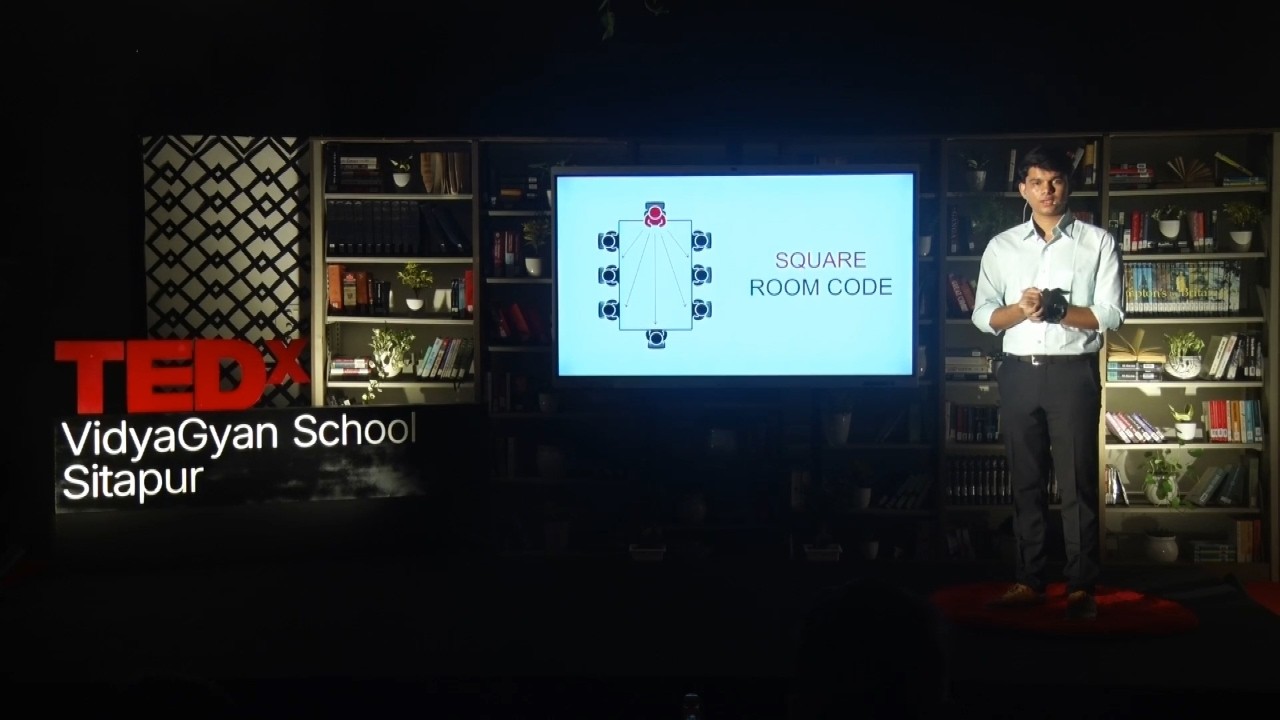
The Software of Us: World Needs a Cultural Re-Install | Ranjan Kumar | TEDxVidyaGyan School Sitapur
Keywords
Summary
133 words
Critical Evaluation
Value of the Information & Strength of the Argument
The talk offers a compelling personal narrative that illustrates the value of cultural exchange. The speaker uses vivid metaphors (software, operating systems, square vs. circular rooms) to make abstract concepts accessible. However, the argumentation is largely anecdotal and relies on a few references without deep exploration. The speaker does not provide concrete evidence or data to support his claims about the effectiveness of cultural exchange in solving global issues. The emotional appeal is strong, but the logical rigor is limited.
Scientific Rigor, Source Quality, Title Accuracy
The talk references ‘Dr. Ellen at York University’ (likely Ellen Bialystok) and ‘Gordon Albert’ (likely Gordon Allport) but does not provide specific citations. The only source in the description is the general TEDx link. The title is metaphorical and aligns with the content, but the scientific rigor is low due to lack of verifiable sources. The speaker’s personal experience is the primary basis, which is not generalizable without further evidence.
165 words
Title / Content Match
The title metaphorically frames cultural exchange as a software re-install, which matches the talk's central theme of cultural understanding as a system update.
Quality & Reliability
5/10
The talk is a personal narrative with anecdotal evidence and references to a few studies (e.g., bilingualism and dementia, intergroup contact theory) but lacks detailed citations or rigorous scientific backing. The speaker is a student ambassador, not a researcher in the field.
Key Moments
Markers derived by PSI from the transcript: the creator did not define chapters.
- Introduction: Growing up in Varanasi, India, and moving to Indiana, USA.
- Cultural shock and the Holi celebration organized by host family.
- Introduction of the software metaphor and reference to bilingualism research.
- Discussion of square room vs. nomadic code and the yurt example.
- Mention of the Jangi system in Cameroon and the need for local understanding.
- Conclusion: Challenge to embrace cultural exchange and become cultural engineers.
Cited Sources
- TEDx Talks — General TEDx platform link provided in the video description.
Concurring Sources
- Intergroup contact theory — Supports the claim that contact reduces prejudice.
- Bilingualism and dementia — Supports the claim about bilingualism delaying dementia.
Contribution & Novelties
The talk provides a personal perspective on cultural exchange, using the software metaphor to frame cultural understanding as a necessary update for global cooperation. It introduces the concept of ‘social geometry’ (square vs. circular spaces) as a way to rethink power dynamics in decision-making. The speaker’s emphasis on ‘cultural engineering’ as a skill for the 21st century is a novel framing.
Pour aller plus loin :
- Intergroup contact theory — Foundational theory by Gordon Allport on reducing prejudice through contact.
- Cognitive reserve — Concept related to bilingualism and dementia delay.
- Bialystok, E. (2011). Reshaping the mind: The benefits of bilingualism. — Research on bilingualism and cognitive benefits.
107 words
Radar Profile
The radar profile shows moderate scores across all dimensions, with a slightly higher score in information quality relative to technical level. This indicates a talk that is accessible and engaging but lacks deep scientific depth.
💬 No comments were provided for analysis.