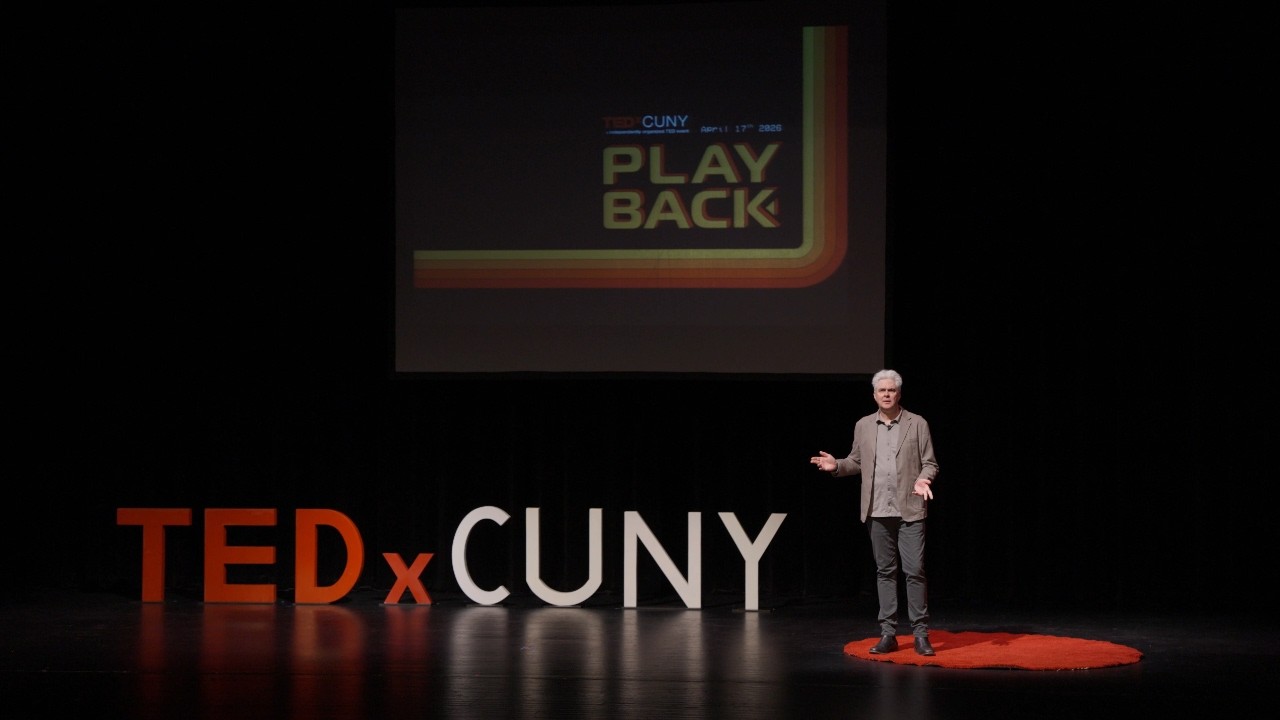
Engaging the creative process | Dave Steck | TEDxCUNY
Keywords
Summary
140 words
Critical Evaluation
The talk provides an accessible and engaging overview of the creative process, blending personal anecdotes with simplified neuroscience. The speaker’s credibility as a filmmaker and educator lends practical weight to his advice, but the scientific claims are presented without rigorous evidence or nuance. For instance, he states that creativity starts in the hippocampi and that memories are sent to the prefrontal cortex for combination, which is a gross oversimplification of complex neural processes. While the hippocampus is indeed involved in memory formation and the prefrontal cortex in higher-order thinking, the exact mechanisms of creative cognition are far more intricate and involve multiple brain networks. The speaker does not cite any studies or sources, which weakens the scientific foundation. However, the talk’s strength lies in its actionable framework: the six steps (discovery, development, epiphany, evaluation, execution, sharing) provide a clear heuristic that many creators may find useful. The emphasis on persistence and overcoming self-doubt is valuable, and the call to create daily is a practical takeaway. The talk’s title is well-aligned with its content, and it successfully demystifies creativity for a general audience. The main critique is the lack of scientific rigor and the potential for misleading oversimplification, but as a motivational and experiential perspective, it offers genuine insights. The inclusion of personal stories makes it relatable, and the advice to seek collaboration and take breaks is sound. Overall, the talk is inspiring but should be viewed as an opinion piece rather than a scientific exposition.
245 words
Title / Content Match
The title accurately reflects the content, which focuses on demystifying the creative process and providing a step-by-step approach.
Quality & Reliability
6/10
The talk is based on personal experience and anecdotal evidence, with references to neuroscience that are simplified and not fully accurate. No scientific sources are cited, and the description only provides a general TEDx link. The speaker is a filmmaker, not a neuroscientist, which limits the scientific authority.
Key Moments
Markers derived by PSI from the transcript: the creator did not define chapters.
- Introduction: Dave Steck introduces himself and his creative background.
- Childhood story: art teacher's comment and the impact on his self-perception.
- Building a robot with his grandfather, realizing creativity is learnable.
- Defining creativity and explaining the neuroscience (hippocampus, prefrontal cortex, dopamine).
- Step 1: Discovery - absorbing knowledge and impressions.
- Step 2: Development - rolling ideas around and connecting memories.
- Step 3: Epiphany - the Eureka moment and how the brain tunes in.
- Step 4: Evaluation - poking holes in ideas and refining.
- Step 5: Execution - doing the work and overcoming obstacles.
- Step 6: Sharing - presenting your creation to the world and final challenge.
Cited Sources
- TEDx Talks — The talk was given at a TEDx event, and this link provides general information about TEDx.
Concurring Sources
- TEDx Talks — The talk is part of the TEDx series, which generally promotes sharing ideas and personal experiences.
Dissenting Sources
- No specific discordant sources — No sources explicitly contradicting the talk were found, but the scientific claims are oversimplified and lack citations.
Contribution & Novelties
The talk offers a personal and practical framework for creativity, breaking it down into six actionable steps. It demystifies the process by connecting it to everyday activities and emphasizes that creativity is not limited to the arts. The speaker’s background as a filmmaker provides concrete examples, making the advice relatable. The main novelty is the integration of personal experience with a simplified neuroscience explanation, which, while not scientifically rigorous, makes the concept accessible.
Pour aller plus loin :
- Hippocampus - Wikipedia — Provides detailed information on the hippocampus’s role in memory, relevant to the speaker’s claims.
- Prefrontal cortex - Wikipedia — Explains the functions of the prefrontal cortex, including executive functions and creativity.
- Dopamine - Wikipedia — Overview of dopamine’s role in reward and motivation, as mentioned in the talk.
- Creative cognition - Wikipedia — Discusses the cognitive processes underlying creativity, offering a more scientific perspective.
146 words
Radar Profile
The radar profile shows moderate scores across all dimensions, with a slight peak in quantity of information and a dip in technical level. This reflects a talk that is informative and accessible but lacks deep scientific rigor, making it more suitable for a general audience than for experts.