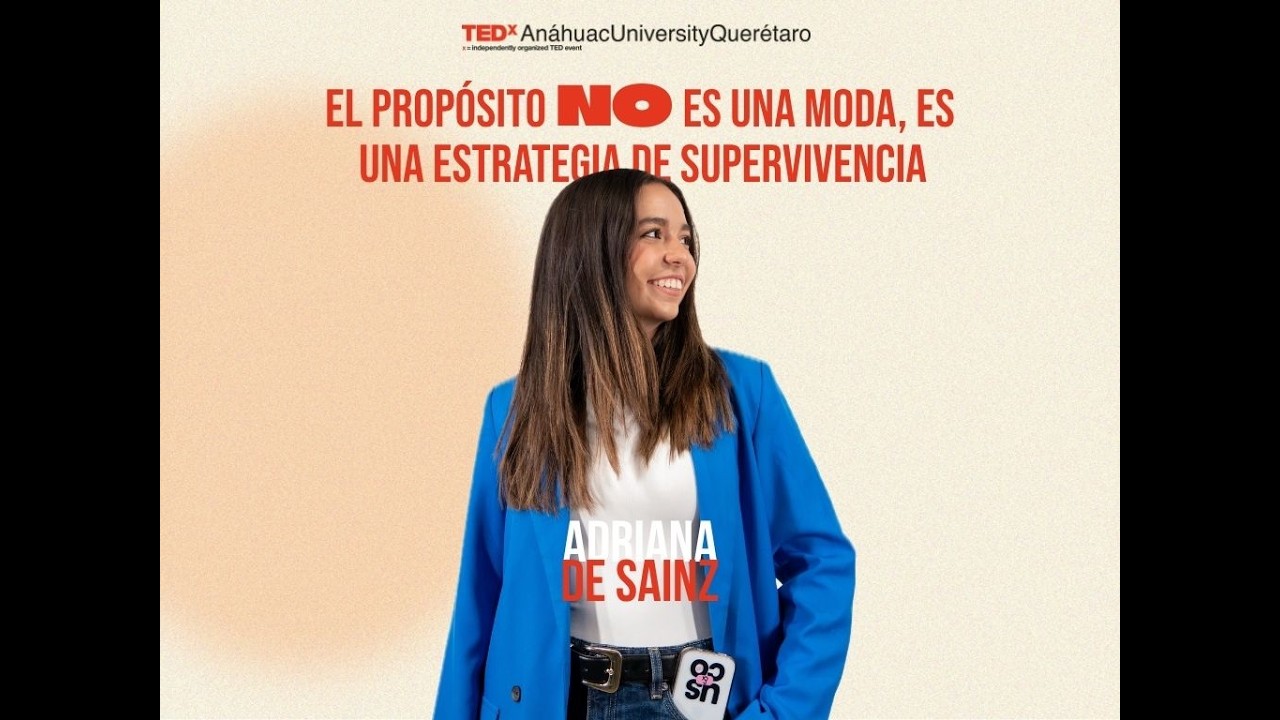
El Propósito Es una Estrategia de Supervivencia | Adriana De Sainz | TEDxAnáhuacUniversityQuerétaro
Keywords
Summary
111 words
Critical Evaluation
The talk presents a compelling narrative about the importance of brand purpose, supported by well-known examples and some statistics. However, the evidence is largely anecdotal and lacks rigorous scientific backing. The speaker cites studies from CB Insights and Deloitte but does not provide specific references, making it difficult to verify the claims. The argumentation is persuasive but relies on emotional appeal rather than systematic analysis. The examples are relevant and illustrate the points effectively, but they are not critically examined. The talk would benefit from more concrete data and a discussion of potential counterarguments. The title accurately reflects the content, and the talk is well-structured with clear takeaways. Overall, it offers valuable insights for entrepreneurs and marketers, but its scientific rigor is limited.
123 words
Title / Content Match
The title accurately reflects the core message: purpose as a survival strategy for brands.
Quality & Reliability
6/10
The talk is based on personal experience and anecdotal evidence, with some references to studies (CB Insights, Deloitte) but without specific citations or verification. The arguments are persuasive but lack rigorous scientific backing.
Key Moments
Markers derived by PSI from the transcript: the creator did not define chapters.
- Introduction: Disney anecdote about a couple who visit every year for the feeling of being children again.
- Difference between a sale and a real connection; examples of Oxo and first salary purchase.
- Statistics: 43% of startups fail due to lack of market need (CB Insights); companies with purpose grow 3x faster (Deloitte).
- Blockbuster vs Netflix: Blockbuster confused product with purpose, leading to bankruptcy.
- Examples of Starbucks, Nike, and Disney: people buy experiences and feelings, not just products.
- Personal agency experience: clients focus on likes, budget, influencers; they ask about purpose instead.
- Examples of Lego, Airbnb, and Dove: brands that recovered by remembering their purpose.
- Five tips for building a purpose-driven brand: solve a problem, be inspired, focus on people, demonstrate purpose, and make it transcend.
- Closing: ask yourself what feeling you leave your customers with; purpose is a survival strategy.
Cited Sources
- TEDx Program — The talk was given at a TEDx event, and this link provides information about the TEDx program.
Concurring Sources
- TEDx Program — The talk follows the TEDx format, which encourages sharing ideas worth spreading.
Contribution & Novelties
The talk provides a practical framework for entrepreneurs to define and implement brand purpose, illustrated with relatable examples. It emphasizes emotional connection over transactional selling.
Pour aller plus loin :
- Simon Sinek’s ‘Start with Why’ — Foundational concept of purpose-driven leadership.
- Brand Purpose — Overview of brand purpose and its business impact.
- Consumer Behavior — Academic perspective on why consumers choose brands.
62 words
Radar Profile
The radar profile shows moderate scores across all dimensions, with a slightly higher score in quantity of information and lower in technical level, indicating a balanced but not deeply technical presentation.