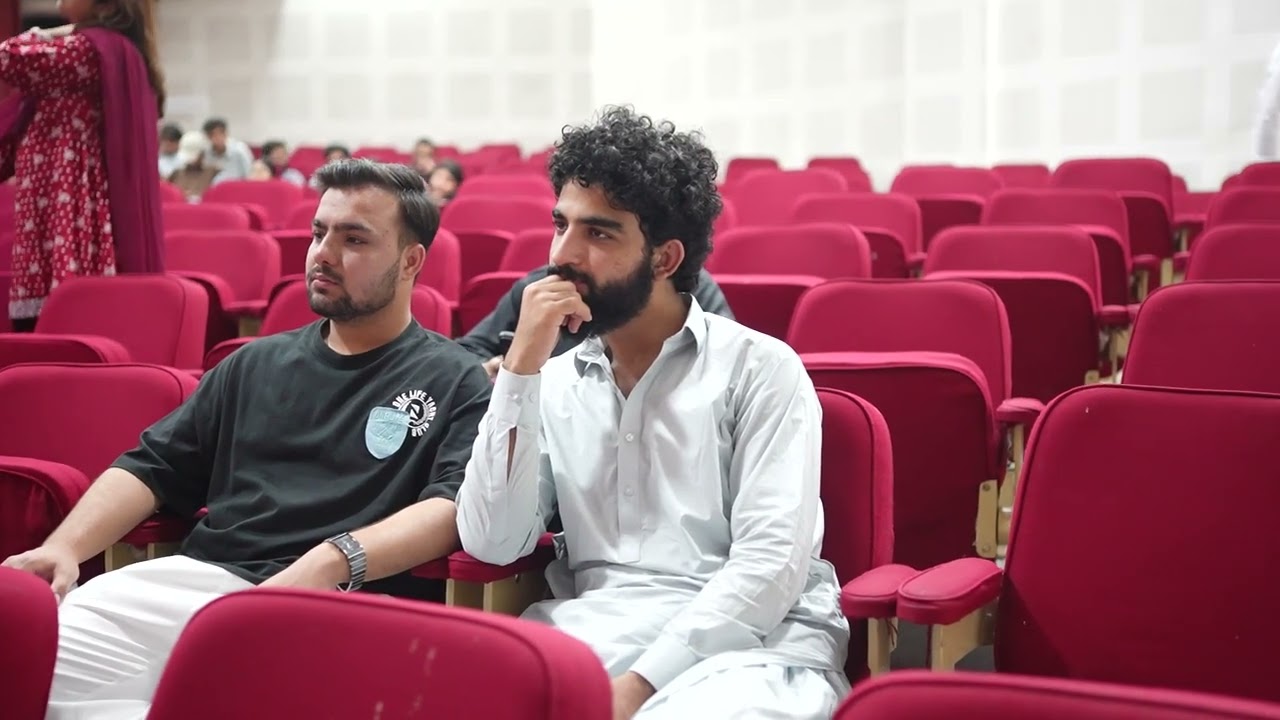
Building Businesses That Gives Back | Ibtisam Babar | TEDxQAU
Keywords
Summary
176 words
Critical Evaluation
The talk presents a compelling and passionate argument for integrating social impact into business models, particularly in the context of developing countries like Pakistan. The speaker’s personal anecdotes, such as the student with the healthcare device and the NASA cleaner story, effectively illustrate his points about the need for mentorship and ownership. However, the talk lacks empirical evidence or data to support claims about the current state of entrepreneurship in Pakistan or the effectiveness of social entrepreneurship. The argument is largely based on personal experience and general observations, which may not be generalizable. The speaker does not cite any specific studies, reports, or statistics, which weakens the scientific rigor. The talk is more inspirational than analytical, focusing on mindset shifts and collective responsibility rather than concrete policy recommendations or business strategies. The structure is somewhat repetitive, with the core message reiterated multiple times. The adéquation between title and content is good, as the talk consistently emphasizes businesses giving back. Overall, the talk is valuable for its motivational and thought-provoking nature, but it lacks the depth and evidence expected in a rigorous scientific analysis.
183 words
Title / Content Match
The title accurately reflects the core message: building businesses that prioritize giving back to the community, not just profit.
Quality & Reliability
6/10
The talk is an inspirational and opinion-driven presentation by an entrepreneur, lacking empirical data or citations. It relies on personal anecdotes and general observations, which limits its scientific rigor. However, the speaker's experience in entrepreneurship and banking adds practical credibility.
Key Moments
Markers derived by PSI from the transcript: the creator did not define chapters.
- Introduction: Speaker shares story of a student with a healthcare device, highlighting the gap between ideas and execution.
- Discussion on the definition of opportunity and who builds it, criticizing empty promises from institutions.
- Emphasis on profit as fuel for business, but not the ultimate goal; importance of giving back to community.
- Comparison with developed countries where governments provide infrastructure, contrasting with Pakistan's situation.
- Call for collective responsibility in building an ecosystem, with examples of startups integrating social impact.
- Personal journey with JS Bank and Zindigi Prize, emphasizing the need for mentorship and opportunities.
- Conclusion: Urges audience to shift mindset and take ownership to create opportunities for Pakistan's youth.
Cited Sources
- TEDx Talks — The talk was given at a TEDx event, and this link provides information about the TEDx program.
Concurring Sources
- TEDx Talks — The talk is part of the TEDx series, which features independently organized talks on various topics.
Contribution & Novelties
The talk offers a fresh perspective on social entrepreneurship in Pakistan, emphasizing the need for businesses to actively create opportunities for their communities rather than just donating a portion of profits. It highlights the importance of mentorship and ecosystem building, which are often overlooked in discussions about startups.
Pour aller plus loin :
- Social entrepreneurship — Provides an overview of the concept and its evolution.
- Ecosystem building — Explains the concept of business ecosystems and their role in fostering innovation.
- Zindigi Prize — A platform by JS Bank that supports startups and entrepreneurship in Pakistan, mentioned by the speaker.
99 words
Radar Profile
The radar profile shows moderate scores across all dimensions, with a slightly higher score in 'quantite_information' and 'qualite_information' compared to 'niveau_technique' and 'fiabilite_globale'. This indicates that while the talk provides a reasonable amount of information and is of decent quality, it lacks technical depth and high reliability due to the absence of citations and empirical evidence.