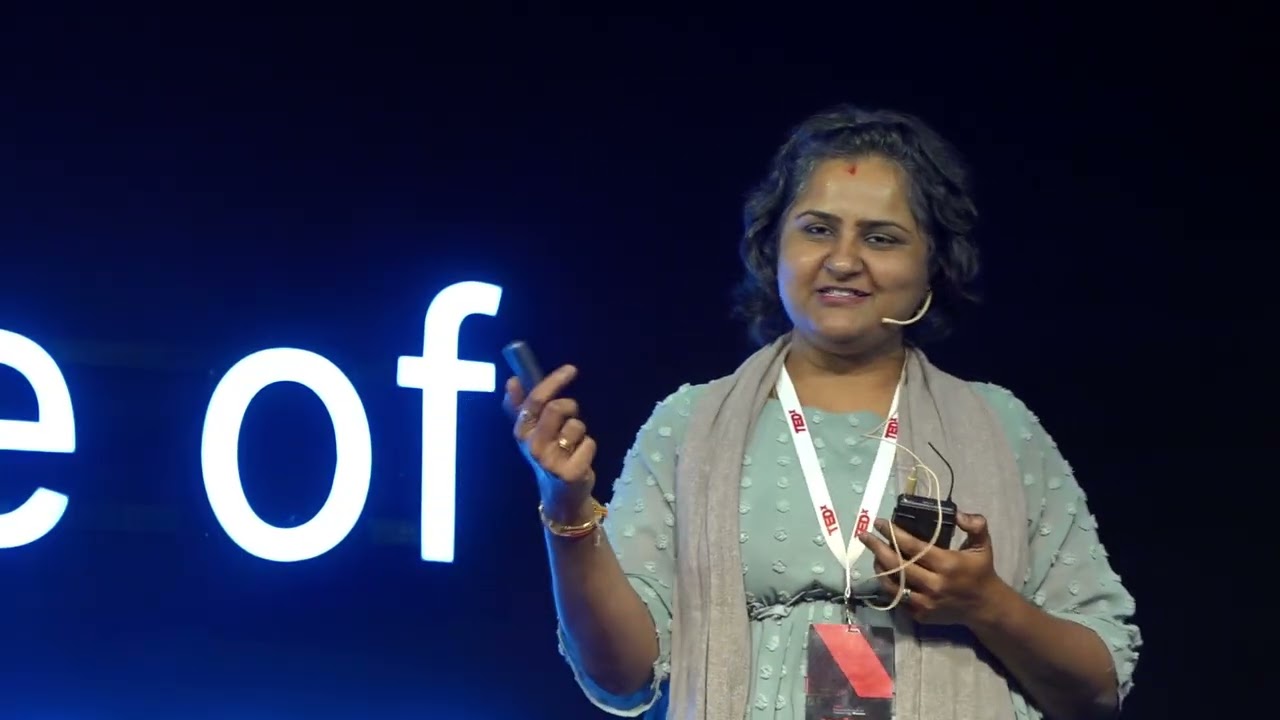
The discipline of voice | Yamini Lakshmipathy | TEDxChennai Institute of Technology Women
Keywords
Summary
145 words
Critical Evaluation
Value of the Information & Strength of the Argument
The talk provides a valuable reframing of silence as a rational response to ambiguity rather than a personal failing, which is a useful perspective for leadership and communication. The argument is structured around three clear, actionable concepts—unnamed assumptions, wrong problems, and unacknowledged trade-offs—making it practical. However, the argumentation relies heavily on anecdotal evidence and personal experience, with limited empirical support. The Einstein spoon story is presented as a neuroscience fact, but the connection to the main argument is tenuous and the scientific basis is oversimplified. The speaker’s engineering analogy of ’never solve a problem that has been clearly defined’ is rhetorically effective but not rigorously developed. Overall, the value lies in its practical framework and thought-provoking insights, but the scientific rigor is moderate.
Scientific Rigor, Source Quality, Title Accuracy
The talk is an expert opinion piece, not a scientific review or study. The speaker cites no formal sources, and the only reference is the TEDx platform itself. The neuroscience reference to the hypnagogic state is mentioned without citation or detailed explanation, which weakens the scientific credibility. The title accurately reflects the content, focusing on the discipline of voice through clarity. The talk is well-structured and the speaker’s engineering background lends practical authority, but the lack of citations and the anecdotal nature of the evidence limit its scientific rigor. No comments were provided for analysis.
233 words
Title / Content Match
The title accurately reflects the core theme of the talk: the discipline required to achieve clarity and thereby unlock one's voice.
Quality & Reliability
6/10
The talk offers a coherent, experience-based framework for understanding silence in professional settings, but relies on anecdotal evidence and a single, loosely interpreted neuroscience reference (hypnagogic state) without citations. The speaker's engineering background lends practical credibility, yet the scientific grounding is thin.
Key Moments
Markers derived by PSI from the transcript: the creator did not define chapters.
- Introduction: The speaker asks the audience about staying silent despite having the right answer.
- Challenges the attribution of silence to fear, suggesting confusion as the root cause.
- Introduces the first blocker: unnamed assumptions, and the need to make them explicit.
- Discusses the second blocker: solving the wrong problems, and the Einstein spoon anecdote.
- Explains the third blocker: unacknowledged trade-offs, using the example of parenting.
- Introduces the concept that clarity ends negotiations, and the importance of honest investigation.
- Concludes with the idea that silence can be a rational response to confusion, and the need to challenge assumptions and trade-offs.
Cited Sources
- TEDx Talks — The talk was given at a TEDx event, and this link provides information about the TEDx program.
Concurring Sources
- TEDx Talks — The talk is part of the TEDx series, which is a platform for sharing ideas.
Contribution & Novelties
The talk offers a fresh perspective on silence in professional settings, shifting the focus from individual courage to systemic clarity. It provides a practical framework of three blockers—unnamed assumptions, wrong problems, and unacknowledged trade-offs—that can be directly applied in team dynamics and leadership. The concept that ‘clarity ends negotiations’ is a provocative insight that challenges common avoidance behaviors.
Pour aller plus loin :
- Hypnagogia — The speaker references the hypnagogic state; this article provides a scientific overview.
- Predictive processing — The speaker mentions predictive processing; this concept is central to cognitive neuroscience.
- Problem structuring methods — Relevant to the idea of defining the right problem before solving it.
108 words
Radar Profile
The radar profile shows a balanced but moderate performance across all dimensions, with slightly higher scores in information quality and reliability, reflecting the talk's practical value but limited scientific depth. The low technical level indicates accessibility to a general audience.