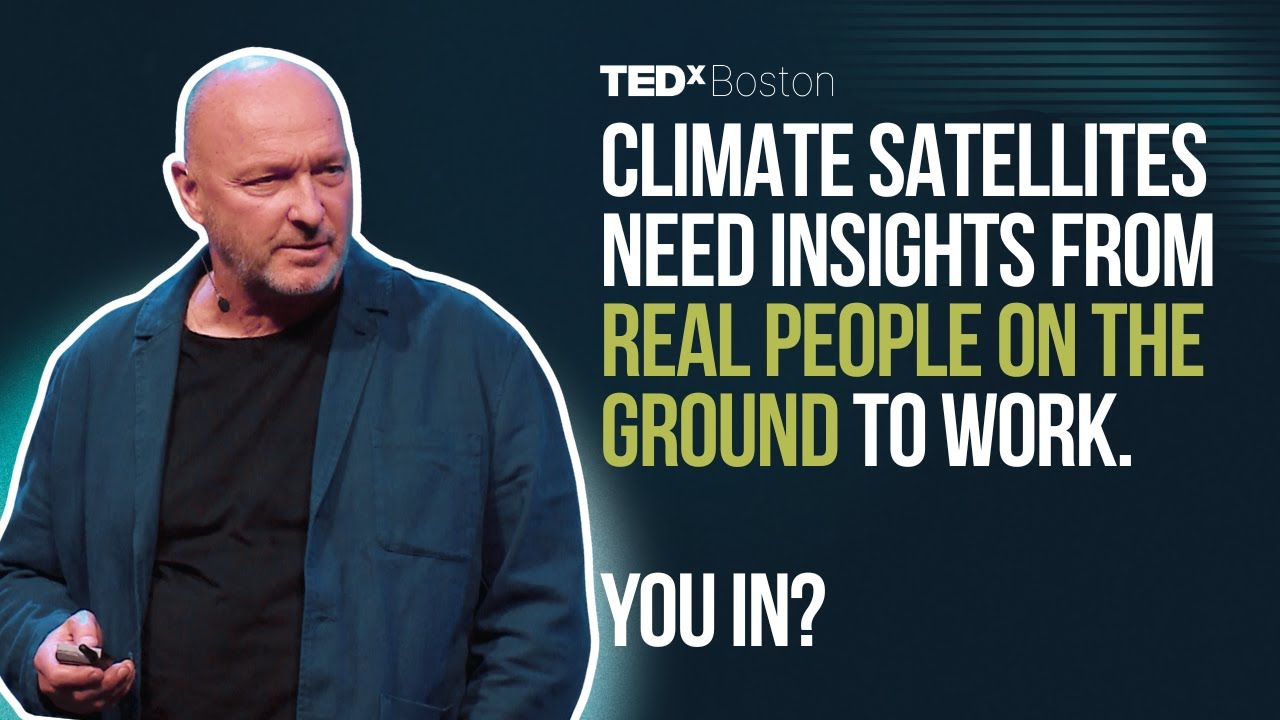
What happens when you turn ordinary people into polar explorers?
Keywords
Summary
127 words
Critical Evaluation
The talk presents a compelling case for citizen science in polar and ocean research. McNeill’s credibility is established through his extensive field experience and the success of his Ice Warrior Project, which has trained over 500 novices. The claim of losing 95% of old Arctic sea ice is a well-documented trend, though the exact figure may vary by source; it is consistent with scientific consensus. The proposal to use sailing vessels for data collection is innovative and addresses the gap in ocean sampling, particularly in extreme environments. However, the talk lacks specific technical details on the instrumentation and methodologies to be used, and the feasibility of scaling such an initiative is not fully addressed. The emphasis on broadcasting and public engagement is a strength, as it could enhance scientific literacy and support for climate action. The talk is more of an inspirational call to action than a rigorous scientific presentation, but it effectively communicates the importance of ground-truthing and the potential of citizen science. The adéquation between title and content is strong, as the talk directly addresses the transformation of ordinary people into polar explorers. Overall, the talk is valuable for raising awareness and proposing a novel approach, but it would benefit from more concrete examples of data collected and partnerships with scientific institutions.
214 words
Title / Content Match
The title accurately reflects the content, which focuses on transforming ordinary people into polar explorers to gather climate data.
Quality & Reliability
7/10
The speaker is an experienced polar explorer with 40 years of field experience and has led citizen science expeditions. Claims are plausible and align with known trends, but specific data (e.g., 95% loss of old sea ice) are not fully referenced in the talk. The talk is an opinion piece advocating for a specific approach, not a peer-reviewed study.
Key Moments
Markers derived by PSI from the transcript: the creator did not define chapters.
- Introduction: setting the scene on a sailing vessel in Greenland, with polar bears and glaciers.
- McNeill introduces himself as an ordinary person without formal degrees, but with 40 years of polar exploration experience.
- He mentions training over 500 people and leading seven major expeditions, with data cited in Smithsonian and Scientific American.
- Key statistic: 95% loss of old Arctic sea ice since 1984.
- Discussion of the paradox of climate change communication and public apathy.
- Explanation of the need for ground-truthing satellite data and the gaps in ocean sampling.
- Proposal: using a flotilla of sailing vessels with ordinary people to collect data in remote regions.
- Emphasis on broadcasting the expeditions live and creating interactive dashboards for public engagement.
- The 'walk tall syndrome': how participants transform and become more confident.
- Call to action: scaling the initiative, funding needs, and the urgency of climate action.
Cited Sources
- TEDx Content Guidelines — Mentioned in the video description as a note from TED regarding TEDx event guidelines.
- TEDx Program — Linked in the description as the official TEDx page.
Concurring Sources
- NASA Climate Change — Provides data and information on Arctic sea ice and climate change, supporting the speaker's claims.
- National Snow and Ice Data Center — Offers scientific data on sea ice extent and trends, consistent with the talk's statements.
Contribution & Novelties
The talk proposes a novel approach to climate data collection by leveraging citizen scientists on sailing vessels to fill gaps in ocean monitoring. It emphasizes the importance of ground-truthing satellite data and democratizing science through public engagement. The initiative aims to create a global network of ocean advocates through live broadcasting and interactive dashboards.
Pour aller plus loin :
- Citizen science — Overview of citizen science and its applications.
- Arctic sea ice decline — Detailed information on the loss of Arctic sea ice.
- Ocean acidification — Relevant to the data collection mentioned in the talk.
95 words
Radar Profile
The radar profile shows high scores in quantity of information and reliability, reflecting the speaker's experience and the talk's informative content. The lower score in technical level indicates that the talk is accessible to a general audience, focusing more on inspiration than technical details.