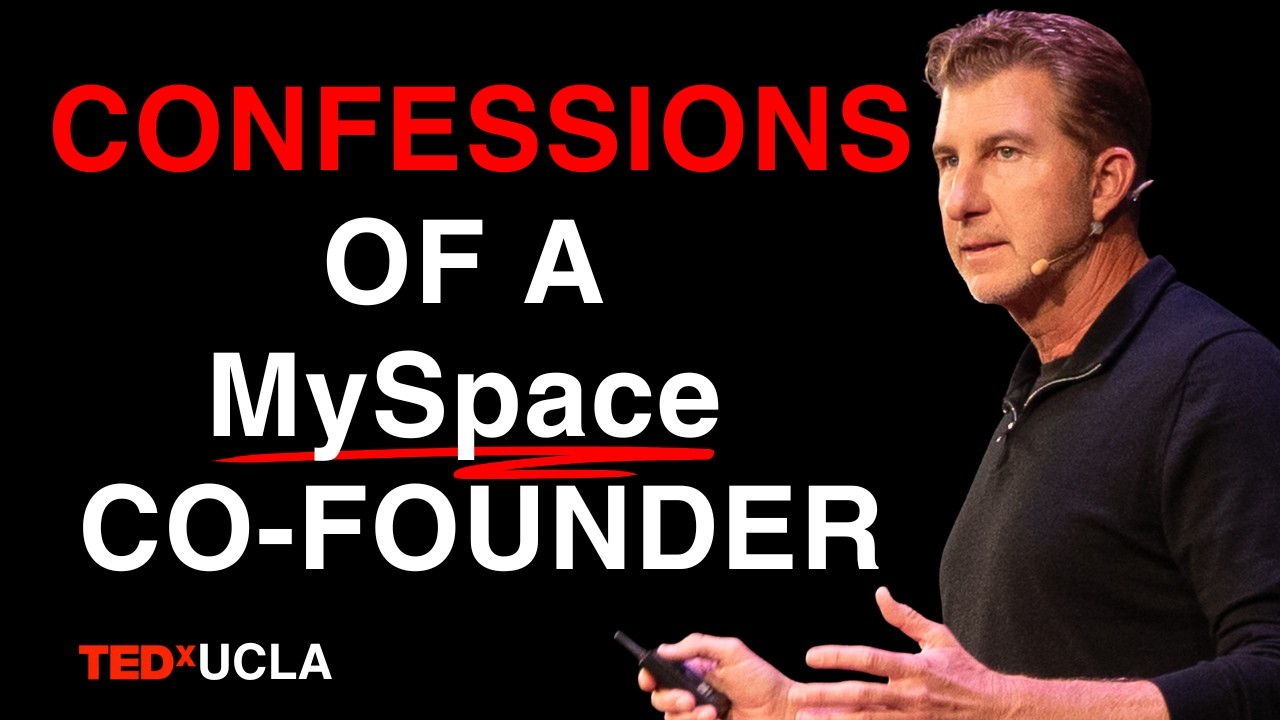
What social media platforms don’t want you to know
Keywords
Summary
133 words
Critical Evaluation
Value of the Information & Strength of the Argument
The talk’s value lies in the speaker’s insider perspective, providing a unique first-hand account of the early days of social media and the decisions made. The argumentation is compelling, using personal anecdotes, statistics, and references to legal and regulatory developments. However, the argument is largely one-sided and lacks a balanced discussion of counterarguments or potential benefits of social media. The speaker’s credibility is high, but the evidence is presented in a persuasive rather than a rigorously scientific manner.
Scientific Rigor, Source Quality, Title Accuracy
The talk references several sources: the US Surgeon General’s advisory, Meta’s internal research, and recent legislation in Australia and other countries. However, these are not cited with specific details or links. The title accurately reflects the content, and the speaker’s insider status adds credibility. The talk is an opinion piece rather than a scientific review, and the TEDx disclaimer acknowledges this. The lack of detailed citations and the reliance on personal experience reduce the scientific rigor.
169 words
Title / Content Match
The title accurately reflects the content: the speaker reveals insider knowledge about social media design and its impact on youth mental health.
Quality & Reliability
6/10
The speaker is a credible insider (co-founder of MySpace) but the talk is largely anecdotal and lacks rigorous citations. It includes some statistics and references to studies, but they are not fully detailed. The TEDx disclaimer notes that the talk represents personal interpretation and warrants further investigation.
Key Moments
Markers derived by PSI from the transcript: the creator did not define chapters.
- Introduction: 20 families suing social media companies in LA Superior Court.
- Brewer's background and early entrepreneurial story.
- Launch of MySpace and the 'default friend' feature.
- Realization that users were hooked on engagement.
- Statistics on youth mental health crisis.
- Critique of Section 230 and age verification.
- Proposed solutions and call to action.
Cited Sources
- TEDx Content Guidelines — Referenced in the video description as the guidelines for TEDx organizers.
- TEDx Program — Referenced in the video description as the official TEDx page.
Concurring Sources
- Surgeon General's Advisory on Social Media and Youth Mental Health — The talk references the Surgeon General's warning about social media's impact on teen mental health.
Contribution & Novelties
The talk provides a unique insider perspective from a co-founder of MySpace, offering a first-hand account of the early design decisions that contributed to addictive social media. It also highlights recent regulatory developments, such as Australia’s age verification law, and proposes concrete solutions. The talk’s novelty lies in its combination of personal accountability and policy advocacy.
Pour aller plus loin :
- Surgeon General’s Advisory on Social Media and Youth Mental Health — Official advisory referenced in the talk.
- Section 230 of the Communications Decency Act — Legal background on the law criticized in the talk.
- Australia’s Online Safety Amendment (Social Media Minimum Age) Act 2024 — Legislation mentioned as a model for age verification.
114 words
Radar Profile
The radar profile shows high scores in quantity of information and global reliability, but lower in technical level and quality of information, reflecting the talk's focus on personal experience and policy rather than technical depth.
💬 Sur les 0 commentaires analysés, aucune tendance n'est disponible.