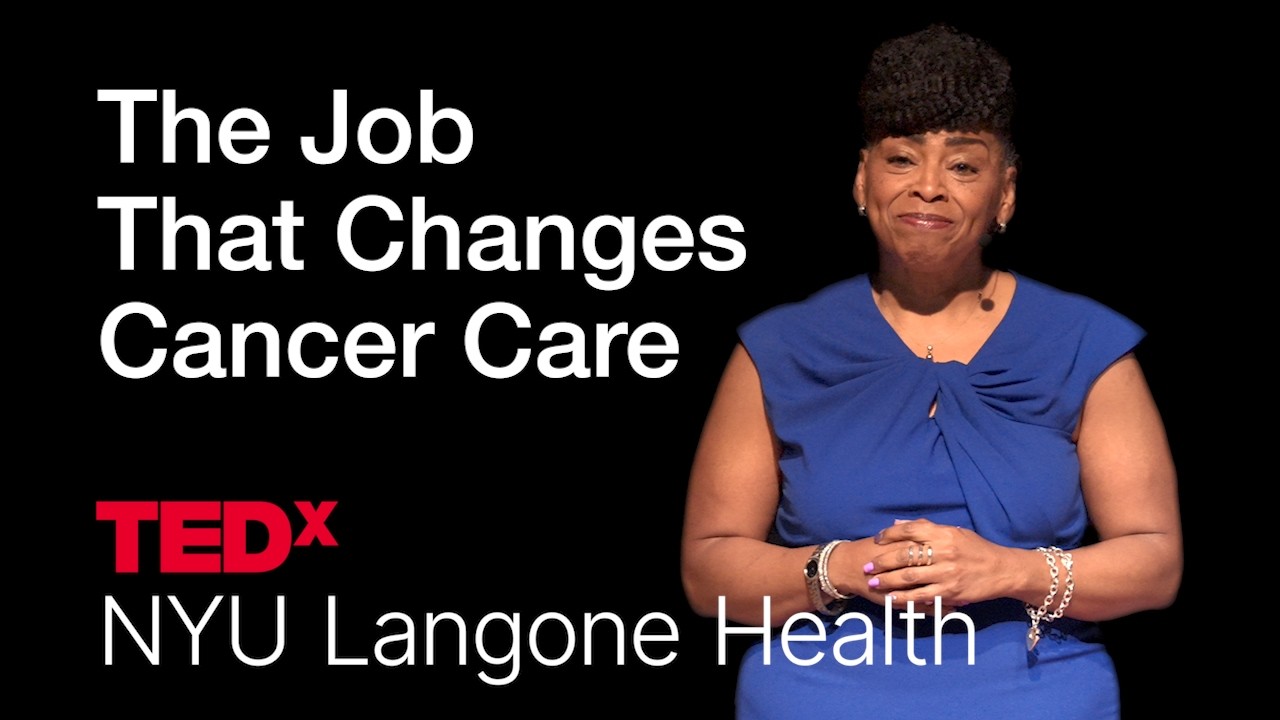
The Vital Role in Healthcare We Can’t Ignore | Sheila Willis | TEDxNYU Langone Health
Keywords
Summary
212 words
Critical Evaluation
The talk is a compelling personal testimony that underscores the importance of patient navigation in healthcare. Willis effectively combines anecdotal evidence with historical context, referencing Dr. Harold P. Freeman’s pioneering work and key legislation. However, the talk lacks rigorous scientific data or formal citations, relying primarily on personal experience and general assertions. The argumentation is emotionally persuasive but not deeply analytical. The speaker’s credibility as a practitioner adds weight, but the absence of quantitative evidence limits the scientific depth. The historical facts mentioned are accurate and verifiable, but the talk does not explore potential criticisms or limitations of patient navigation programs. The title accurately reflects the content, and the talk is well-structured, moving from personal narrative to broader systemic issues. The audience is likely to be moved by the speaker’s passion, but for a scientific evaluation, the talk is more inspirational than evidence-based. It would benefit from citing studies on patient navigation outcomes or discussing challenges such as funding and training. Overall, the talk serves as an effective advocacy piece but falls short of a rigorous scientific analysis.
178 words
Title / Content Match
The title accurately reflects the content, which emphasizes the importance of patient navigators in healthcare.
Quality & Reliability
7/10
The talk is based on personal experience and anecdotal evidence, but it references key historical facts and legislation (e.g., Harold P. Freeman, Patient Navigator Act, Affordable Care Act) that are verifiable. The speaker is a professional in the field, lending credibility. However, no formal citations or data are provided, and the talk is primarily motivational.
Key Moments
Markers derived by PSI from the transcript: the creator did not define chapters.
- Introduction: Sheila Willis explains the acronym MAD (Making a Difference) and her role as a patient navigator.
- Childhood story: school trip to JFK Airport, encounter with a stewardess, and the impact of compassion.
- Career change: leaving finance to pursue a purpose-driven role in healthcare.
- History of patient navigation: Dr. Harold P. Freeman and the origins at Harlem Hospital.
- Legislation: Patient Navigator Act (2005), Affordable Care Act (2010), and ACS standard (2012).
- Willis's work at NYU Langone: breast health outreach, mammogram buses, and patient support.
- Personal story: navigating her father's care after stroke-related dementia.
- Conclusion: call to action to recognize and utilize patient navigators.
Cited Sources
- TEDx Talks — The talk was given at a TEDx event, and the description links to the TEDx program.
Concurring Sources
- Patient navigation (Wikipedia) — Provides background on patient navigation, its origins, and evidence of its impact.
- Harold P. Freeman (Wikipedia) — Confirms the historical facts about Dr. Freeman's work and the creation of patient navigation.
Contribution & Novelties
The talk provides a personal perspective on the role of patient navigators, emphasizing the human and compassionate aspects of healthcare. It highlights the historical origins of patient navigation and its evolution into a recognized standard of care. The speaker’s firsthand experience adds authenticity, but the talk does not introduce new scientific data or research.
Pour aller plus loin :
- Patient navigation (Wikipedia) — Overview of patient navigation, its history, and evidence of effectiveness.
- Harold P. Freeman (Wikipedia) — Biography of the founder of patient navigation.
- Patient Navigation, Outreach, and Chronic Disease Act of 2005 (Congress.gov) — Text and status of the legislation mentioned in the talk.
- Affordable Care Act (Wikipedia) — Overview of the ACA, including provisions related to patient navigation.
- Community health worker (Wikipedia) — Definition and roles of community health workers.
133 words
Radar Profile
The radar profile shows moderate scores across all dimensions, with a slight emphasis on quality of information and reliability, reflecting the talk's personal but historically grounded nature. The low technical level indicates it is accessible to a general audience.
💬 No comments were provided for analysis.