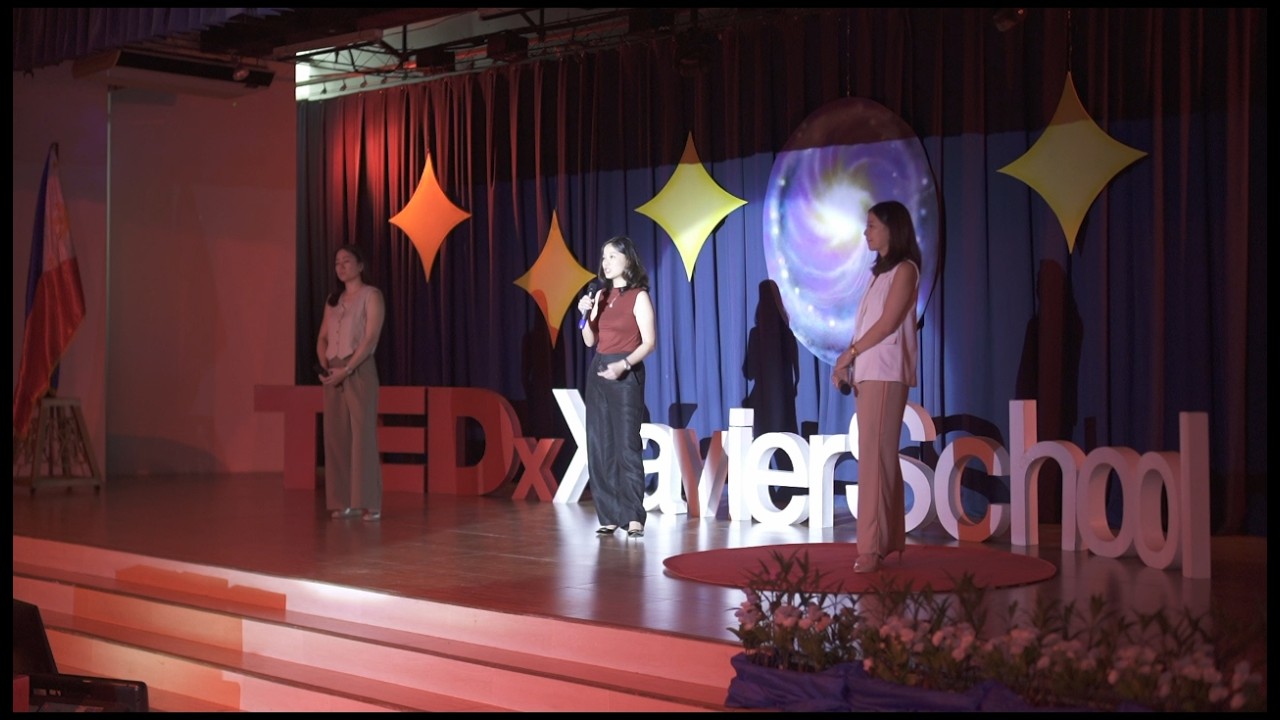
Transforming Healthcare through Innovation | Azaki Group | TEDxXavierSchool
Keywords
Summary
134 words
Critical Evaluation
The talk provides a personal and motivational perspective on healthcare innovation, primarily through the lens of three dermatologists’ use of social media. The speakers are credible as board-certified dermatologists, which lends authority to their statements about dermatology and medical practice. However, the content is largely anecdotal and lacks empirical evidence or detailed case studies. The discussion of digital innovation is superficial, focusing more on their social media success than on specific technological advancements or measurable outcomes. The argumentation is coherent but relies heavily on personal experience and inspirational rhetoric rather than scientific data. The talk does not cite specific studies or sources, which limits its scientific rigor. The title suggests a broad discussion of healthcare innovation, but the content is narrower, centering on dermatology and social media. The speakers address common myths and provide practical advice, which is valuable for a general audience, but the depth of analysis is limited. The talk’s strength lies in its authenticity and the speakers’ genuine commitment to patient education, but it falls short of a comprehensive examination of healthcare innovation. The absence of concrete examples of technology implementation or data on patient outcomes weakens the overall impact. The talk would benefit from incorporating evidence-based research or statistics to support claims about the effectiveness of telemedicine and social media in healthcare. Overall, it is an inspiring but not deeply analytical presentation.
226 words
Title / Content Match
The title is somewhat broad and aspirational; the talk focuses more on personal journeys and myth-busting than on specific healthcare innovations, but it does touch on digital innovation in dermatology.
Quality & Reliability
6/10
The talk is an expert opinion by three board-certified dermatologists sharing personal experiences and general insights on healthcare innovation and social media use. It lacks detailed data, citations, or rigorous scientific evidence, but the speakers' credentials and practical experience lend some credibility.
Key Moments
Markers derived by PSI from the transcript: the creator did not define chapters.
- Introduction of the three dermatologists and their social media presence.
- Explanation of the long journey to becoming a dermatologist in the Philippines.
- Debunking myth #1: Dermatology is not just about beauty.
- Debunking myth #2: Learning is fun and continuous.
- Debunking myth #3: There is no family life for doctors.
- Debunking myth #4: Learning stops after training.
- Debunking myth #5: Pimples are not just a part of life.
- Debunking myth #6: Doctors should use social media professionally.
Cited Sources
- TEDx Program — Mentioned as the organizing body for the talk.
Concurring Sources
- WHO on telemedicine — Supports the potential of telemedicine in improving healthcare access.
Contribution & Novelties
The talk offers a unique perspective from practicing dermatologists on using social media to combat misinformation and improve healthcare access, particularly in the Philippines. It highlights the potential of tele-dermatology and the importance of evidence-based content. However, it does not present novel research or data.
Pour aller plus loin :
- Telemedicine in dermatology — WHO overview of telemedicine, relevant to the talk’s discussion of tele-dermatology.
- Health misinformation on social media — WHO article on managing health misinformation, directly related to the speakers’ mission.
- Continuing medical education — Wikipedia article on CME, relevant to the talk’s emphasis on lifelong learning.
99 words
Radar Profile
The radar profile shows moderate scores across all dimensions, with slightly higher quality and reliability due to the speakers' credentials, but lower technical depth and information quantity. This suggests a balanced but not deeply technical presentation.