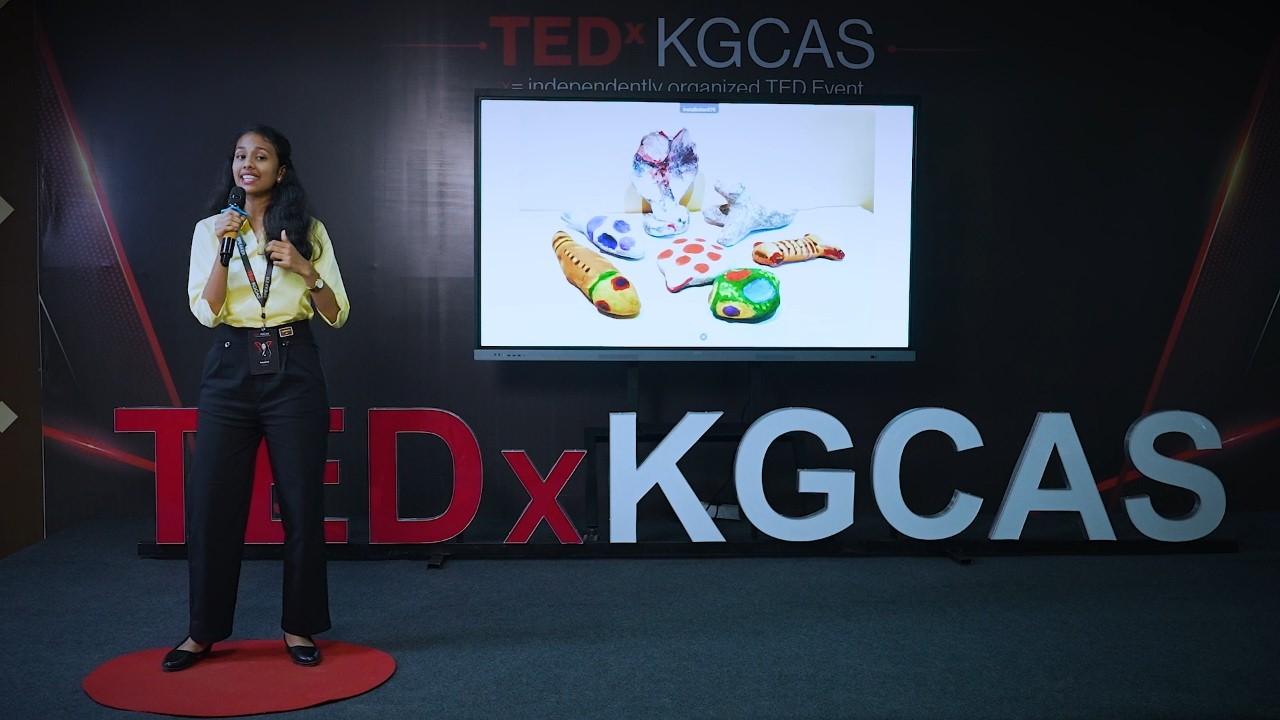
Eco-friendly Ritual | Ashwitha K | TEDxKGCAS
Keywords
Summary
251 words
Critical Evaluation
Value of the Information & Strength of the Argument
The talk provides a compelling narrative that connects cultural practices with ecological sustainability, offering a fresh perspective on how traditions can be reinterpreted for environmental benefit. The argument is built on personal observations and family stories, which are engaging but not scientifically rigorous. The speaker references a UN FAO manual and archaeological findings, but these are not cited in detail, and the interpretation of historical practices is speculative. The proposal of ‘seed idols’ is innovative and practical, but its effectiveness is not backed by empirical evidence. Overall, the value lies in raising awareness and inspiring action, but the argumentation would benefit from more robust scientific support.
Scientific Rigor, Source Quality, Title Accuracy
The talk references a UN FAO manual on pond hydrology and archaeological excavations, but these are not formally cited with specific titles or URLs. The speaker’s claims about the ecological purpose of rituals are plausible but not thoroughly verified. The title accurately reflects the content, which focuses on eco-friendly rituals. The talk is a personal narrative rather than a systematic review, so the scientific rigor is moderate. The speaker does not provide a list of sources, and the only link in the description is to the TEDx program, which does not offer additional references. The audience’s comments are not provided, so no analysis of public reception is possible.
229 words
Title / Content Match
The title accurately reflects the content, which focuses on the ecological significance of traditional rituals and proposes eco-friendly adaptations.
Quality & Reliability
6/10
The talk presents a personal narrative linking traditional rituals to ecological wisdom, supported by references to a UN FAO manual and archaeological findings. However, the evidence is largely anecdotal and lacks peer-reviewed sources, and the speaker's interpretation of historical practices is not rigorously verified.
Key Moments
Markers derived by PSI from the transcript: the creator did not define chapters.
- Introduction to the village and the annual temple festival.
- Description of the traditional water bodies (ooranis) and their purposes.
- Observation of the deterioration of water bodies and the paradox of devotion.
- Discovery of clay idols in a neighboring village and the father's explanation.
- Reference to the UN FAO manual and archaeological evidence.
- Proposal of seed idols as a modern adaptation.
- Conclusion: the need to restore the wisdom behind rituals.
Cited Sources
- TEDx Program — The talk was given at a TEDx event, and this link provides general information about the TEDx format.
Concurring Sources
- Traditional water harvesting systems in India — Supports the idea that traditional practices were ecologically sound.
Dissenting Sources
- Modern environmental impact of religious practices — Some studies suggest that certain rituals, even with good intentions, can have negative environmental impacts, which the talk does not address.
Contribution & Novelties
The talk offers a unique perspective on the intersection of cultural traditions and environmental sustainability, proposing that rituals can be redesigned to serve ecological purposes. It highlights the concept of ‘seed idols’ as a creative solution, which is not widely discussed in mainstream environmental discourse. The talk also emphasizes the importance of understanding the original purpose of traditions rather than blindly preserving them.
Pour aller plus loin :
- Traditional water harvesting systems in India — Provides background on traditional water management practices.
- Pond sealing techniques — The FAO manual referenced in the talk, though the specific section is not directly linked.
- Tirukkural — Ancient Tamil text that includes verses on the importance of water, as mentioned in the talk.
119 words
Radar Profile
The radar profile shows moderate scores across all dimensions, with a slightly higher score in information quantity and quality, reflecting the talk's narrative richness but limited technical depth. The low technical score indicates that the content is accessible to a general audience, while the moderate reliability score suggests that the claims are plausible but not fully substantiated.