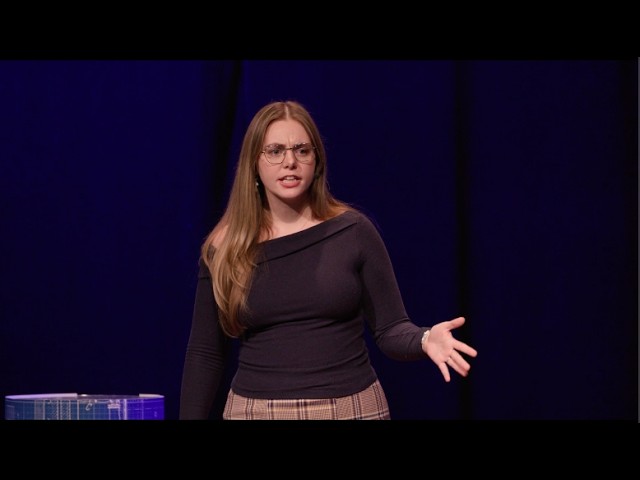
Beyond victimhood: Reimagining vulnerability in humanitarian crises | Emily Ruhm | TEDxTufts
Keywords
Summary
101 words
Critical Evaluation
The talk provides a compelling personal narrative that highlights systemic flaws in humanitarian aid, particularly the tendency to categorize certain groups as ‘vulnerable’ and thereby strip them of agency. Ruhm’s anecdotes from her field experiences are powerful and illustrate real-world consequences of poorly designed programs. However, the argumentation relies heavily on anecdotal evidence and lacks rigorous scientific backing. While she references concepts like intersectionality (Crenshaw) and humanitarian principles, she does not provide specific citations or data sources, weakening the scientific rigor. The talk is more of an expert opinion based on professional experience than a systematic review or original study. The quality of information is moderate: it raises important questions and offers practical recommendations, but the lack of empirical evidence and detailed references limits its reliability. The structure is clear and engaging, but the depth of analysis could be improved by incorporating more quantitative data and academic literature. The title accurately reflects the content, and the talk successfully challenges conventional thinking about vulnerability. Overall, it is a thought-provoking and valuable perspective, but not a rigorous scientific contribution.
177 words
Title / Content Match
The title accurately reflects the content, which focuses on redefining vulnerability in humanitarian contexts.
Quality & Reliability
7/10
The talk is based on personal experience and professional expertise in humanitarian aid, but lacks rigorous scientific citations and empirical evidence. It references concepts like intersectionality and humanitarian principles without detailed sources.
Key Moments
Markers derived by PSI from the transcript: the creator did not define chapters.
- Introduction: personal background and motivation
- UN meeting in South Sudan: mass rape incident and censorship
- Peace Corps in Senegal: meeting Mama Awa and learning about genital cutting
- Lesotho: Manana's story of disability and gender barriers
- UN Nigeria: donor target for disability inclusion and data challenges
- Intersectionality and critique of victimhood framing
- Examples of exclusion: men and boys, persons with disabilities
- Three recommendations: ask who is missing, collect data, integrate leadership
Cited Sources
- TEDx Talks — General TEDx platform information
Concurring Sources
- UN Disability Inclusion Strategy — Supports the call for inclusive humanitarian action.
Dissenting Sources
Contribution & Novelties
The talk offers a personal and professional perspective on redefining vulnerability in humanitarian aid, emphasizing agency and intersectionality. It contributes to the discourse by highlighting often-overlooked groups and advocating for disaggregated data.
Pour aller plus loin :
- Intersectionality — Concept coined by Kimberlé Crenshaw, central to the talk.
- Humanitarian principles — The four principles mentioned (humanity, neutrality, impartiality, independence).
- Do no harm — Ethical principle in humanitarian aid.
68 words
Radar Profile
The radar profile shows balanced scores across information quantity, quality, technical level, and reliability, with a slight emphasis on qualitative aspects. The talk is strong on narrative and practical insights but weaker on technical depth and empirical evidence.
💬 No comments provided.