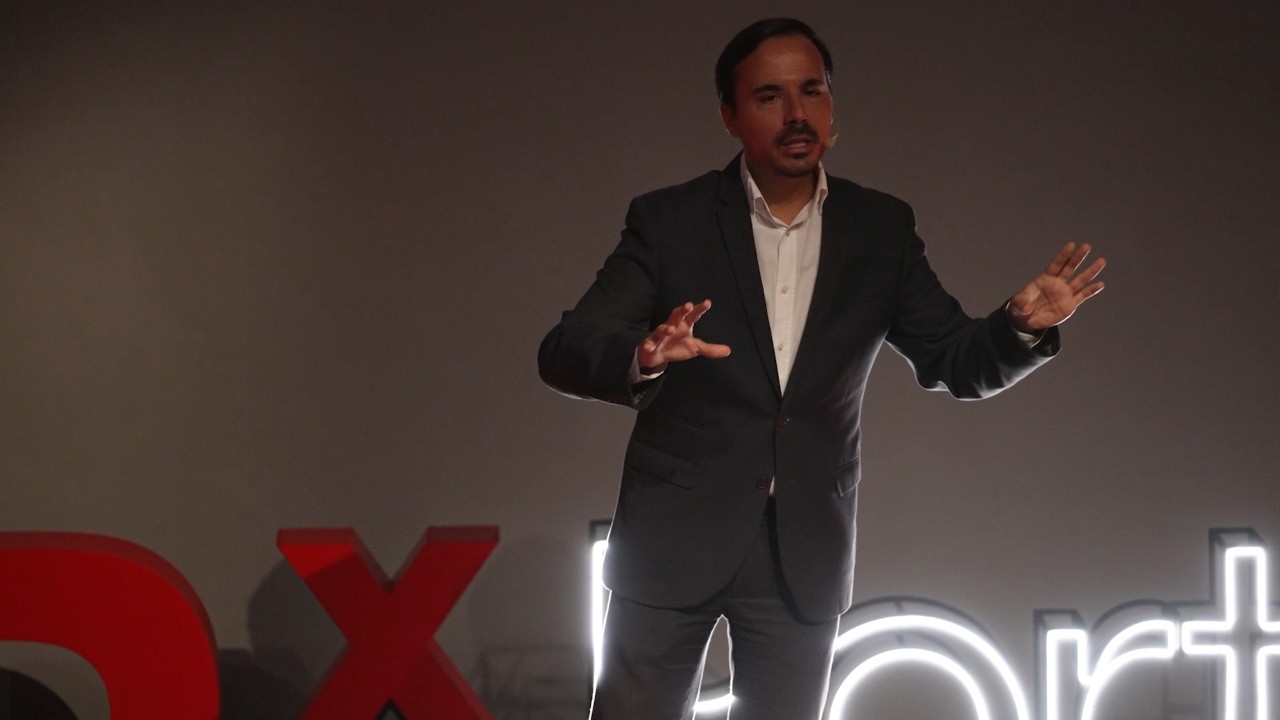
Sabemos. Então porque não mudamos? | Carlos Ribeiro | TEDxPortoSalon
We Know. So Why Don't We Change? | Carlos Ribeiro | TEDxPortoSalon
Keywords
Summary
190 words
Critical Evaluation
Value of the Information & Strength of the Argument
The talk provides valuable insights into the limitations of technocentric approaches to smart cities, emphasizing the importance of human behavior and participation. The argument is well-structured, using a compelling anecdote (the bike lane) and a concrete research example (green spaces and mental health) to support the thesis. However, the argumentation relies heavily on anecdotal evidence and personal experience rather than systematic data or citations, which weakens its scientific rigor. The speaker’s expertise lends credibility, but the lack of specific references limits the depth of the argument.
Scientific Rigor, Source Quality, Title Accuracy
The talk is an expert opinion, not a scientific presentation. The speaker references the 3-30-300 rule and a research project in Guimarães, but does not provide specific sources or data. The title accurately reflects the content, focusing on the knowledge-action gap. The description provides background on the speaker’s credentials, which supports his authority. However, the lack of citations and the anecdotal nature of the evidence reduce the overall scientific rigor. The title is well-aligned with the content, and the talk is coherent and persuasive.
185 words
Title / Content Match
The title accurately reflects the core message: the gap between knowledge and action in urban transformation.
Quality & Reliability
7/10
The talk is an opinion piece by an expert in environmental governance and sustainability, drawing on anecdotal evidence and a specific research project. It lacks detailed citations but is grounded in the speaker's professional experience and references to established concepts like the 3-30-300 rule.
Key Moments
Markers derived by PSI from the transcript: the creator did not define chapters.
- Introduction: the parable of the fish and the water, illustrating how we normalize urban problems.
- Critique of smart cities as merely data-generating, and the need for 'natural intelligence'.
- Anecdote of the bike lane network that nobody uses because only 1% can ride a bike.
- Emphasis on the need for citizen participation and the problem of 'achometer' (guessing) vs. science.
- Introduction of the One Health concept and the interconnection of urban systems.
- Presentation of the 3-30-300 rule for green spaces and the research in Guimarães on green space use and mental health.
- Call for climate literacy and education as the foundation for participation.
- Challenge to the audience to change a small habit and commitment to speak to non-converted audiences.
Cited Sources
- TEDx Program — General reference to the TEDx format and organization.
Concurring Sources
- TEDx Program — The talk is part of the TEDx series, which promotes ideas worth spreading.
Contribution & Novelties
The talk offers a refreshing perspective on smart cities, shifting the focus from technology to human behavior and participation. It highlights the importance of understanding real needs before implementing solutions, as illustrated by the bike lane anecdote. The emphasis on the 3-30-300 rule and the research on green space use provides practical insights for urban planners.
Pour aller plus loin :
- 3-30-300 rule — A rule of thumb for urban green space provision.
- One Health — The concept of interconnected health of humans, animals, and ecosystems.
- Smart city — Overview of smart city concepts and critiques.
96 words
Radar Profile
The radar profile shows moderate to high scores across all dimensions, with the lowest in technical level, reflecting the talk's accessible, opinion-based nature. The high scores in information quantity and quality indicate a well-articulated argument, while the moderate technical level suggests it is not highly specialized.