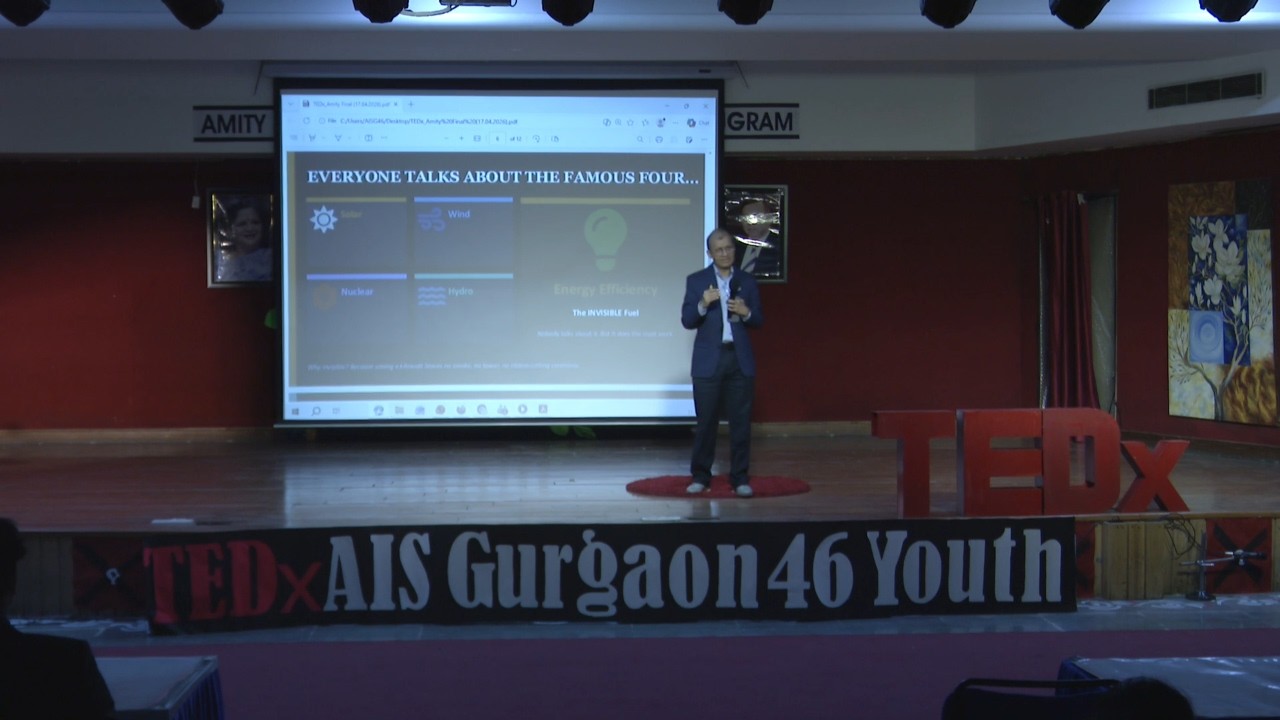
Nurturing Nature | Dr. Satish Kumar | TEDxAIS Gurgaon 46 Youth
Keywords
Summary
142 words
Critical Evaluation
Value of the Information & Strength of the Argument
The talk provides valuable insights into the often-overlooked role of energy efficiency in climate action. The argument is well-structured, starting with the scale of electricity consumption, then detailing specific high-impact areas (AC, AI/data centers), and finally presenting energy efficiency as a solution. The speaker uses relatable examples (AC setpoint, LED bulbs) and a clear metaphor (leaky glass) to make the case compelling. The argument is persuasive, though it relies more on anecdotal evidence and general statistics than on deep technical analysis.
Scientific Rigor, Source Quality, Title Accuracy
The talk demonstrates scientific rigor by referencing credible organizations like the International Energy Agency (IEA) and citing specific statistics. However, it lacks direct citations for many claims, which weakens its scholarly foundation. The title ‘Nurturing Nature’ is somewhat broad but accurately reflects the talk’s theme of environmental stewardship through energy efficiency. The content aligns well with the title, focusing on practical steps to reduce energy consumption and thus nurture the planet.
167 words
Title / Content Match
The title 'Nurturing Nature' is broad but the content directly addresses how energy efficiency can nurture nature, making it adequately aligned.
Quality & Reliability
7/10
The talk provides credible data points (e.g., 40% of electricity-related emissions, 10% of global electricity for AC, 3-5% energy increase per degree setpoint) and references reputable organizations (IEA). However, specific sources are not cited, and some claims lack precise references.
Key Moments
Markers derived by PSI from the transcript: the creator did not define chapters.
- Introduction: Electricity as the invisible force behind modern civilization.
- Key statistics: 40% of electricity-related emissions, projected 5x growth by 2050.
- Air conditioning impact: 10% of global electricity, 3-5% energy increase per degree setpoint.
- AI and data centers: 10,000x more electricity consumption than typical office space.
- Introduction of energy efficiency as 'first fuel' and 'negawatts'.
- Efficiency opportunities: buildings, vehicles, appliances (5-star ratings).
- Practical tips: LED bulbs, 5-star appliances, intentional digital use.
- Conclusion: Be observant, advocate for efficiency, and consider careers in energy.
Cited Sources
- TEDx Talks — Official TEDx platform where the talk is hosted.
Concurring Sources
- International Energy Agency - Energy Efficiency — The IEA's work on energy efficiency as the 'first fuel' aligns with the talk's central message.
Dissenting Sources
- Renewable energy alone can solve climate change — The talk argues that renewables alone are insufficient due to material and land requirements, which contrasts with some optimistic views on 100% renewable transitions.
Contribution & Novelties
The talk’s original contribution lies in framing energy efficiency as the ‘first fuel’ and introducing the concept of ’negawatts’ to a general audience. It synthesizes known data on electricity consumption and climate impact into a clear call to action, emphasizing that efficiency is a cheaper and faster solution than expanding renewable generation alone.
Pour aller plus loin :
- International Energy Agency - Energy Efficiency — Official IEA page on energy efficiency, providing reports and data.
- Negawatt power - Wikipedia — Overview of the negawatt concept.
- Mihaly Csikszentmihalyi - Wikipedia — Background on the psychologist quoted in the talk.
98 words
Radar Profile
The radar profile shows a balanced performance with slightly higher scores in information quantity and quality, and lower in technical depth. This indicates a talk that is informative and credible but not highly technical, suitable for a general audience.
💬 No comments were provided for analysis.