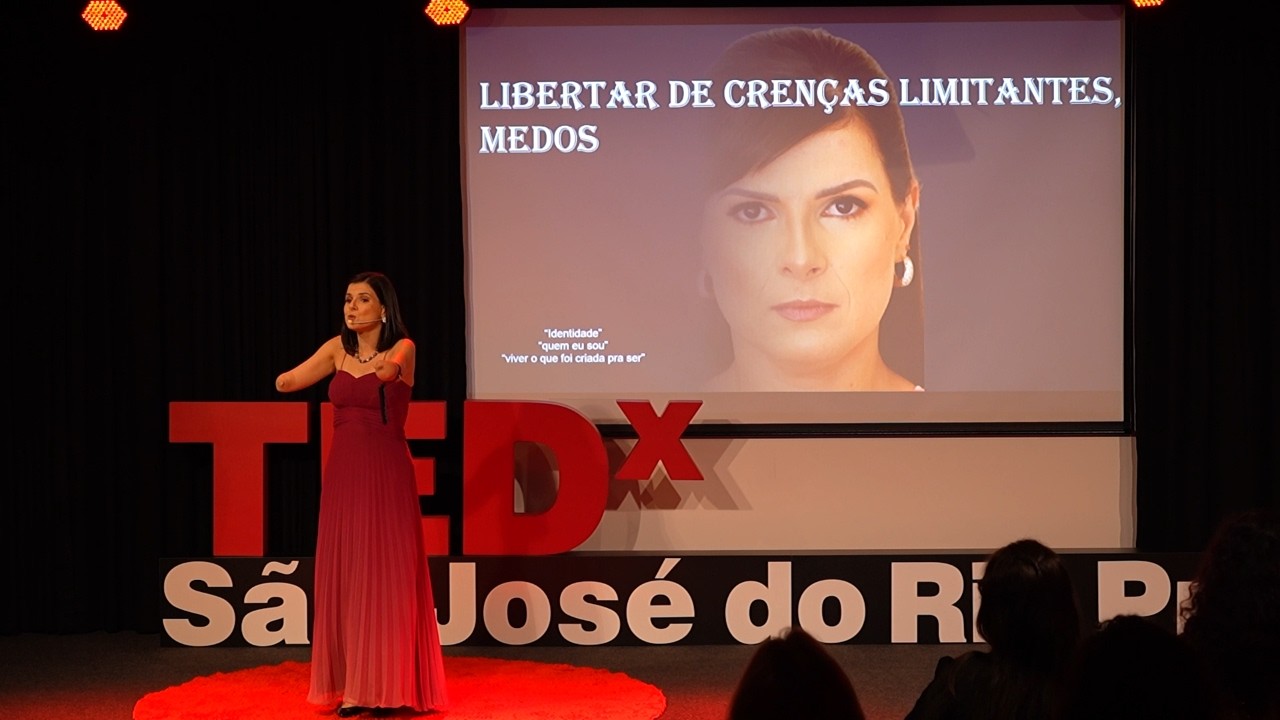
Supere seus limites | Ana Paula Oliveira | TEDxSão José do Rio Preto Women
Keywords
Summary
133 words
Critical Evaluation
Value of the Information & Strength of the Argument
The value of the information lies in the speaker’s personal testimony, which can be inspiring and relatable for audiences facing challenges. However, the argumentation is primarily anecdotal and relies on motivational rhetoric rather than scientific evidence. The speaker mentions neuroscience but does not provide any concrete studies or data to support her claims about brain adaptation or the power of mindset. The five steps she proposes are common in self-help literature and lack originality or empirical backing. The talk’s strength is its emotional appeal and the speaker’s credibility as someone who has overcome significant adversity, but it falls short of offering rigorous, evidence-based guidance.
Scientific Rigor, Source Quality, Title Accuracy
The talk does not cite any specific scientific sources or studies. The only reference is to the World Health Organization regarding rising suicide rates, but no data or citation is provided. The speaker’s expertise is in business and communication, not in neuroscience, which limits the scientific authority of her claims. The title accurately reflects the content, which is a motivational talk about overcoming limits. The description mentions the TEDx format and provides a link to TED’s website, but no additional references are given. Overall, the scientific rigor is low, and the talk is best viewed as an inspirational personal story rather than a source of scientific information.
226 words
Title / Content Match
The title accurately reflects the content, which is a motivational talk about overcoming personal limits.
Quality & Reliability
5/10
The talk is a personal testimony and motivational speech, with limited scientific depth. Neuroscience is mentioned but not explained with citations or data. The speaker's credentials are in business and communication, not in neuroscience research. The content is anecdotal and lacks verifiable evidence.
Key Moments
Markers derived by PSI from the transcript: the creator did not define chapters.
- Introduction: Ana Paula Oliveira introduces herself and her message about overcoming limits.
- She reveals her congenital condition and her parents' initial despair.
- She explains how she adapted without mechanical hands and emphasizes that limitations are in the mind.
- First step: embracing pain and transforming from within, citing her car accident and mother's cancer.
- Second step: self-love and caring for mental, physical, and spiritual health.
- Third step: freeing oneself from limiting beliefs, especially fear of judgment.
- Fourth step: living with purpose and gratitude, including her work as a social worker and her calling.
- Final step: believing in the impossible and leaving a legacy.
Cited Sources
- TEDx Program — Mentioned in the video description as the organizing body for TEDx events.
Concurring Sources
- TEDx Program — The talk follows the TEDx format, which is designed to share ideas worth spreading.
Contribution & Novelties
The talk offers a personal and emotional perspective on overcoming physical and mental limitations, which can be motivating for audiences. However, it does not introduce new scientific concepts or original frameworks. The five steps are common in self-help literature.
Pour aller plus loin :
- Neuroplasticity — Relevant to the speaker’s claim about brain adaptation, though she does not cite it explicitly.
- Growth mindset — Carol Dweck’s concept aligns with the talk’s emphasis on believing in one’s ability to grow.
- Limiting beliefs — A concept central to the talk’s third step, though not referenced directly.
94 words
Radar Profile
The radar profile shows low scores in technical level and reliability, reflecting the talk's anecdotal nature. The quantity and quality of information are moderate, as the talk provides personal insights but lacks scientific depth. The overall profile is typical of a motivational speech rather than an educational or research-based presentation.
💬 No comments were provided for analysis.