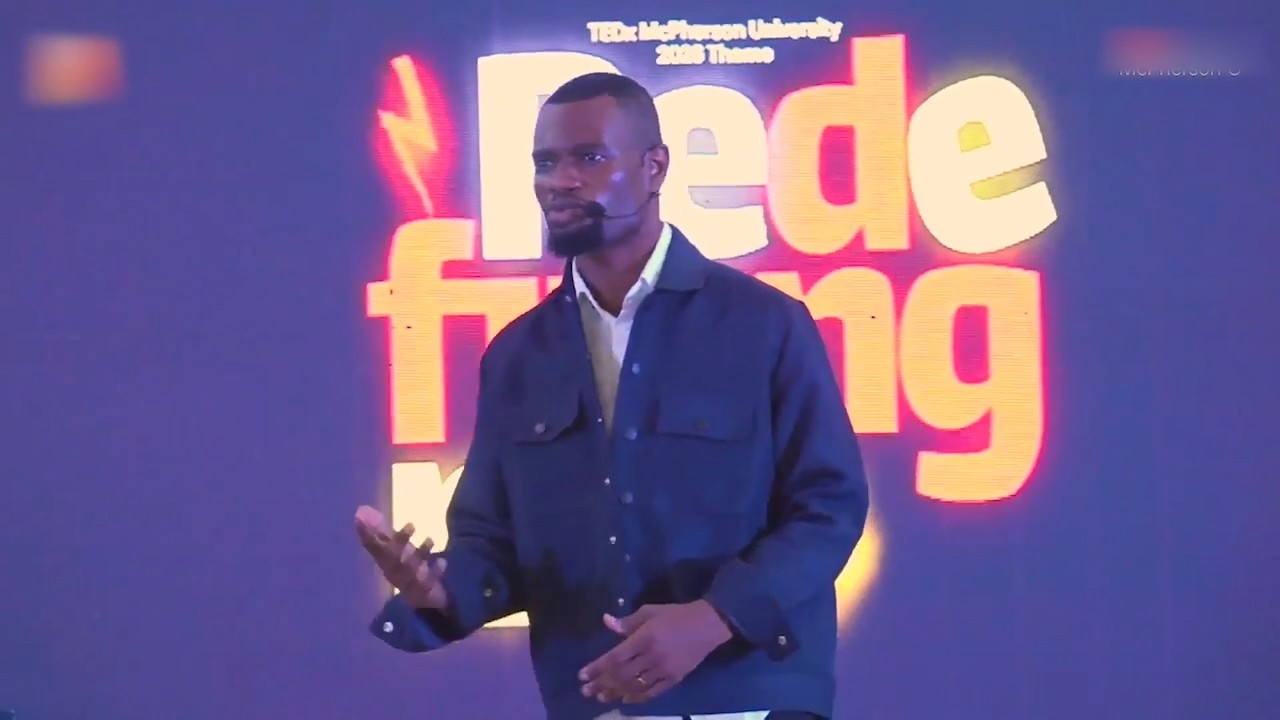
You Are Not the Hero of Your Brand Story | Dafe Richards | TEDxMcPherson U
Keywords
Summary
175 words
Critical Evaluation
Value of the Information & Strength of the Argument
The talk offers a clear and accessible argument for customer-centric branding, supported by relatable anecdotes and popular cultural references. The speaker’s professional experience in marketing lends practical credibility. The argumentation is structured around a central metaphor (the guide vs. the hero) and is persuasive in its simplicity. However, the evidence is largely anecdotal and relies on well-known but not rigorously validated frameworks. The speaker does not address potential limitations or counterexamples, such as brands that successfully use a brand-as-hero narrative. The three-step advice is practical but lacks depth and empirical backing.
Scientific Rigor, Source Quality, Title Accuracy
The talk references Joseph Campbell’s ‘The Hero with a Thousand Faces’ and Donald Miller’s StoryBrand framework, but does not provide specific citations or data. The description mentions these sources, and the only link provided is to TEDx generally. The title accurately reflects the content. The talk is an opinion piece based on professional experience rather than a scientific study, so the rigor is moderate. The lack of concrete sources and the reliance on anecdotal examples limit its scientific credibility.
185 words
Title / Content Match
The title accurately reflects the core message: the speaker argues that brands should not position themselves as the hero but as the guide, making the customer the protagonist.
Quality & Reliability
6/10
The talk presents a coherent, experience-based argument for customer-centric branding, but relies on anecdotal evidence and popular frameworks (Hero's Journey, StoryBrand) without rigorous empirical support or critical examination of counterarguments.
Key Moments
Markers derived by PSI from the transcript: the creator did not define chapters.
- Introduction and audience engagement
- Introduction of the topic: 'You are not the hero of your brand story'
- Anecdote about 'main character syndrome' and the two types of kids
- Reference to Joseph Campbell's 'The Hero with a Thousand Faces' (1949)
- Examples from anime (Naruto, One Piece) and music (Don Jazzy) illustrating the guide role
- Critique of brands that claim to be 'first' or 'best'
- First step: solve the customer's internal (emotional) problem, not just external
- Second step: empower users and give them permission to tell their own stories
- Third step: celebrate customer victories without taking center stage
- Conclusion: brands should make customers feel seen, heard, and celebrated
Cited Sources
- TEDx Program — General reference to the TEDx event format, mentioned in the description.
Concurring Sources
- StoryBrand - Donald Miller — The framework aligns with the talk's core message.
- Hero's Journey - Wikipedia — The narrative structure referenced by the speaker.
Dissenting Sources
- Brand-centric marketing critique — The talk does not address potential counterarguments, such as brands that successfully use a brand-as-hero narrative (e.g., Apple's iconic 'Think Different' campaign).
Contribution & Novelties
The talk provides a practical, memorable framework for brand storytelling, emphasizing the shift from brand-centric to customer-centric narratives. It synthesizes existing concepts (Hero’s Journey, StoryBrand) into an actionable three-step guide, illustrated with contemporary examples. The novelty lies in the clear articulation of the ‘guide’ role and the emphasis on celebrating customer victories.
Pour aller plus loin :
- Hero’s journey - Wikipedia — The monomyth framework by Joseph Campbell, foundational to the talk’s argument.
- StoryBrand - Donald Miller — The marketing framework referenced, which formalizes the customer-as-hero approach.
- Customer-centric marketing - Wikipedia — A broader concept of placing the customer at the core of business strategy.
105 words
Radar Profile
The radar profile shows moderate scores across all dimensions, with a slightly higher score in 'quantite_information' and 'qualite_information' reflecting the talk's clear structure and practical advice, but lower 'niveau_technique' and 'fiabilite_globale' due to the lack of rigorous scientific backing.