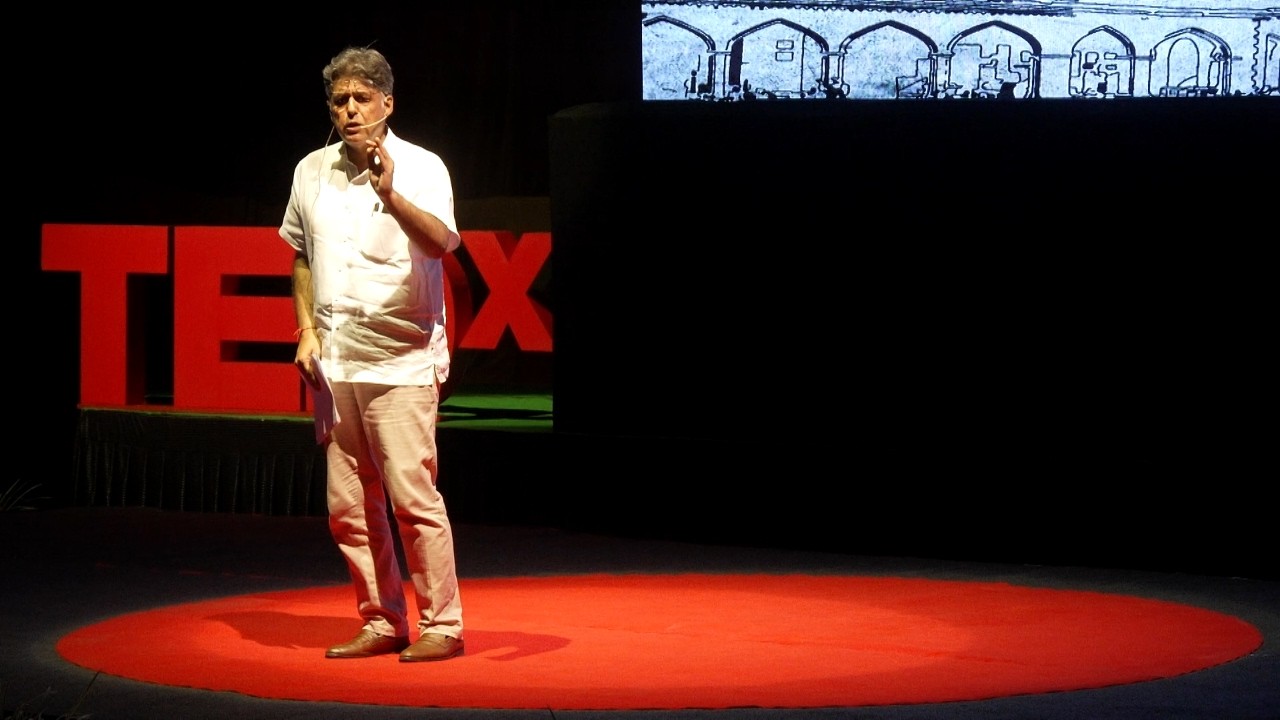
How Geography Shapes Global Power | Manish Tewari | TEDxWBS Youth
Keywords
Summary
171 words
Critical Evaluation
The talk offers a compelling and accessible overview of how geography continues to shape global power, using the recent Strait of Hormuz crisis as a vivid example. Tewari effectively communicates the interconnectedness of global supply chains and the fragility of the world economy. However, the analysis is largely descriptive and lacks rigorous economic or geopolitical depth. The speaker does not provide specific sources for his statistics, such as the $2.2 trillion loss figure or the 70% seaborne trade percentage, which are plausible but unverified. The argumentation is persuasive but relies on rhetorical appeal rather than empirical evidence. The talk’s strength lies in its clarity and relevance, but it falls short of a scholarly analysis. The title accurately reflects the content, and the talk is well-structured, moving from the virtual civilization to physical choke points and concluding with a call to action. The lack of citations and the speaker’s non-expert background in geography or economics slightly undermine the scientific rigor. Overall, the talk is informative for a general audience but does not offer novel insights for those familiar with geopolitical issues.
180 words
Title / Content Match
The title accurately reflects the content, as the talk explores how geographic choke points influence global power and trade.
Quality & Reliability
6/10
The talk provides a broad overview of geopolitical concepts and current events, but lacks specific citations or data sources. The speaker's expertise is in politics and law, not geography or economics, which may limit the depth of analysis. The content is plausible and aligns with general knowledge, but the lack of verifiable references reduces its reliability.
Key Moments
Markers derived by PSI from the transcript: the creator did not define chapters.
- Introduction to the concept of 'tyranny of geography' and the contrast between virtual and physical civilizations.
- Discussion on the internet as the largest ungoverned space and the rise of virtual sovereignty.
- Introduction of the Strait of Hormuz crisis and its impact on global economy.
- Listing of 25 maritime choke points and their role in global trade.
- Example of South Korea's dependence on Hormuz for energy and its link to AI infrastructure.
- Call for peace and stability as prerequisites for progress, urging youth to build a global peace constituency.
Cited Sources
- TEDx Program — The talk was given at a TEDx event, and this link provides information about the TEDx program.
Concurring Sources
- Strait of Hormuz - Wikipedia — Confirms the strategic importance of the Strait of Hormuz for global oil and gas shipments.
Contribution & Novelties
The talk provides a contemporary perspective on how geographic choke points remain critical in the digital age, using the recent Strait of Hormuz crisis as a case study. It connects geopolitical events to technological infrastructure, such as AI, highlighting the cascading effects of disruptions. The speaker’s call for a ‘global peace constituency’ offers a forward-looking, youth-oriented message.
Pour aller plus loin :
- Strait of Hormuz - Wikipedia — Provides detailed information on the strategic importance and history of the strait.
- Maritime Choke Points - Wikipedia — Overview of various maritime choke points and their significance.
- Global Supply Chains - Wikipedia — Background on how global supply chains operate and their vulnerabilities.
111 words
Radar Profile
The radar profile shows moderate scores across all dimensions, with slightly higher scores in information quantity and quality, but lower in technical level and reliability. This indicates a talk that is informative and accessible but lacks depth and rigorous sourcing.