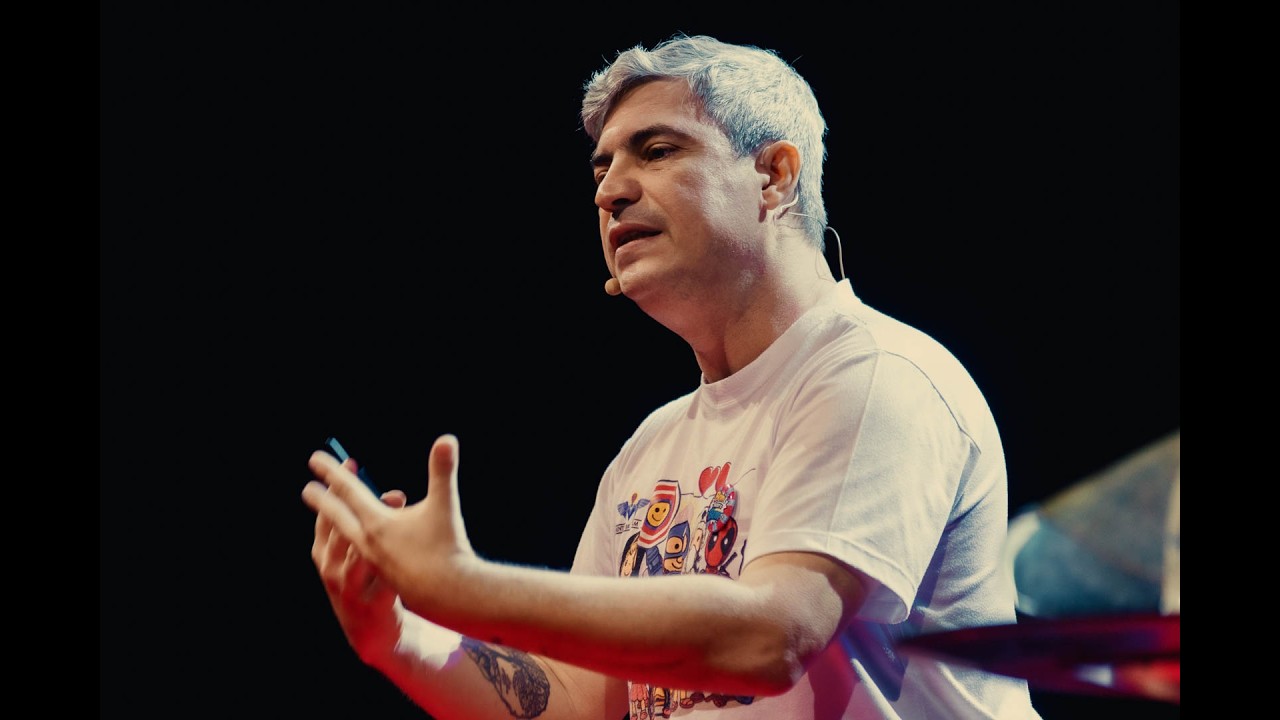
O que ninguém te contou sobre fazer o bem | Henrique Castro | TEDxFortaleza
Keywords
Summary
169 words
Critical Evaluation
The talk is a compelling and heartfelt narrative that offers practical wisdom on altruism and humanitarian work. Henrique Castro’s credibility is established through his professional background in disaster response and his founding of the collective ‘Mentes Que Voam’. The strength of the talk lies in its concrete examples, which illustrate abstract concepts like cognitive empathy and the importance of self-care. However, the argumentation is largely anecdotal and lacks empirical evidence or references to scientific literature. While the advice is sensible and aligns with established psychological concepts, such as the distinction between emotional and cognitive empathy, the talk does not provide a rigorous scientific framework. The speaker’s personal stories are moving and serve to humanize the message, but they also introduce potential biases. For instance, the story about donating powdered milk highlights a logistical issue but does not address broader ethical considerations. The talk’s structure is clear, with seven distinct lessons, but the transitions between them are sometimes abrupt. The title is appropriate, as the content indeed reveals less obvious aspects of doing good. Overall, the talk is valuable for its inspirational and practical insights, but it would benefit from more robust evidence and a more critical examination of the challenges in humanitarian work. The audience’s positive reception, as indicated by applause, suggests that the message resonates, but the lack of critical engagement limits its scientific depth.
226 words
Title / Content Match
The title accurately reflects the content, which discusses often-overlooked aspects of doing good, such as self-care, donating what overflows, and cognitive empathy.
Quality & Reliability
7/10
The talk is an expert opinion based on personal experience in humanitarian aid and disaster response. It provides practical advice and anecdotes but lacks empirical evidence or citations. The speaker's credentials are mentioned but not verified. The content is coherent and aligns with established concepts like cognitive empathy and disaster management, but the lack of sources and subjective nature lower the score.
Key Moments
Markers derived by PSI from the transcript: the creator did not define chapters.
- Introduction and personal background
- Childhood story about kindness
- Definition of disaster and vulnerability
- First mission and emotional impact
- Lesson 1: Self-care
- Lesson 2: Donate what overflows
- Lesson 3: Cognitive empathy
- Lesson 4: Listen to your heart
- Story of Felipe and the superhero visit
- Conclusion and call to action
Cited Sources
- TEDx Program — Mentioned in the video description as the organizing body for TEDx events.
Concurring Sources
- TEDx Program — The talk is part of the TEDx series, which is known for sharing ideas worth spreading.
Contribution & Novelties
The talk provides a personal and practical perspective on altruism, emphasizing often-overlooked aspects such as self-care and cognitive empathy. It offers actionable advice for individuals and organizations, illustrated with real-life examples from disaster response and community work.
Pour aller plus loin :
- Empathy (Wikipedia) — Discusses the distinction between emotional and cognitive empathy, relevant to the talk’s emphasis on asking what others need.
- Disaster risk reduction (Wikipedia) — Provides background on the concept of vulnerability and risk in disasters, which the speaker touches upon.
- Self-care (Wikipedia) — Explores the importance of self-care in caregiving professions, aligning with the first lesson.
100 words
Radar Profile
The radar profile shows high scores in quantity and quality of information, moderate technical level, and good reliability. This indicates a well-structured and informative talk, though not deeply technical or heavily sourced.
💬 Sur les 0 commentaires analysés, aucune tendance n'est disponible.